Lesson 2 / 5 in Marketing & Growth
30,000 Downloads in 3 Days: The Secret Behind a Danish Developer's Weekend Boycott App
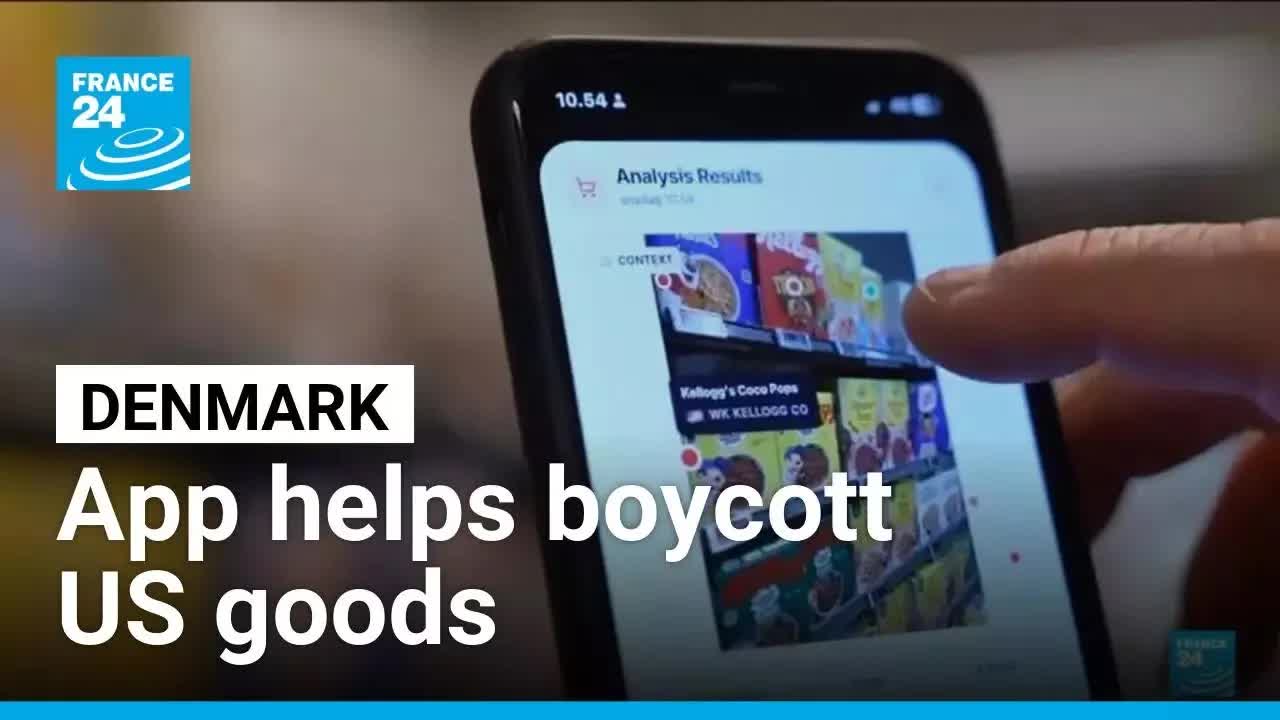
TL;DR
An AI-powered boycott app built over a single weekend by a Copenhagen digital marketer for Danish consumers outraged by Trump's Greenland acquisition threats has surpassed 100,000 downloads and is spreading across Europe.
30,000 Downloads in 3 Days: The Secret Behind a Danish Developer's Weekend Boycott App
One-Line Summary
An AI-powered boycott app built over a single weekend by a Copenhagen digital marketer for Danish consumers outraged by Trump's Greenland acquisition threats has surpassed 100,000 downloads and is spreading across Europe.
Key Numbers & Data
| Metric | Value | Context |
|---|---|---|
| 3-day downloads | 30,000 | Immediately after the Greenland crisis reignited in January 2026 |
| Cumulative downloads | Over 100,000 | Since launch in March 2025 |
| Peak daily scans | 40,000 | January 23, 2026 alone -- 80x normal volume |
| User growth rate | 1,400% | During January 2026 alone |
| Product accuracy | Over 95% | AI-based product origin identification |
| Product database | 2 million+ products | Image recognition + verified database |
Background: Why This Matters
In early 2026, President Trump's renewed public push to acquire Danish-controlled Greenland triggered a diplomatic crisis across the Atlantic. Threats emerged to impose 10% tariffs starting February 1st and up to 25% by June on Denmark and 7 other European nations that participated in joint military exercises related to Greenland. This sparked a rapid spread of US product boycotts among European consumers.
In Denmark specifically, over 95,000 people joined online boycott communities, and a movement grew to replace US brands -- from food brands like Coca-Cola and Heinz to digital services like Netflix and Amazon Prime -- with European alternatives. Some people even canceled trips to the United States.
But there was a problem. While the willingness to boycott was abundant, it was difficult for ordinary consumers to know which products were owned by US companies. Interestingly, only about 1% of Danish food consumption consists of direct US imports. This meant the movement was more about 'political messaging through consumption' than actual economic damage.
Enter Ian Rosenfeldt, co-founder of the Copenhagen digital marketing agency InboundCPH. In March 2025, he joined an online community of people interested in boycotting and invested a single weekend to build a web app called Made O'Meter. Run as a non-profit, the app is offered for free despite significant AI processing costs, with operating expenses covered by Patreon donations.
Key Insights
1. The Biggest Barrier to Boycotting Is Not Willpower -- It Is Information
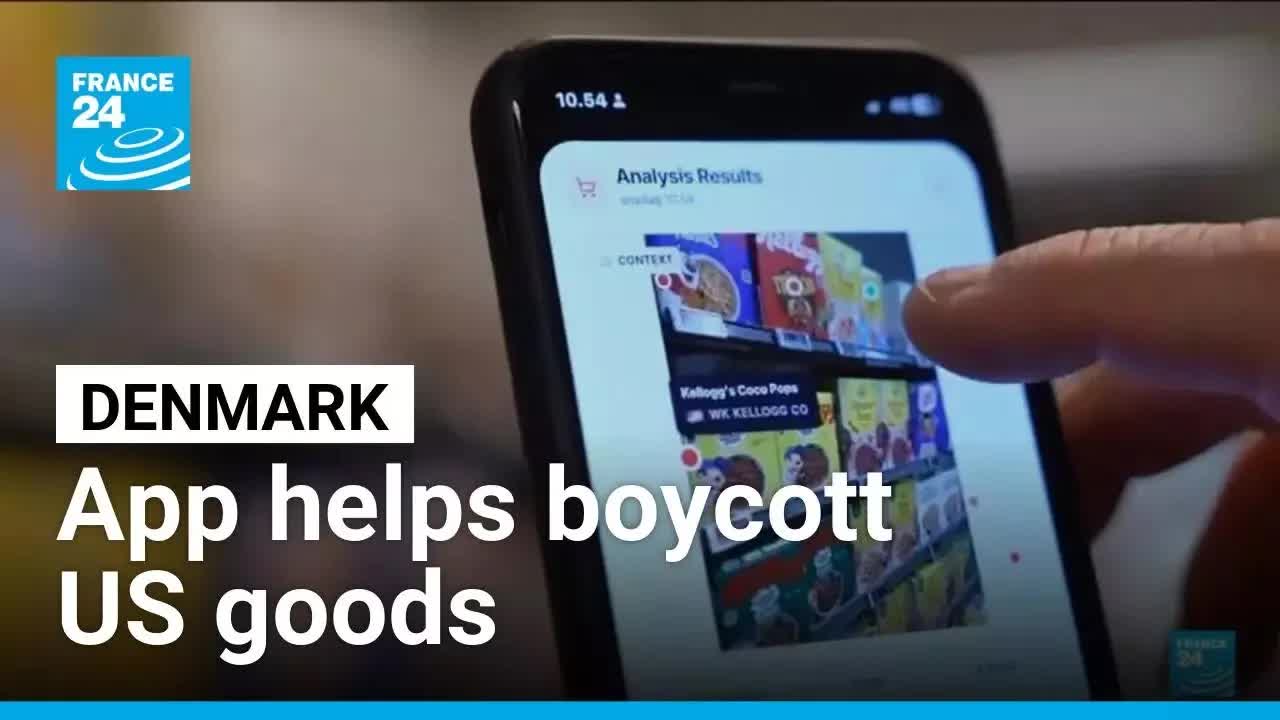
As the diplomatic conflict over Greenland deepens, the movement to boycott US products among Danish consumers is intensifying. Over 95,000 people have joined online boycott communities, showing how heated the sentiment has become.
Here is where the core problem emerges. There is plenty of willpower but no information. At the supermarket, well-known brands like Coca-Cola or Heinz are easy to identify, but for ordinary consumers, it is nearly impossible to determine which company actually owns the countless everyday products from cotton swabs to cereal.
"I am boycotting, but I can only avoid well-known brands. It is impossible to identify all American products."
This kind of real-world feedback is precisely where a technology solution is needed.
How to apply: Recognize the information asymmetry in brand origin when making purchasing decisions -- we know the actual parent company of fewer daily products than we think.
2. One Photo Is All It Takes: AI Identifies Origin and Suggests Alternatives
The app that solved this information asymmetry problem with AI is Made O'Meter. Usage is simple. Just take one photo of any product on the store shelf and you are done.
The key point is that no barcode is needed. Photograph any part of the product and the AI recognizes the image, cross-referencing it against a database of over 2 million products to identify the owning company, country of manufacture, and supply chain information all at once. If a product is not in the database? It automatically scans external sources to provide the most accurate results possible.
Set filters like 'Exclude USA brands' or 'EU brands only' and it automatically recommends European alternative products. It boasts over 95% accuracy and, like Wikipedia, allows users to edit product information directly, meaning data quality improves as more people use it.
"With AI, you just take a photo of the product. Not a barcode, any product. It finds accurate product information across multiple layers so consumers can make decisions based on their own criteria."
How to apply: Download Made O'Meter and scan 3 products in your home. You may be surprised by how complex the ownership structures of many brands actually are.
Tools mentioned:
- Made O'Meter - AI-based product origin identification and alternative recommendations
3. 30,000 Downloads in 3 Days and 80x Daily Scan Surge -- The Secret Was Timing
Made O'Meter was initially a simple web app created as a weekend project in March 2025. At first, about 500 daily scans were all it got, quietly growing through word-of-mouth in online communities of people interested in boycotting.
Then came the turning point. In January 2026, when Greenland acquisition remarks resurfaced at the Davos Forum, anger exploded across Denmark and app downloads surged 1,400%. On January 23rd alone, about 40,000 scans were performed -- 80 times the normal volume. For reference, the competing app NonUSA (UdenUSA) that appeared around the same time recorded a peak of 526 scans per minute.
30,000 downloads occurred in just 3 days, and cumulative downloads surpassed 100,000. Honestly, it is uncommon for a weekend side project to explode to this degree.
What is even more interesting is that the movement spread beyond Denmark. Users appeared in Germany, Spain, Italy, France, and even Venezuela in South America. Given that the top 5 markets are Denmark, Norway, Sweden, and Iceland, the movement has a strong Nordic solidarity character.
How to apply: Remember that explosive growth is possible when market needs align with the timing of external events.
Tools mentioned:
- NonUSA (UdenUSA) - US product identification and boycott support app (competitor)
4. From Tariff Threats to NATO Mediation: The Geopolitical Background Behind the Boycott App
Behind this app phenomenon lies complex geopolitics. President Trump threatened to impose 10% tariffs starting February 1, 2026, rising to 25% by June, on 8 European countries including Denmark. The justification was that these nations opposed America's Greenland acquisition.
However, through mediation by NATO Secretary General Mark Rutte, a 'framework for future agreements on Greenland and the broader Arctic region' was established, and the tariff threats were withdrawn.
Stepping back to look at the bigger picture, experts believe the actual economic impact of food boycotts will be limited. But the real significance of this movement is different. It is not about economic damage -- it demonstrated a new paradigm of 'consumer sovereignty' and 'civic action through technology.'
"I like American people. But the way the American government is treating Europe and Denmark, especially the threats to take Greenland, is unacceptable."
This single sentence captures the sentiment of the Danish people. It is not anti-Americanism but rather a rational consumer response to political actions. This is a case where a single AI app restored information sovereignty to consumers and gave citizens a voice in global geopolitics.
How to apply: Observe the new consumer needs created by geopolitical events. Bridging the gap between outrage and action with technology -- that is the opportunity.
Action Checklist
Today:
- Download the Made O'Meter app and scan products around you
- Check the actual parent companies of brands you use daily
This week:
- Analyze the business model of AI image recognition-based product analysis
- Research app market trends that respond to geopolitical events
Long-term:
- Explore business opportunities in the Consumer Sovereignty Tech space
- Develop a strategy for launching side projects timed to external events
References
Related Tools
| Tool | Purpose | Price | Link |
|---|---|---|---|
| Made O'Meter | AI-based product origin identification app. Scan with one photo, 2M+ product DB | Free (donation-based) | Visit |
| NonUSA (UdenUSA) | Barcode scan-based origin check app. No. 1 on the Danish App Store | Free | Visit |
| Made O'Meter Chrome | Browser extension for checking product origin while shopping online | Free | Visit |
Related Resources
- Apps for boycotting American products surge to the top of the Danish App Store (Article) - TechCrunch's detailed analysis of the boycott app surge in Denmark
- A U.S. product boycott app increases users 1,400% (Article) - Fortune's in-depth report on Made O'Meter user growth
- Boycott US products? New tariffs make people choose European products (Article) - European product transition trends and alternative lists
- How AI-powered apps help European shoppers boycott American products (Article) - Technical analysis of AI-powered boycott apps
- Greenland crisis - Wikipedia (Wiki) - Full timeline and background of the Greenland crisis
Fact-Check Sources
- Over 95% accuracy claim → Made O'Meter official site (Developer's own claim, not independently verified)
- 30,000 downloads in 3 days → AP News report
- US products account for about 1% of Danish food consumption → Danske Bank economist Louise Aggerstrom Hansen
Questions to Consider
Of the products you use daily, how many do you actually know the true country of origin for?
Among the new consumer needs created by geopolitical changes, which ones can be solved with technology?
What were the key factors that allowed a weekend side project to become a 100,000-download app?
Key Takeaways
- 1Download the Made O'Meter app and scan products around you
- 2Check the actual parent companies of brands you use daily
- 3Analyze the business model of AI image recognition-based product analysis
- 4Research app market trends that respond to geopolitical events
- 5Explore business opportunities in the Consumer Sovereignty Tech space
- 6Develop a strategy for launching side projects timed to external events
Want to read this later?
Save this insight to access it anytime
Original Video
3일 만에 3만 다운로드, 덴마크 개발자가 주말에 만든 '불매운동 앱'의 비밀