Lesson 1 / 46 in Mindset & Wellness
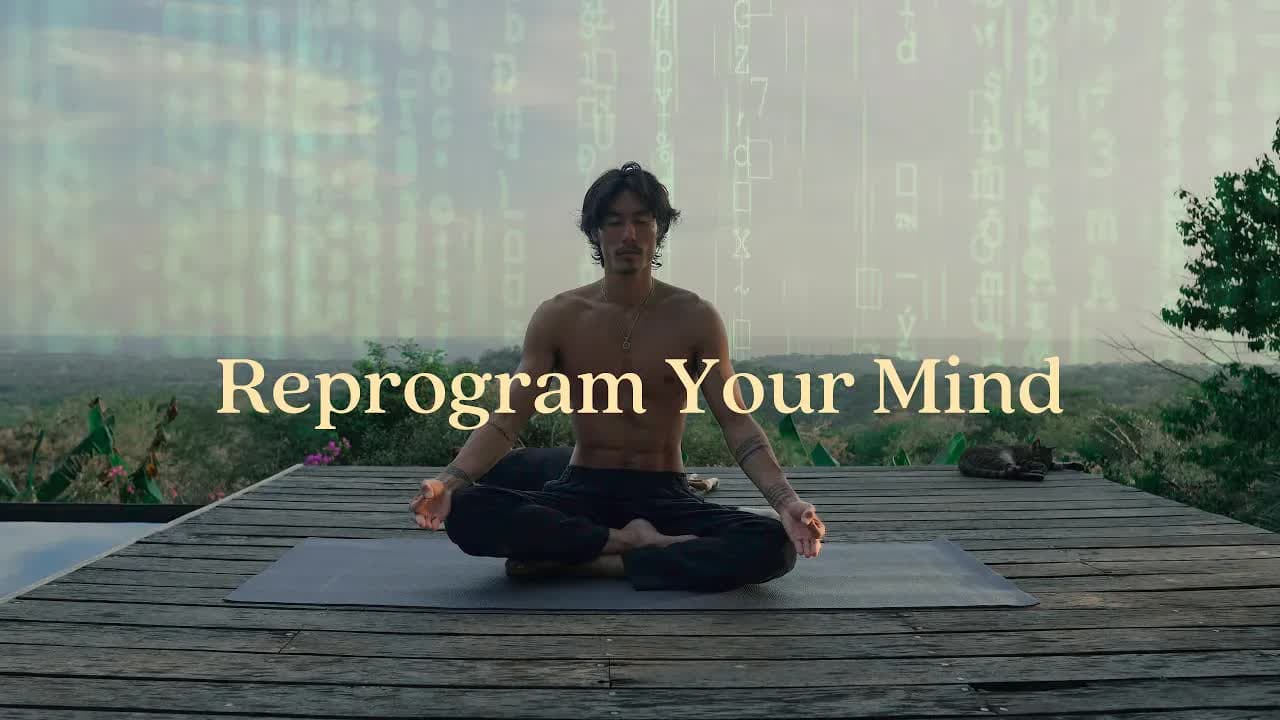
Reprogram Your Subconscious in 13 Minutes: A 5-Step Guided Meditation Technique
TL;DR
From breathing and body scan to energy visualization, gratitude, forgiveness, and manifestation -- a structured meditation routine that redesigns your subconscious with just 13 minutes of daily investment.
Reprogram Your Subconscious in 13 Minutes: A 5-Step Guided Meditation Technique
TL;DR
From breathing and body scan to energy visualization, gratitude, forgiveness, and manifestation -- a structured meditation routine that redesigns your subconscious with just 13 minutes of daily investment.
Key Numbers & Data
| Metric | Value | Context |
|---|---|---|
| Meditation duration | 13 min 15 sec | Short but structured session containing all 5 stages |
| Global meditation market | Approx. 11.7 billion USD (2026) | Projected to grow to approx. 29.7 billion USD by 2035 (CAGR 10.5%) |
| Millennials using digital mindfulness | 45% | Percentage of millennials using digital mindfulness tools |
| AI-personalized meditation preference | 41% | Meditation users who prefer personalized guided sessions |
| Cumulative interest | 1.25M+ views | Global interest in this meditation technique (since 2023 release) |
Context: Why This Matters
As modern stress and anxiety become chronic, the concept of "subconscious reprogramming" is gaining significant attention in self-improvement and meditation communities. Unlike traditional meditation that simply "empties the mind," structured guided meditation combines psychological techniques like body scan, gratitude, forgiveness, and visualization step by step to plant new patterns in the subconscious.
According to the latest research by UC San Diego and Mount Sinai teams in 2025, intensive meditation functionally changes the brain's Default Mode Network (DMN) and Salience Network, inducing BDNF (Brain-Derived Neurotrophic Factor) increase and neuroplasticity enhancement. In simple terms, meditation can physically rewire the brain's circuits.
Body scan meditation in particular is recommended by Cleveland Clinic and UC Berkeley researchers, with reported benefits in stress reduction, sleep improvement, pain relief, and increased self-compassion. Effects are maximized when practiced consistently 3-6 days per week for at least 4 weeks.
Show Nemoto, who systematized this meditation technique, is a mindset coach and TEDx speaker with over 2.5 million social media followers. A former fashion model, he overcame childhood bullying and now works in mind reprogramming through meditation and hypnosis. He coaches entrepreneurs and professionals with his "Live Your Life Like a Movie" philosophy.
Key Insights
1. Why 3 Deep Breaths Open the Door to Meditation
Starting meditation is simpler than you think. Sit comfortably with your back straight, check that no part of your body is in pain, then take 3 deep breaths -- inhale through your nose and exhale through your mouth.
These 3 deep breaths matter because conscious breathing triggers the shift from sympathetic to parasympathetic nervous system. It switches your body from daily mode to relaxation mode. When you focus on the sensation of air entering and leaving your body, mental chatter naturally subsides.
The hardest part of meditation is actually starting. But having this simple ritual of 3 breaths significantly lowers the entry barrier. When you start with the same routine daily, it becomes an anchor that tells your brain "now it's meditation time."
"Feel the air comes in and out from your body"
How to apply: Tonight before bed, take 3 deep breaths -- inhale through the nose, exhale through the mouth. This alone can release the day's tension.
2. From Head to Toe: How Body Scan Awakens Self-Awareness
From the relaxed state after deep breathing, you move directly into body scan. Focus your attention on the top of your head, breathe, and feel the sensations in that area. Then slowly move down through forehead, eyes, nose, cheeks, lips, neck, shoulders, elbows, palms, chest, belly, hips, thighs, knees, calves, to your toes.
UC Berkeley Greater Good Science Center recommends body scan meditation as one of the most effective mindfulness techniques. Cleveland Clinic researchers have also reported it effective for stress reduction, sleep improvement, and pain relief. The key is to feel each area without judgment -- just as it is.
Body scan is not simply feeling the body -- it trains interoception (internal body sensing). Neuroscience research shows that interoceptive training induces neuroplastic changes in the brain's insula, improving emotional regulation ability. When you can accurately read your body's state, you can better manage your emotions.
"We're going to focus on each part of your body and we're going to scan it slowly"
How to apply: Tomorrow morning, try a 2-minute body scan. Feel each area from head to toes for about 5 seconds each as you move downward.
3. Energy Expansion Visualization Starting from a Point of Light on Your Forehead

After body scan comes the energy visualization stage. Focus on your forehead and imagine energy there -- like a light or a fire. Then assign it a color. Any color is fine -- whatever comes naturally to you.
Next is the key part: expand this energy to fill the entire room. Literally imagine yourself inside an energy ball. Feel its temperature and experience its warmth.
This technique works because visualization activates the brain's visual cortex, and interestingly, seeing something and imagining it use similar neural pathways in the brain. This is exactly why athletes in sports psychology use visualization training for performance enhancement.
Finally, visualize this energy dissipating gently like fog -- softly, slowly, beautifully. The process of creating and releasing energy itself builds self-efficacy: "I can control my inner state."
"It's like a light, it's like a fire"
"You're covered, you're inside of this ball of energy"
How to apply: During your next meditation, close your eyes and imagine a light of your favorite color on your forehead. Even 10 seconds starts building your visualization muscle.
4. Gratitude + Forgiveness = The Core Formula for Subconscious Reset

This stage is divided into two parts: first gratitude, then forgiveness.
In the gratitude part, you look back on today or yesterday and visualize things to be grateful for. A cup of tea, coffee, friends, compliments received -- small or big, it doesn't matter. Spend a few minutes visualizing and expressing gratitude. If you find yourself smiling, you're doing it right.
The forgiveness part goes deeper. First, recall someone who has caused you distress. It could be someone who annoyed you today or someone who hurt you in the past. Visualize that person and forgive them. The key message: forgiveness is not for the other person -- it's for yourself. For peace of mind and moving forward.
Then comes self-forgiveness. This is the truly powerful part -- examining whether you're self-sabotaging. Are you blocking your own success and preventing yourself from reaching the life you dream of? Use this opportunity to look inward and restart the journey.
Positive psychology research shows that simply keeping a gratitude journal significantly increases happiness. Here, instead of writing, you experience gratitude through visualization -- which can be even more powerful because sensory gratitude imprints more deeply in the brain.
"You don't forgive them because you have to, you forgive them for yourself"
"It's not a bad thing to take time to breathe"
How to apply: Close your eyes and recall 3 things you're grateful for today. Then (mentally) forgive one person who's been on your mind. You'll be surprised how much lighter you feel.
5. How to Manifest Using All Five Senses
The final and most powerful stage of the meditation. Think of the one thing you want most, and focus on the emotions of having it.
The key is "mobilizing all five senses." Not just visual imagination, but touching (tactile), smelling (olfactory), and feeling the texture (somatosensory). Whether it's an object or a person, feel the skin's texture and even smell it -- experience it as vividly as possible.
Then look around. Where are you? What does that place feel like? Don't suppress emotions -- express them freely. Expand your imagination to the fullest and immerse yourself in visualization for about 1 minute.
Scientifically, this technique aligns with "mental rehearsal" or "vivid visualization." Neuroscience research shows that vividly imagined experiences activate neural patterns in the brain similar to actual experiences. This is the core principle of "subconscious reprogramming" -- when you repeatedly experience (imagine) the reality you want, the brain starts recognizing it as "familiar reality."
When closing the meditation, slowly return to the present moment, take deep breaths, re-sense your body, stretch your neck, shoulders and spine, then open your eyes.
"Use your five senses to really experience what you are visualizing"
"Don't sabotage your emotion to be exposed, let it go, feel it"
How to apply: Tonight before sleep, spend 1 minute imagining the one thing you want most using all 5 senses. See it, touch it, smell it, hear it, taste it. The more specific, the more effective.
Action Checklist
Do today:
- Tonight before bed: 3 nose breaths + 2-minute body scan
- Close eyes and visualize 3 things you're grateful for
- Mentally forgive one person who's been on your mind
This week:
- Start a daily 13-minute guided meditation routine (morning or evening)
- 5-sense visualization practice: pick one desire and vividly imagine it for 1 minute daily
- Set a dedicated meditation space or time (leverage anchor effect)
Long-term:
- Practice consistently for 4+ weeks to maximize body scan effects (UC Berkeley recommended)
- Keep a meditation journal: write 1 line about how you felt after each session
- Create personalized meditation audio to automate your routine
Reference Links
Source Material
- Guided Meditation For Reprogramming Your Mind - SHOW NEMOTO (13:15)
Related Tools
| Tool | Purpose | Price | Link |
|---|---|---|---|
| showmeditation.com | Show Nemoto's customized meditation audio creation service | Contact for pricing | Visit |
| Live Your Life Like a Movie Coaching | 1-on-1 mindset coaching program | Contact for pricing | Visit |
| Insight Timer | World's largest free meditation app, 100K+ guided meditations | Free (premium options available) | Visit |
| Calm | Comprehensive wellness app for sleep, meditation, and relaxation | 69.99 USD/year | Visit |
Related Resources
- Body Scan Meditation Practice Guide (Article) - UC Berkeley Greater Good Science Center's body scan meditation practice guide
- Body Scan Meditation for Beginners (Article) - Cleveland Clinic's body scan meditation beginner guide
- Meditation Retreat Rapidly Reprograms Body and Mind (Article) - UCSD research team's findings on meditation rapidly reprogramming body and mind
- The Risk of Not Being Yourself - Show Nemoto TEDx Talk (Video) - Show Nemoto's TEDx APU talk on the risk of not being yourself
Fact-Check Sources
- Meditation changes the brain's Default Mode Network (DMN) -> https://www.mountsinai.org/about/newsroom/2025/new-research-reveals-that-meditation-induces-changes-in-deep-brain-areas-associated-with-memory-and-emotional-regulation
- Body scan meditation is effective for stress reduction and sleep improvement -> https://pubmed.ncbi.nlm.nih.gov/35538557/
- Visualization activates neural patterns similar to actual experience in the brain -> https://pmc.ncbi.nlm.nih.gov/articles/PMC6753170/
Questions to Consider
Right now, which part of your body holds the most tension? Try focusing your awareness on that area right now.
If there's an emotion you haven't been able to forgive and are still holding onto, how would your daily life change if you let it go?
If you experienced the one thing you want most through all five senses, what would it smell like and what texture would you feel?
Key Takeaways
- 1Tonight before bed: 3 nose breaths + 2-minute body scan
- 2Close eyes and visualize 3 things you're grateful for
- 3Mentally forgive one person who's been on your mind
- 4Start a daily 13-minute guided meditation routine (morning or evening)
- 55-sense visualization practice: pick one desire and vividly imagine it for 1 minute daily
- 6Set a dedicated meditation space or time (leverage anchor effect)
- 7Practice consistently for 4+ weeks to maximize body scan effects (UC Berkeley recommended)
- 8Keep a meditation journal: write 1 line about how you felt after each session
- 9Create personalized meditation audio to automate your routine
Want to read this later?
Save this insight to access it anytime
Original Video
Guided Meditation For Reprogramming Your Mind