Lesson 7 / 46 in Mindset & Wellness
Learn Core Mindfulness in 1 Minute: A 3-Step Focus Training to Strengthen Your Brain

TL;DR
Mindfulness is a scientifically validated stress management technique that strengthens your brain's focus muscle by repeating just three steps: focus, wander, and return — no special tools required.
Learn Core Mindfulness in 1 Minute: A 3-Step Focus Training to Strengthen Your Brain
One-Line Summary
Mindfulness is a scientifically validated stress management technique that strengthens your brain's focus muscle by repeating just three steps: focus, wander, and return — no special tools required.
Key Numbers & Data
| Metric | Value | Context |
|---|---|---|
| Global meditation market (2025) | Approx. 7.5 billion USD | Growing 13.1% CAGR, projected to reach 17.8 billion USD by 2032 |
| Stress reduction effect | 85% | 85% stress reduction over 4 months with just 5.2 minutes of daily meditation (UCSF clinical trial) |
| MBSR research history | 40+ years | Jon Kabat-Zinn's MBSR program backed by over 40 years of scientific research |
| Time for brain changes | 8-12 weeks | Regular mindfulness practice confirmed to increase prefrontal cortex size and connectivity |
| Video views | 94,000+ | 1-minute mindfulness guide produced by Rush University Medical Center |
Background: Why This Matters
As modern stress levels reach all-time highs, interest in non-pharmacological stress management has exploded. Mindfulness is not just a meditation trend — it is a psychotherapy technique validated by over 40 years of scientific research. Meta-analyses show that MBSR (Mindfulness-Based Stress Reduction) programs are as effective as standard psychotherapy for reducing anxiety, depression, and chronic pain.
The challenge is knowing how to start. A standard 8-week MBSR program costs around 400 USD (200 USD for students) and requires 2 hours per week. For those too busy for such programs, understanding the core principles is a crucial first step.
Rush University Medical Center's mindfulness expert Rebecca Bunn condenses the essence of mindfulness into just 1 minute. This approach, distilling 40 years of research into three steps, makes clear that mindfulness is not mysterious or difficult — it is "brain muscle training" anyone can do.
Rebecca Bunn leads quarterly MBSR programs at Rush University Medical Center and practices as a psychotherapist at Northwestern University's Family Institute. She is MBSR-certified through the UMass Center for Mindfulness.
Related market data:
- Global meditation market approx. 7.51 billion USD in 2025, projected 17.78 billion USD by 2032 (CAGR 13.1%) (Source: Coherent Market Insights)
- Average 5.2 minutes of daily meditation reduced stress by 85% over 4 months (UCSF trial, 1,458 participants) (Source: UCSF Randomized Clinical Trial)
- 30 days of mindfulness training significantly improves attention speed and accuracy regardless of age (Source: USC Leonard Davis School of Gerontology)
- 45% of millennials use digital mindfulness tools (Source: Grand View Research)
- Meditation app market revenue 5.72 billion USD in 2025 (Source: Statista)
Key Insights
1. Mindfulness Is Awareness of the "Here and Now"
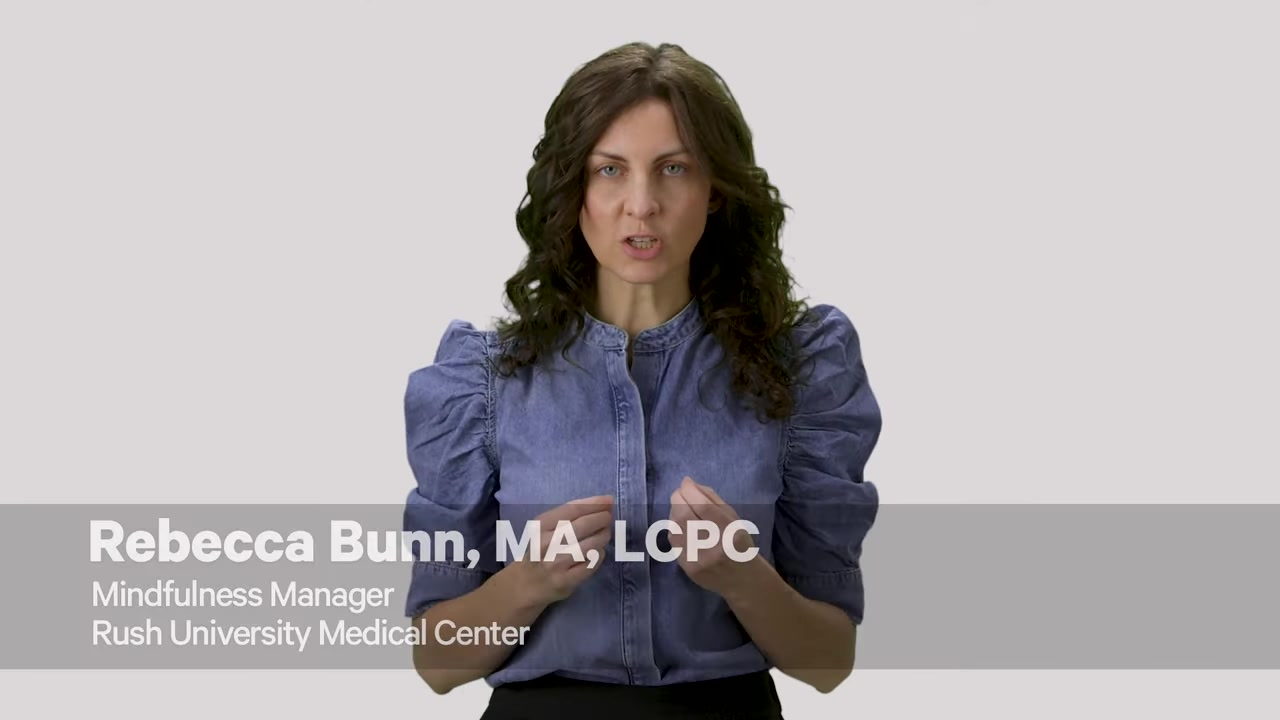
When people hear "mindfulness," many picture sitting on a meditation cushion with eyes closed. But the actual definition is far simpler and more everyday. Mindfulness is the awareness of what is happening within and around us in the present moment. That is all there is to it.
The keyword is "present moment." When we are stressed, most of our suffering comes from regretting the past or worrying about the future — agonizing over things that haven't happened yet or replaying events that are already over. Mindfulness is the skill of breaking that pattern and returning to "right now."
This is not mere philosophy — it is verified by neuroscience. A 2025 USC School of Gerontology study found that 30 days of mindfulness meditation training significantly improved attention speed and accuracy regardless of age, measured using objective eye-tracking tools.
"Mindfulness is the awareness of what's going on within and around us in the present moment."
How to apply: Three times today, pause for 30 seconds each time and ask yourself: "What am I seeing, hearing, and feeling right now?"
2. Your Brain's "Focus Muscle" Gets Stronger with Practice

The most important insight: the mind is like a muscle. This analogy may seem simple, but it accurately reflects what neuroscience calls "neuroplasticity."
Neuroplasticity is the brain's ability to physically change through experience and training. A 2024 systematic review published in MDPI found that mindfulness increases cortical thickness, reduces amygdala reactivity, improves brain connectivity, and enhances neurotransmitter levels. Specifically, 8-12 weeks of regular mindfulness practice has been shown to increase both the size and connection strength of the prefrontal cortex — the region responsible for focus and decision-making.
Honestly, your mind wandering is not failure. Mind-wandering is the brain's default setting. What matters is the number of "reps" — noticing the wandering and returning. Just like building biceps requires repeatedly lifting and lowering dumbbells, building focus muscle requires cycling through "focus, wander, return."
"The good news is that the mind is like a muscle and we can strengthen our capacity to be mindful with practice."
How to apply: When your mind wanders, instead of self-blame, count "noticing the wandering" as one "rep" of your focus muscle workout.
3. Five Senses Are Your Anchor to the Present

Once you understand the principle, the next question is "how." Here, the senses become a concrete tool. What you see, hear, feel in your body, think, and emotionally feel — these five channels connect you to the present moment.
This is not abstract — it is highly practical. For example, if anxiety spikes during a meeting, pause and think: "Let me notice the pressure of my body against the chair." Or notice: "I can hear the air conditioning." Since senses only exist in the present, the moment you pay attention to them, you automatically return to the here and now.
MBSR programs use this principle in various exercises. "Body scan" involves observing bodily sensations sequentially from head to toe. "Mindful eating" means noticing the color, aroma, texture, and taste of food one at a time. Rush University's MBSR program runs for 8 weeks, 2 hours per week, systematically teaching these sensory-based mindfulness techniques.
"We connect to the present moment using our senses, being aware of what we see, hear, feel in the body, including the thoughts we think and the emotions we feel."
How to apply: Practice the "5-4-3-2-1 grounding technique": find 5 things you see, 4 things you hear, 3 things you can touch, 2 things you smell, and 1 thing you taste.
4. Focus, Wander, Return: These 3 Steps Are Everything

Here, the entire mindfulness process compresses into three steps. First, pay attention to the present moment. Second, your mind wanders (this will inevitably happen — it is natural). Third, notice the wandering and return to the present. That is it.
This formula is powerful because it removes the concept of failure. Many people try meditation and give up thinking "I can't focus, so meditation isn't for me." But mind-wandering is not failure — it is part of the process. The moment you notice the wandering and return is when the real "workout" happens. Just as muscles actually grow during the strenuous moment of lifting weights.
A 2025 Carnegie Mellon University study found that practicing just 3 times per week, 10-21 minutes per session through a meditation app produced measurable health effects including blood pressure reduction, decreased repetitive negative thinking, and changes in inflammation-related gene expression. The key is not "perfect focus" but "consistent repetition."
"We focus our attention, the mind wanders, we bring it back. It's simple, but not easy."
How to apply: Set 3 alarms on your phone per day. Each time the alarm goes off, practice a 1-minute micro-meditation focusing on your breath.
Mentioned tools:
- Headspace - Beginner-friendly guided meditation app
- Calm - Comprehensive wellness app for sleep, meditation, and relaxation
- Insight Timer - Free meditation timer and guided meditation community
5. Be Kind to Yourself: The Hidden Core of Mindfulness

This final message may be the most important. You must be kind and accepting of yourself. Many people approach mindfulness with the pressure to "do it right." They blame themselves when focus slips and feel they have failed when thoughts arise.
But this perfectionist attitude is actually mindfulness's greatest enemy. Self-compassion is an essential component of mindfulness. Even Jon Kabat-Zinn, who developed MBSR, emphasized the principle of "observing the present without judgment" — and that includes judgment of your own imperfections.
Scientifically, self-compassion is directly linked to reduced cortisol (stress hormone) levels. Meta-analyses show that MBSR participants' cortisol levels decreased significantly after the program, with the effect being especially strong among participants with higher self-acceptance attitudes. The real secret of mindfulness is not "perfect focus" but "accepting your imperfections while consistently practicing."
"It's simple, but not easy. So we should be kind and accepting of ourselves when we practice mindfulness."
How to apply: When your mind wanders, make it a habit to say internally: "It's okay, this is normal." Celebrate the noticing itself rather than blaming yourself.
Action Checklist
Do today:
- Right now, focus on your breath for 1 minute: pay attention only to the sensation of air entering and leaving
- Set 3 daily "mindfulness reminders" on your phone (10 AM, 2 PM, 8 PM)
- Try the 5-4-3-2-1 grounding technique once
This week:
- Install a free meditation app (Insight Timer, etc.) and start 5 minutes of guided meditation daily
- Convert one meal per day into "mindful eating" (focus on taste, aroma, texture)
- Create a 3-minute body scan routine before bed (observe bodily sensations from head to toe)
Long-term:
- Consider enrolling in an 8-week MBSR program (online courses approx. 200-400 USD)
- Join a 30-day mindfulness challenge to build it into a habit
- Propose introducing a "Mindful Minute" at your workplace or on your team
Reference Links
References
- Practicing Mindfulness - Rush University System for Health (0:59)
Related Tools
| Tool | Purpose | Price | Link |
|---|---|---|---|
| Headspace | Beginner-friendly guided meditation app for mindfulness, sleep, exercise, focus | 12.99 USD/mo or 69.99 USD/yr | Visit |
| Calm | Comprehensive wellness app with sleep stories, meditation, music, masterclasses | 14.99 USD/mo or 69.99 USD/yr | Visit |
| Insight Timer | 200,000+ free guided meditations, meditation timer, global community | Free (premium 59.99 USD/yr) | Visit |
| Rush University MBSR Program | Official MBSR program based on Jon Kabat-Zinn's work, 2-hour weekly classes + full-day retreat, online via Zoom | 400 USD (students 200 USD), 8-week course | Visit |
Related Resources
- NCCIH: Meditation and Mindfulness — Effectiveness and Safety (Article) - NIH comprehensive review of mindfulness research
- Neurobiological Changes Induced by Mindfulness: Systematic Review (Article) - 2024 systematic review of neurobiological changes from mindfulness
- Meditation Apps Deliver Real Health Benefits (CMU) (Article) - Carnegie Mellon research on real health benefits from meditation apps
Fact-check Sources
- The mind is like a muscle and mindfulness can be strengthened with practice → https://www.mdpi.com/2227-9059/12/11/2613
- We can connect to the present moment through our senses → https://www.rush.edu/treatments/mindfulness-based-stress-reduction-mbsr
Questions to Consider
If you paused for just 1 minute to focus on your breath during your most stressful moment of the day, how might your response change?
If you viewed mind-wandering as a "practice opportunity" rather than "failure," how would your approach to meditation change?
What compounding effects could a daily 5-minute mindfulness investment create over time for your health, relationships, and productivity?
Key Takeaways
- 1Right now, focus on your breath for 1 minute: pay attention only to the sensation of air entering and leaving
- 2Set 3 daily "mindfulness reminders" on your phone (10 AM, 2 PM, 8 PM)
- 3Try the 5-4-3-2-1 grounding technique once
- 4Install a free meditation app (Insight Timer, etc.) and start 5 minutes of guided meditation daily
- 5Convert one meal per day into "mindful eating" (focus on taste, aroma, texture)
- 6Create a 3-minute body scan routine before bed (observe bodily sensations from head to toe)
- 7Consider enrolling in an 8-week MBSR program (online courses approx. 200-400 USD)
- 8Join a 30-day mindfulness challenge to build it into a habit
- 9Propose introducing a "Mindful Minute" at your workplace or on your team
Want to read this later?
Save this insight to access it anytime
Original Video
1분 만에 배우는 마음챙김 핵심 원리: 뇌 근육 강화하는 3단계 집중 훈련법