Lesson 8 / 46 in Mindset & Wellness
Beat Procrastination with 5-Minute Meditation: A 3-Step Guide to Boosting Focus and Execution
TL;DR
A practical routine that resets distraction and procrastination with just 5 minutes of guided meditation, then restores focus and drive through affirmations.
Beat Procrastination with 5-Minute Meditation: A 3-Step Guide to Boosting Focus and Execution
One-Line Summary
A practical routine that resets distraction and procrastination with just 5 minutes of guided meditation, then restores focus and drive through affirmations.
Key Numbers & Data
| Metric | Value | Context |
|---|---|---|
| Meditation duration | 5 minutes | Ultra-short routine you can do before work, before studying, or during a break |
| Meditation market size (2025) | 9.7 billion USD | 21.5% YoY growth, projected to reach 17.8 billion USD by 2032 |
| Meditation app user preference | 41% | 41% of all users prefer personalized guided sessions |
| Stress reduction effect | 85% | 85% stress reduction sustained for 4 months with an average of 5.2 minutes of daily meditation (USC study) |
| Employee productivity boost | 8-12% | Productivity gains in companies that adopted mindfulness programs |
Background: Why This Matters
The average human attention span keeps shrinking, and distraction caused by smartphones and social media has become the biggest enemy of workplace productivity. Procrastination isn't simple laziness — psychology has established it as an "emotion-based avoidance strategy." The more important a task is, the more anxiety and resistance it triggers, and we end up spending time on less important things to escape that discomfort.
Mindfulness meditation is a scientifically validated method for breaking this vicious cycle. Research shows that higher mindfulness levels correlate with lower procrastination frequency, and meditation improves emotional regulation, which reduces resistance itself. The fact that even 5 minutes can activate the brain's attention control system makes it one of the most accessible self-management tools for busy professionals.
Aileen Xu is a lifestyle creator and founder of Lavendaire, with a USC Business & Communication background. She has 2.3 million+ followers, 11 million podcast downloads, and is the author of the bestselling "Artist of Life Workbook." She has spoken at TEDxYouth, Stanford, Google, and LinkedIn.
Related market data:
- Global meditation market size 9.7 billion USD (2025), 21.5% YoY growth (Source: The Business Research Company)
- Meditation app market 2.25 billion USD (2025) projected to reach 7.6 billion USD (2033), CAGR 18.5% (Source: Straits Research)
- 45% of millennials use digital mindfulness tools (Source: Expert Market Research)
- Average 5.2 minutes/day meditation yields 85% stress reduction sustained for 4 months (USC study) (Source: USC Leonard Davis School of Gerontology)
- Companies with mindfulness programs see 8-12% employee productivity gains, 50% reduction in turnover (Source: The Mindfulness App / SAP)
Key Insights
1. Reset Your Brain with 3 Deep Breaths

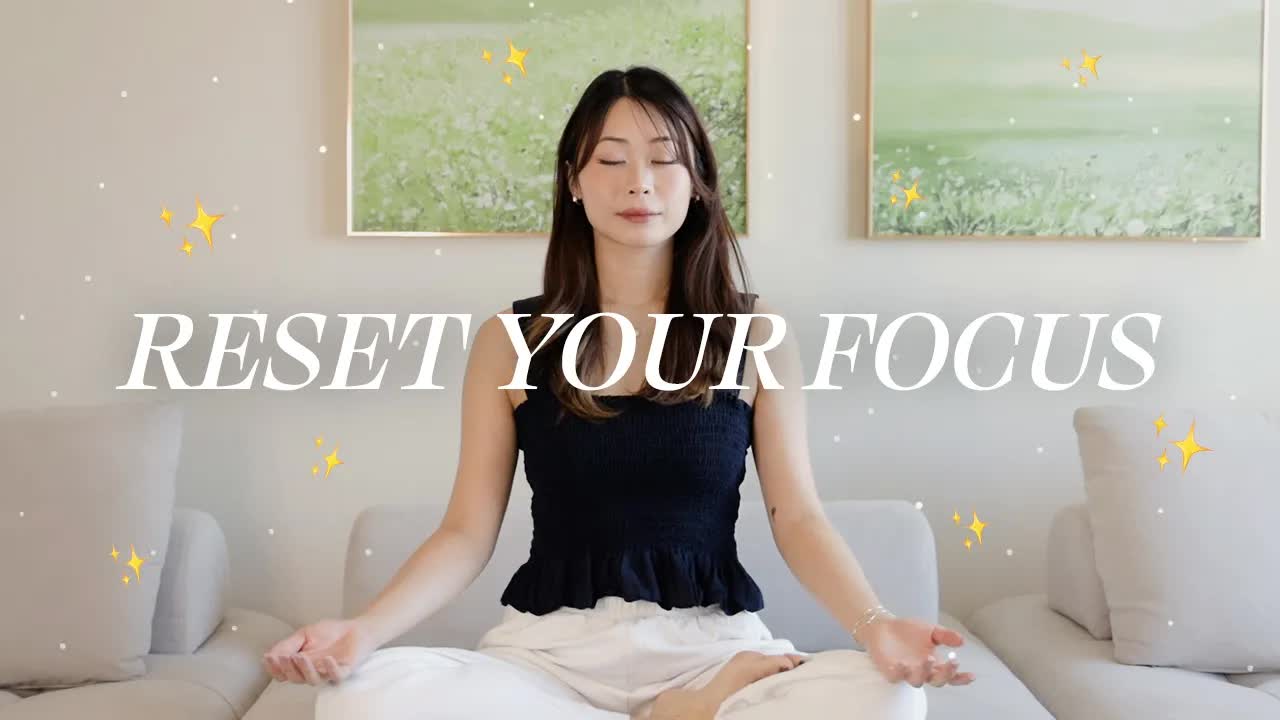
The first step of meditation is physically setting up your body. Sit comfortably, close your eyes, and place your palms facing up on your knees. Facing palms upward represents a posture of "receptivity," psychologically creating an open state.
The key here is repeating the "inhale through the nose, exhale through the mouth" breathing pattern exactly 3 times. This isn't simple relaxation. From a neuroscience perspective, deep breathing stimulates the vagus nerve, activating the parasympathetic nervous system. In plain terms, it's like flipping a switch from "fight-or-flight" mode to "rest-and-digest" mode.
The most important practical point is the clear count of "3 times." Having a defined number eliminates the anxiety of "how long should I keep doing this?" and lets you focus solely on breathing. For meditation beginners, this makes a huge difference.
"Take a deep breath in through your nose, and exhale out through your mouth."
How to apply: Before starting work, close your eyes at your desk and do 3 rounds of "nose inhale, mouth exhale." No timer needed — just 3 breaths.
2. The Power of Reframing: Procrastination Is Resistance, Not You

After stabilizing your body with breathing, the next step is shifting your mental frame. First, bring attention to physical sensations — the floor under your feet, the air flowing through your lungs. Focusing on specific bodily sensations naturally pulls you out of thought spirals.
The truly pivotal shift happens here. When we procrastinate, we typically blame ourselves: "I have no willpower," "I'm lazy." But this meditation offers a completely different perspective.
"Procrastination is not who you are. It's just a symptom of resistance." This single sentence creates an enormous psychological shift. Psychology defines procrastination as an "emotion-focused coping strategy" — the more important a task is, the greater the fear of failure, perfectionism, and uncertainty, generating uncomfortable emotions that we avoid through procrastination.
"It's uncomfortable because you care." This reframe is powerful because it transforms the "discomfort" that caused procrastination into "evidence of meaning." The anxiety doesn't disappear, but its meaning changes.
Mindfulness-based research shows that simply recognizing and reinterpreting thought patterns significantly reduces procrastination frequency.
"Procrastination is not who you are. It's just a symptom of resistance."
"It's uncomfortable because you care."
How to apply: Next time you catch yourself procrastinating, instead of thinking "I'm lazy," tell yourself "This is proof that I care about this task."
3. Why Visualizing Your Future Self Boosts Execution

The third turning point is expanding your time perspective. It starts with the message "Your greatest power is in the present moment" — and this isn't a simple meditation cliche.
Psychology has a concept called "temporal discounting." Humans instinctively choose immediate comfort over future rewards. This is the core mechanism behind procrastination — "the pleasure of watching YouTube now > the satisfaction of completing the project later."
This meditation overcomes temporal discounting bias with the phrase "Your future self will thank you." Research actually shows that vividly imagining your future self reduces the temporal discounting effect. Instead of a vague "later," setting a specific beneficiary — "my future self" — gives meaning to present action.
Brain imaging studies (fMRI) have shown that self-affirmation simultaneously activates self-related processing (medial prefrontal cortex) and reward systems (ventral striatum). This effect is amplified when recalling future-oriented core values.
"Remember that your greatest power is in the present moment."
"You are doing this for your future self, and your future self will thank you."
How to apply: If you're putting off a big project, specifically imagine "What would the me from one week later say to the me right now?" Write it on a sticky note and put it on your monitor.
4. 7 Science-Backed Affirmations That Boost Execution Energy
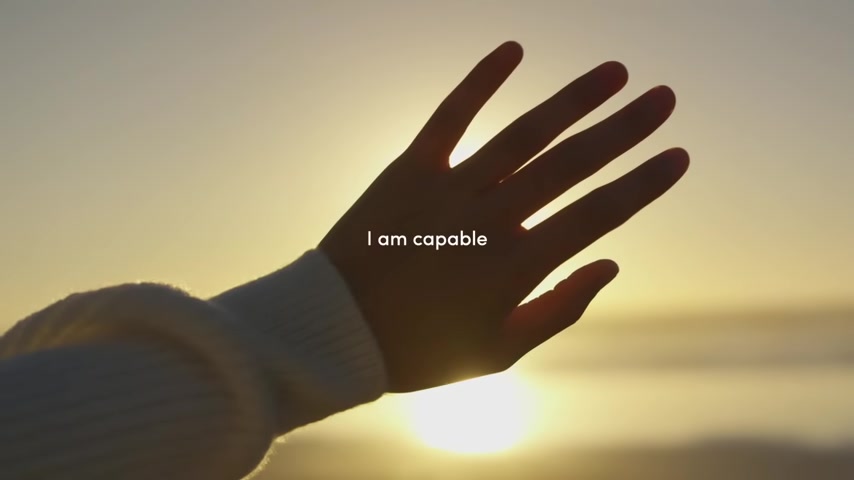
The latter half of the meditation consists of an affirmation sequence. Seven affirmations are arranged in a very deliberate order, and examining the structure reveals a strategic design.
The first three are state affirmations: "I am focused," "I am calm," "I am confident." They define your current state first. Then "I am capable" confirms ability, "My power is in the present moment" sets a temporal anchor, "I believe in myself" builds self-trust, and "I take one step at a time" lowers the burden of execution. Finally, "I can handle the task in front of me," "I am ready to take action," and "I move forward with ease" elevate execution energy.
From a neuroscience perspective, affirmations simultaneously activate the brain's self-related processing area (medial prefrontal cortex) and reward system (ventral striatum). In simple terms, when you say "I am capable," your brain responds as if it actually received a reward.
One caveat: research also shows that forcing positive affirmations when self-esteem is very low can backfire. For affirmations to work, they should be at a "slightly stretching" level rather than completely unrealistic. That's precisely why the affirmations in this meditation are designed at an immediately achievable level like "I can handle the task in front of me" rather than unrealistic goals like "I am rich."
"I am focused. I am calm. I am confident. I am capable."
"I take one step at a time."
How to apply: Every morning while washing your face, look in the mirror and repeat "I can accomplish the most important task today" 3 times. The key is making it specific to one real task you need to do today.
5. The "Anchoring" Technique That Connects Meditation to Immediate Action

The meditation's closing is the most strategic part of the entire routine. After the final deep breath, you slowly open your eyes as the instruction comes: "Bring this confident, focused energy into your next action step."
This matters because while most meditations end with a "peaceful conclusion," this one ends with an "action bridge." Psychology has a concept called "implementation intention" — setting a specific intention like "When X situation happens, I will do Y action" increases actual execution probability by 2-3x.
This meditation plants the implementation intention: "The moment you open your eyes = start the next action." It serves as a bridge to immediately start the task you've been putting off, rather than opening social media again after meditation.
The brief closing "You got this" is also strategic. It concludes with a tone of firm conviction rather than soft encouragement, letting you carry both the calmness of the meditative state and the vitality of execution energy.
"Bring this confident, focused energy into your next action step. You got this."
How to apply: Right before meditation, decide "1 thing I'll do immediately after meditation." Within 5 seconds of opening your eyes, begin the first physical action for that task (opening your laptop, clicking a file, etc.).
Mentioned tools:
- Resonance by Lavendaire - Meditation, affirmations, and sound healing app with 400+ guided audio sessions
Action Checklist
Do today:
- Set a 5-minute timer right now and follow this meditation routine once
- Write the 1 thing you're currently procrastinating on a sticky note and put it on your monitor
- Next time you procrastinate, reframe it as "This is proof that this task matters"
This week:
- Set up a daily 5-minute pre-work meditation routine (add a recurring event to your calendar)
- Customize 3 affirmations to fit your current situation (e.g., "I can finish this report today")
- Build the habit of deciding "1 thing to do right after meditation" before each session
Long-term:
- Gradually extend meditation time: 5 min, 10 min, 15 min
- Add a "procrastination pattern analysis" item to your weekly review
- Try meditation apps like Resonance and Headspace to find the right tool for you
Reference Links
References
- 5 Minute Meditation for Focus & Clarity | Beat Procrastination & Distraction - Lavendaire (5:55)
Related Tools
| Tool | Purpose | Price | Link |
|---|---|---|---|
| Resonance by Lavendaire | Meditation, affirmations, sound healing, frequency therapy with 400+ content pieces. 2.6M+ users | 24.99 USD/month or 159.99 USD/year (14-day free trial) | Visit |
| Headspace | World's largest meditation app. Programs from 5-minute short meditations to sleep, focus, and exercise | 12.99 USD/month or 69.99 USD/year | Visit |
| Insight Timer | 150K+ free guided meditations. Strong community and timer features | Free (Premium 59.99 USD/year) | Visit |
Related Resources
- How Mindfulness Can Reduce Procrastination (Article) - Psychology Today article analyzing the correlation between mindfulness and procrastination
- Mindfulness Meditation Can Sharpen Attention in Adults of All Ages (USC study) (Article) - USC study showing 30-day mindfulness meditation improves attention across all ages
- Self-affirmation activates brain systems associated with self-related processing and reward (Article) - fMRI study on affirmation activating self-related processing and reward systems in the brain
- The Science of Affirmations: The Brain's Response to Positive Thinking (Article) - Comprehensive guide on the neuroscientific mechanisms and effects of positive affirmations
Fact-check Sources
- Procrastination is a "symptom of resistance," not a personality trait → https://solvingprocrastination.com/procrastination-study-mindfulness/
- Higher mindfulness levels correlate with less procrastination → https://www.sciencedirect.com/science/article/abs/pii/S1041608022001315
- Affirmations activate the brain's reward system → https://pmc.ncbi.nlm.nih.gov/articles/PMC4814782/
Questions to Consider
What is the one thing you're procrastinating on the most right now? Can you write in one sentence why it feels uncomfortable?
If the you from one week in the future could send a message to the you of today, what would they say?
Why is it so hard to invest just 5 minutes a day in self-care? What is the real reason blocking those 5 minutes?
Key Takeaways
- 1Set a 5-minute timer right now and follow this meditation routine once
- 2Write the 1 thing you're currently procrastinating on a sticky note and put it on your monitor
- 3Next time you procrastinate, reframe it as "This is proof that this task matters"
- 4Set up a daily 5-minute pre-work meditation routine (add a recurring event to your calendar)
- 5Customize 3 affirmations to fit your current situation (e.g., "I can finish this report today")
- 6Build the habit of deciding "1 thing to do right after meditation" before each session
- 7Gradually extend meditation time: 5 min, 10 min, 15 min
- 8Add a "procrastination pattern analysis" item to your weekly review
- 9Try meditation apps like Resonance and Headspace to find the right tool for you
Want to read this later?
Save this insight to access it anytime
Original Video
5분 명상으로 미루기 습관 끊는 법: 집중력과 실행력을 동시에 잡는 3단계 가이드