Lesson 15 / 46 in Mindset & Wellness
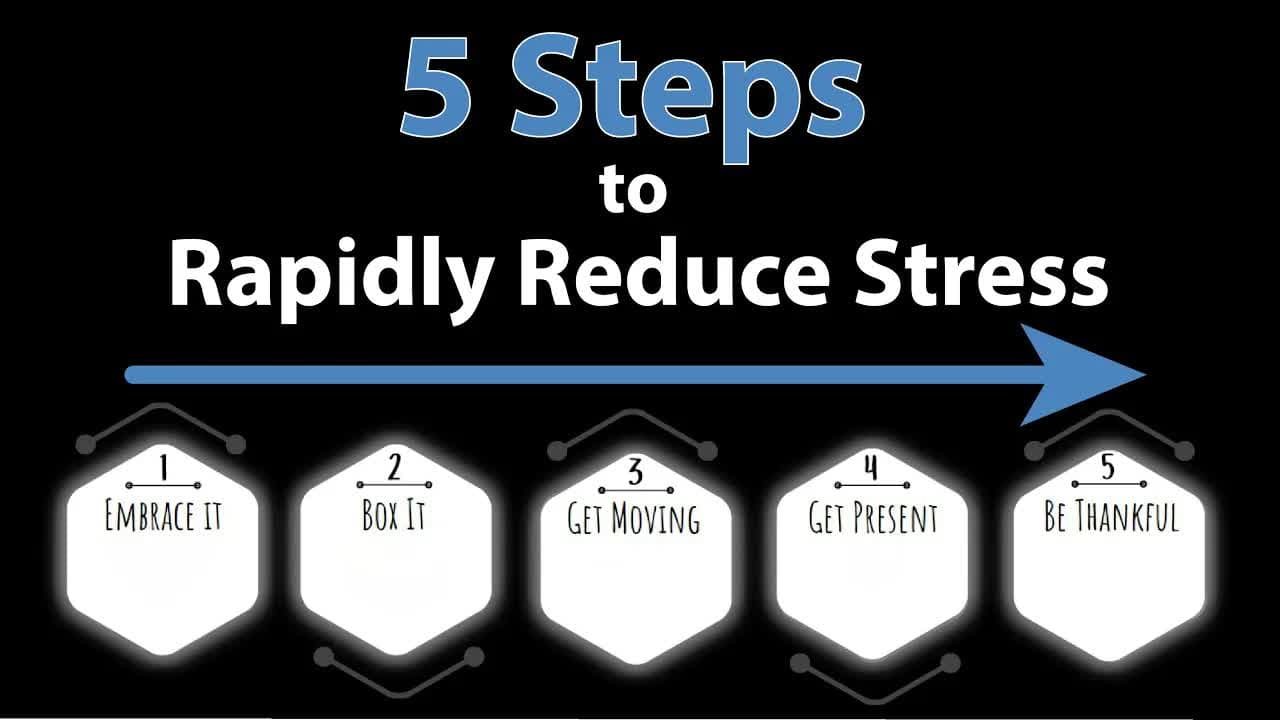
Rapidly Reset Stress in 5 Steps: Science-Backed Techniques Used by Navy SEALs
TL;DR
Stop avoiding stress — from the perception shift that turns a 43% mortality increase to 0%, to Navy SEAL box breathing, here are 5 stress reset techniques you can use right now.
Rapidly Reset Stress in 5 Steps: Science-Backed Techniques Used by Navy SEALs
One-Line Summary
Stop avoiding stress — from the perception shift that turns a 43% mortality increase to 0%, to Navy SEAL box breathing, here are 5 stress reset techniques you can use right now.
Key Numbers & Data
| Metric | Value | Context |
|---|---|---|
| Stress perception and mortality | 43% increase to 0% | In an 8-year study of 30,000 people, only those who believed stress was harmful had 43% higher mortality; those who saw stress as neutral/positive had zero increase |
| Box breathing duration | 3 minutes | Repeating 4-4-4-4 breathing at least 6 times activates the parasympathetic nervous system, visibly reducing heart rate and anxiety |
| 5 Second Rule countdown | 5-4-3-2-1 | Time needed to shift control from the amygdala (fear/anxiety) to the prefrontal cortex (decision-making) |
| Global workplace stress management market | Approx. 10 billion USD (2025) | Projected to reach 14.3 billion USD by 2030 (CAGR 7.5%); workplace stress causes 300 billion USD in annual economic losses |
| Estimated premature deaths from stress | 182,000/year | Researchers estimate that the mere belief that stress is harmful caused over 20,000 premature deaths annually in the US over 8 years |
Background: Why This Matters
Nearly half of modern workers experience burnout. Microsoft surveyed 20,000 people across 11 countries and found that 50% of employees and 53% of managers reported burnout. Gallup's global survey also found over 40% of workers worldwide experience significant stress throughout the day.
The problem is not stress itself but our attitude toward it. When stressed, we instinctively reach for our phones, grab snacks, or avoid the problem entirely. But this is like putting problems on a credit card — they come back later with interest as even greater stress.
Fortunately, there are scientifically validated methods. Stanford's Dr. Kelly McGonigal, former Navy SEAL Commander Mark Divine, and Stoic philosophy researcher Professor William Irvine, among other experts, offer techniques that, when organized into 5 steps, can help anyone reset stress to the "sweet spot" within minutes.
Key Insights
1. The Belief That Stress Is Harmful Is the Real Killer
Do not aim for a stress-free life. Instead, the key is finding your "stress sweet spot."
Think of the inverted U-curve (Yerkes-Dodson law). Too little stress and you lack motivation; too much and you become paralyzed by obligations, people, and situations. When paralyzed, most people escape to phones or food — but that is like putting problems on a credit card, with interest.
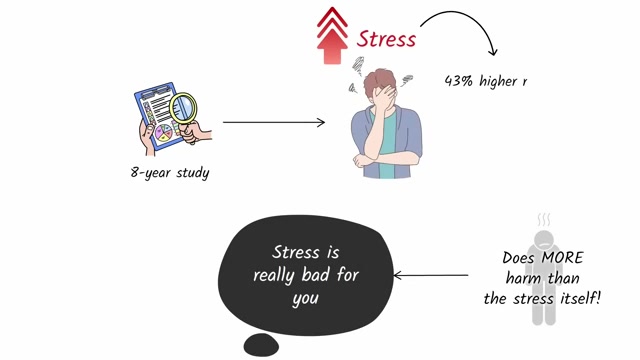
Here is the shocking research: In a massive study tracking 30,000 Americans over 8 years, those reporting high stress had 43% higher mortality risk. That makes stress appear deadlier than skin cancer, HIV, or homicide. But here is the twist — that 43% increase applied only to those who perceived stress as harmful. Those who viewed stress as neutral or beneficial? Their mortality increase completely disappeared, and they even had lower death rates than those with minimal stress.
Dr. Kelly McGonigal explains in "The Upside of Stress": when you view stress negatively, blood vessels constrict and stress accumulates. But when you see stress as a performance booster, blood vessels relax, delivering more oxygen along with DHEA (a learning-promoting hormone) and oxytocin (a hormone that gives courage to seek help).
"Believing stress is bad does more harm than the stress itself."
"This stress is a sign that I care, and embracing stress increases my ability to seek help and remember valuable lessons."
How to apply: When you feel stress, tell yourself: "This stress is a signal that I care about this." Perception shift alone changes your body's physical response.
2. Navy SEAL 4-4-4-4 Box Breathing: Reset in Under 3 Minutes
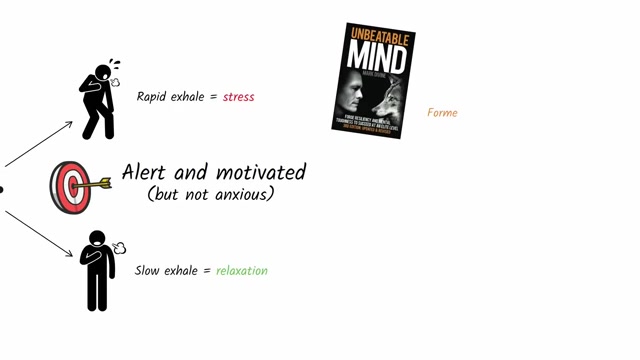
Breathing is the fastest tool to change your emotional state. Try it: breathe in for 4 seconds and exhale quickly — you feel a jolt of tension. Reverse it — breathe in for 4 seconds and exhale slowly and long — a wave of relaxation washes over you. Long exhales calm; short exhales energize.
To stay in the stress sweet spot, optimize your breathing with "box breathing." Former Navy SEAL Commander Mark Divine introduced this technique in "Unbeatable Mind" — it is the breathing method Navy SEALs actually use before entering extreme situations like hostage rescues.
The method is simple: 4 seconds inhale, 4 seconds hold, 4 seconds exhale, 4 seconds hold. Repeat this cycle at least 6 times. Scientifically, this pattern activates the parasympathetic nervous system. Holding your breath raises blood CO2 levels, triggering a cardio-inhibitory response that lowers heart rate and calms the sympathetic (fight-or-flight) response.
"Your breath is the fastest way to change how you feel."
"Four in, four hold, four out, four hold, and repeat at least six times."
How to apply: Try 6 rounds of box breathing right now. 4-second inhale, 4-second hold, 4-second exhale, 4-second hold. Set your phone timer to 4 seconds to keep rhythm.
3. Break Paralysis with the 5-4-3-2-1 Countdown
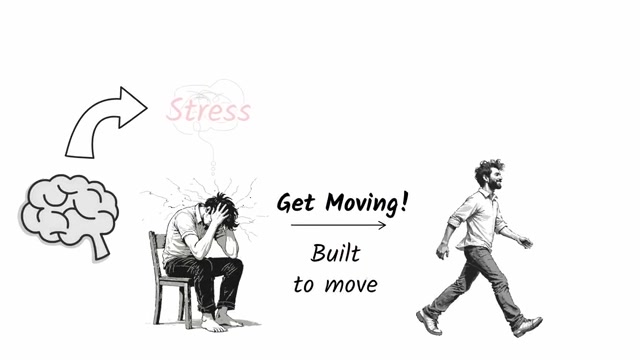
Staying still makes you extremely vulnerable to stress. But once you start moving, stress has a hard time holding on — like a sniper struggling to hit a moving target.
This makes evolutionary sense. The human brain evolved primarily to process complex movement. So if you want your brain to find an exit from a stressful situation, move your body first.
This is where Mel Robbins' "5 Second Rule" becomes a powerful tool. Simply count 5-4-3-2-1, then move. This countdown shifts control from the amygdala (fear/anxiety response) to the prefrontal cortex (decision-making/action execution). Walk to the kitchen for water, step outside for fresh air, or do a quick workout in the garage — anything works.
The key is not to waste time finding the "perfect move." Once you start any movement, a rhythm of consistent action builds positive momentum that breaks the stress paralysis.
"Lack of movement leaves us vulnerable to stress, but once moving, it's hard for stress to pin us down."
"The key is to waste little time hunting for the perfect move and just move."
How to apply: Next time stress freezes you, count 5-4-3-2-1 and stand up. Get water, stretch, walk around the block — anything. Do not hunt for the perfect action; just move.
4. Find the 'Voice' in Your Head — And Watch It Disappear
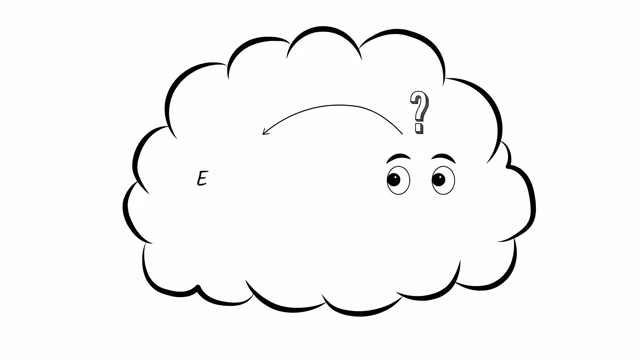
In a stressed state, your thoughts become horror movie scriptwriters, generating narratives like "this means trouble" and "here's what will go wrong." These stories amplify fear and anxiety, yet ruminating about the future does nothing to help complete the very next task at hand.
Fortunately, there is an easy trick to silence these stress-amplifying stories. Try to find the "voice" in your head. We all have that inner voice we call our "ego." But when you turn your attention toward it and look for exactly where it resides in your head — you cannot find it. In that instant, however brief, the inner voice vanishes and you experience silence.
Leverage this brief moment of stillness by tuning into one of your five senses. Focus on colors in your field of vision, listen for the faintest sound, feel the tension in your neck or the breeze on your face. When immersed in seeing, hearing, feeling, tasting, or smelling, the barrage of negative thoughts stops and you lock into the present moment.
Remember SHIFTS to quickly recall the five senses: S-H-F-T-S (Sight, Hearing, Feel, Taste, Smell).
"Look for the voice in your head. When you turn your attention toward it and look for exactly where it resides in your head, you can't find it."
How to apply: Try it now. Look for the "voice" in your head. During that brief silence, focus on the quietest sound around you. This alone brings you back to the present.
5. What Would 90-Year-Old You Give to Have This Problem?
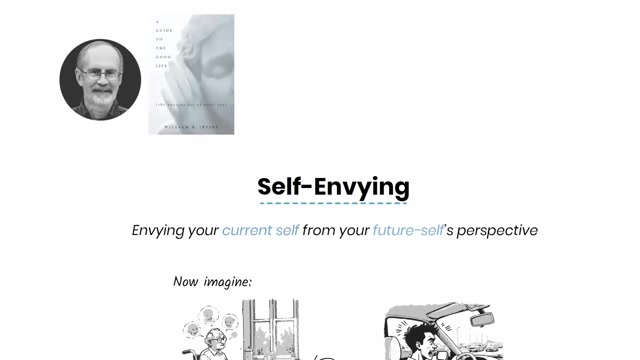
The final technique is a truly perspective-shifting thought experiment.
Imagine tomorrow you are stuck in traffic during your commute, about to be late for an important meeting. Your heart is racing and stress is spiking. Now imagine yourself at 90 years old, sitting in a wheelchair, barely remembering your grandchildren's names. Would that 90-year-old version of you trade places with stressed-out you in a heartbeat? Absolutely.
This technique is called "Self-Envying" — envying your present self from the perspective of your future self. Derived from Professor William Irvine's "Negative Visualization" technique in "A Guide to the Good Life," the core idea is: when you view today's problems from the perspective of your far more frail future self, you realize how much of a blessing your current problems truly are.
Stressed about a deadline? Your 90-year-old self would be grateful just to have a sharp brain capable of meeting deadlines. In conflict with a partner? Your elderly self would envy having the energy and opportunity to reconcile with someone you love.
When anxiety strikes, ask: "What would 90-year-old me give to have this problem?" This single sentence transforms the weight of stress into the lightness of gratitude.
"That 90-year-old you would trade places with stressed out you in a heartbeat."
"What would 90-year-old me give to have this problem?"
How to apply: Each time a stressful situation arises, ask yourself: "What would 90-year-old me give to have this problem?" Write it on a sticky note and put it on your monitor for even better results.
Action Checklist
Do today:
- Practice 6 rounds of box breathing (4s inhale, 4s hold, 4s exhale, 4s hold)
- Practice reframing once: "This stress is a signal that I care"
- Count 5-4-3-2-1 from your seat, stand up, and drink a glass of water
This week:
- Add 5 minutes of box breathing to your morning routine (10-20 cycles daily)
- Set a phone reminder with the "90-year-old me" question
- Practice "find the inner voice + five senses focus" mindfulness 3 times daily
- Memorize the SHIFTS acronym (Sight, Hearing, Feel, Taste, Smell)
Long-term:
- Keep a stress journal: record which techniques work best for you
- Read Kelly McGonigal's "The Upside of Stress" or Mark Divine's "Unbeatable Mind"
- Build a present-moment focus habit using a mindfulness app (Headspace, Calm, etc.)
- Quarterly "90-year-old me" gratitude review of your entire current life
Reference Links
References
- 5 Steps to Rapidly Reduce Stress - Productivity Game (7:34)
Related Tools
| Tool | Purpose | Price | Link |
|---|---|---|---|
| The Upside of Stress | Dr. Kelly McGonigal's book on the science of stress perception transformation | Approx. 16 USD (paperback) | Visit |
| Unbeatable Mind | Navy SEAL Commander Mark Divine's mental toughness training program and book | Book approx. 18 USD / Paid Academy program | Visit |
| The 5 Second Rule | Mel Robbins' action trigger technique for overcoming hesitation | Approx. 15 USD (paperback) | Visit |
| A Guide to the Good Life | Prof. William Irvine's practical guide to modern Stoic philosophy | Approx. 15 USD (paperback) | Visit |
Related Resources
- Kelly McGonigal: How to make stress your friend (TED Talk) (Video) - 14-minute TED talk on the science of stress perception shift (36M+ views)
- Box Breathing Benefits and Techniques - Cleveland Clinic (Article) - Cleveland Clinic's medical benefits and practice guide for box breathing
- Navy SEALs use this mindfulness technique - National Geographic (Article) - National Geographic's deep dive into Navy SEAL tactical breathing
Fact-check Sources
- 8-year study of 30,000 Americans: stress perceived as harmful linked to 43% higher mortality → https://blog.ted.com/the-upside-of-stress-kelly-mcgonigal-at-tedglobal-2013/
- Navy SEALs use box breathing before extreme situations like hostage rescues → https://www.medicinenet.com/why_do_navy_seals_use_box_breathing/article.htm
- 5-second countdown shifts control from amygdala to prefrontal cortex → https://www.melrobbins.com/book/the-5-second-rule/
Questions to Consider
If you think about the biggest stress you feel right now, what would 90-year-old you give up to have that problem?
What is your default reaction pattern when stressed? (Avoidance? Overeating? Phone?) Which of the 5 steps could you try instead?
If you viewed stress as "fuel" rather than an "enemy," what would change about how you approach your current work?
Key Takeaways
- 1Practice 6 rounds of box breathing (4s inhale, 4s hold, 4s exhale, 4s hold)
- 2Practice reframing once: "This stress is a signal that I care"
- 3Count 5-4-3-2-1 from your seat, stand up, and drink a glass of water
- 4Add 5 minutes of box breathing to your morning routine (10-20 cycles daily)
- 5Set a phone reminder with the "90-year-old me" question
- 6Practice "find the inner voice + five senses focus" mindfulness 3 times daily
- 7Memorize the SHIFTS acronym (Sight, Hearing, Feel, Taste, Smell)
- 8Keep a stress journal: record which techniques work best for you
- 9Read Kelly McGonigal's "The Upside of Stress" or Mark Divine's "Unbeatable Mind"
- 10Build a present-moment focus habit using a mindfulness app (Headspace, Calm, etc.)
- 11Quarterly "90-year-old me" gratitude review of your entire current life
Want to read this later?
Save this insight to access it anytime
Original Video
스트레스를 5단계로 빠르게 잡는 법: 네이비씰도 쓰는 과학적 기법 5가지