Lesson 18 / 46 in Mindset & Wellness
3 Science-Backed Meditation Techniques to Reduce Stress by 85% with Just 5 Minutes of Daily Mindfulness
TL;DR
Mindfulness is the practice of acknowledging your feelings without judgment, and research increasingly shows that just 5 minutes a day can reduce stress, improve emotional regulation, and strengthen relationships.
3 Science-Backed Meditation Techniques to Reduce Stress by 85% with Just 5 Minutes of Daily Mindfulness
One-Line Summary
Mindfulness is the practice of acknowledging your feelings without judgment, and research increasingly shows that just 5 minutes a day can reduce stress, improve emotional regulation, and strengthen relationships.
Key Numbers & Data
| Metric | Value | Context |
|---|---|---|
| Video views | 710K+ | Among the top-performing mindfulness introductory content |
| Stress reduction | 85% | With average 5.2 min daily meditation, sustained for 4 months (UCSF clinical trial) |
| Workplace productivity increase | 120% | Focus and productivity among regular mindfulness practitioners |
| Global meditation market | 11.7 billion USD (2026) | Growing at 13-19% CAGR, rapid digital wellness expansion |
| ROI on investment | 11:1 | Corporate mindfulness programs yield 3,000 USD annual productivity gain per employee |
Background: Why This Matters
83% of modern workers experience work-related stress, and the WHO calls stress the "health epidemic of the 21st century." Yet recent neuroscience studies consistently show that just 5 minutes of daily mindfulness meditation can significantly reduce cortisol levels, lower amygdala reactivity, and increase prefrontal cortex thickness.
A 2025 Carnegie Mellon study found that even short meditations via apps can reduce blood pressure, alleviate repetitive negative thinking, and change inflammation-related gene expression. A USC research team also reported that 30 days of guided meditation significantly improved attention control regardless of age.
Organizations like Google, Aetna, Mayo Clinic, and the U.S. Army have adopted mindfulness training based on this scientific evidence. Mindfulness is no longer an "alternative therapy" — it has established itself as a validated stress management tool.
Psych Hub is the world's largest online mental health education platform, with content developed by experts from Columbia, UPenn, and Harvard. Over 30 million consumers use their free resources, and they won the 2025 Health Tech World Award for mental health innovation.
Related market data:
- Global meditation market: 11.74 billion USD in 2026, CAGR 13-19% (Source: Expert Market Research / Coherent Market Insights)
- Meditation apps account for 96% of all mental health app users (Source: PMC / NCBI)
- 45% of millennials use digital mindfulness tools (Source: SkyQuest Technology)
- Corporate mindfulness programs: 3,000 USD annual productivity gain per employee, 11:1 ROI (Source: Goleman EI)
- Mindfulness practice improves job satisfaction by 13-22% (Source: Mindful Leader / Springer Nature)
Key Insights
1. Feel Without Judging — The Essence of Mindfulness is Non-Judgmental Awareness

The core of mindfulness is simple. It means noticing what you feel right now without labeling it as "good" or "bad." If you feel sad, just observe the sadness. If anxious, observe the anxiety — without pushing it away or clinging to it.
This matters because of how our brains work. Neuroscience research shows that consistent mindfulness practice activates neuroplasticity, increases cortical thickness, and reduces reactivity in the amygdala (the region responsible for fear and anxiety). In simple terms, you build a brain that stays steadier under the same stressful situations.
A 2025 Vanderbilt University Medical Center study found that focused-attention mindfulness meditation stimulates the brain's waste removal system in a way similar to sleep. Meditation does not merely "empty the mind" — it physically cleans the brain.
"Mindfulness is the practice of acknowledging what you're feeling without judging the emotions or sensations as you're feeling them."
How to apply: Once today, when an emotion arises, name it: "I notice I'm feeling [emotion] right now." Just observe for 3 seconds without judgment.
2. No Special Place or Time Needed — 4 Mindfulness Routines for Daily Life
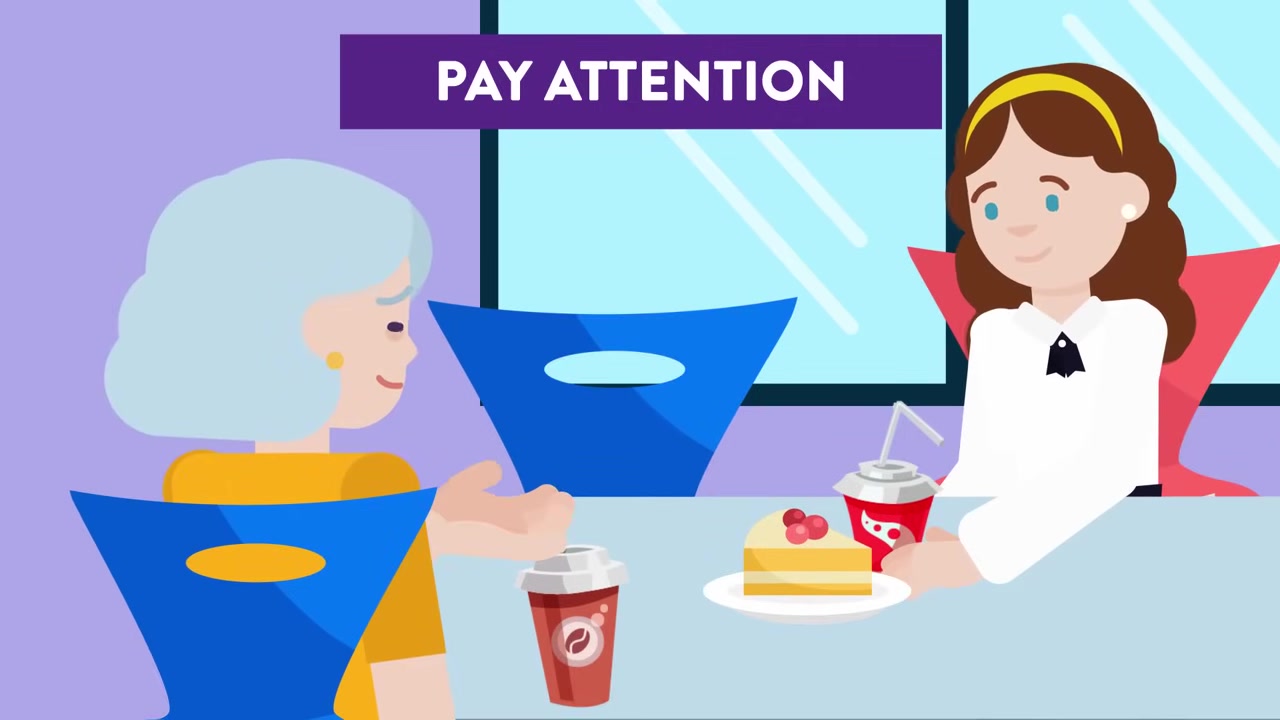
One of the greatest advantages of mindfulness is that it requires no special time or place. You can practice in the car during your commute, in an empty meeting room at lunch, or even stuck in traffic. Here are 4 specific methods.
First, Pay Attention. Focus on one sense at a time — sight, smell, hearing, touch. When smelling your coffee, give it 3 full seconds of complete attention before moving to the next sense. Second, Live in the Moment. Instead of regretting the past or worrying about the future, place your awareness on what is happening here and now.
Third, Accept Yourself. Speak to yourself with the same kindness you would offer a loved one. Self-criticism amplifies stress, but self-compassion builds resilience. A meta-analysis of 37 studies with over 16,000 participants found significant correlations between self-compassion and life satisfaction, personal growth, and sense of purpose.
Fourth, Focus on Breathing. Breathe slowly and rhythmically with intention. A UCSF clinical trial found that an average of just 5.2 minutes of daily breathing meditation reduced stress levels by 85%, with effects lasting 4 months.
"Use gentle words for yourself like you would use for your loved ones."
"I found an app that helps me use mindfulness. I put on my headphones, and just focus on the audio to let my mind and body fully relax."
How to apply: During lunch today, try 1 minute of "5-4-3-2-1 sensory grounding": see 5 things, touch 4 things, hear 3 things, smell 2 things, taste 1 thing.
Mentioned tools:
- Headspace - Beginner-friendly guided meditation app with step-by-step courses
- Calm - Meditation app specializing in sleep and relaxation
- Insight Timer - 200K+ free guided meditations, 17,000+ teachers
3. From Emotional Control to Better Relationships — 5 Research-Proven Benefits of Mindfulness

If mindfulness only made you "feel good," it would not receive this much attention. Here are 5 verified benefits from research.
1) Better emotional regulation. Mindfulness helps you control emotions more effectively under stress. Brain imaging studies confirmed significantly reduced amygdala activation after 8 weeks of mindfulness training. 2) Stronger stress coping. Research shows an average 30% reduction in psychological stress. You gain the ability to choose a response rather than a reaction.
3) Improved relationships. Studies show mindfulness practitioners handle conflict more effectively. Greater present-moment focus and self-awareness help you truly listen during conversations. 4) 120% workplace productivity gain. Google, Aetna, Mayo Clinic, and the U.S. Army adopted mindfulness programs, reporting 3,000 USD annual productivity per employee (11:1 ROI). 5) 85% reduction in absenteeism. Regular mindfulness practice prevents burnout and increases job satisfaction by 13-22%.
"Research suggests that people who practice mindfulness may be able to handle conflict more effectively."
How to apply: This week, when an uncomfortable conversation or conflict arises, consciously take 3 breaths before responding.
4. Body Scan, Sitting, and Walking Meditation — 3 Techniques to Start Today
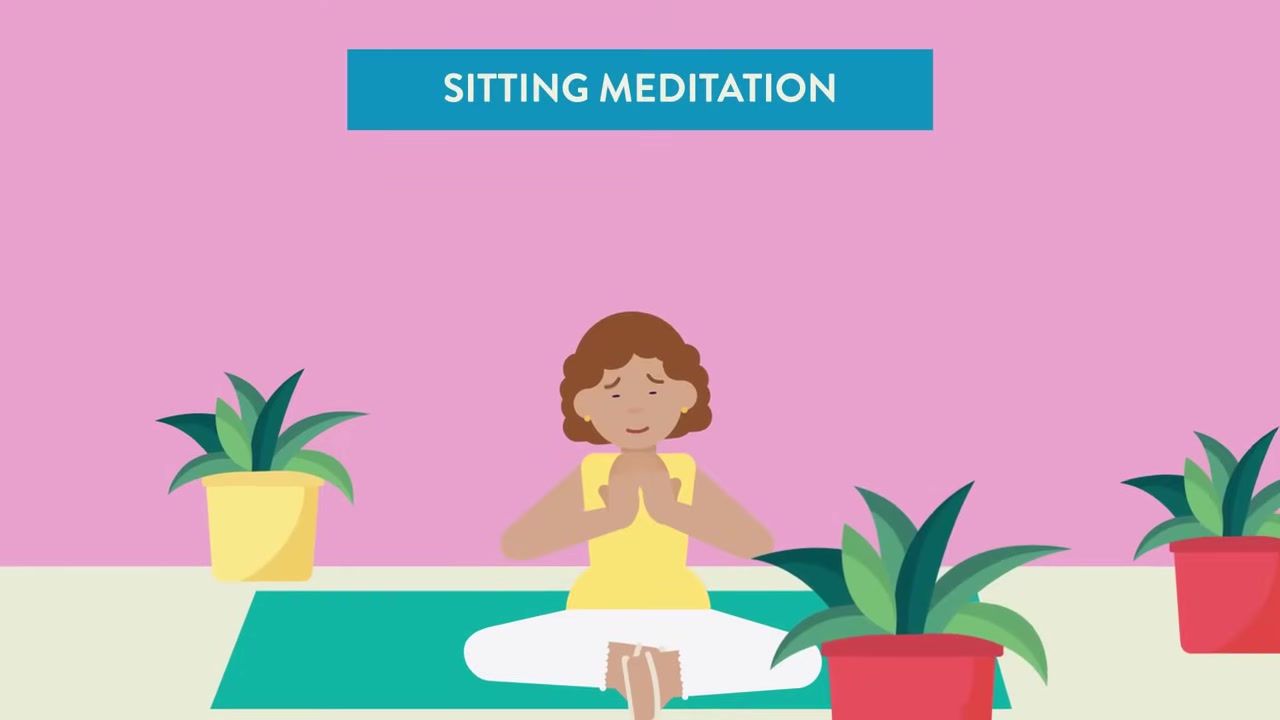
The theory is clear — now let's look at specific practices. All 3 techniques require no special tools or location and can be started today.
Body Scan Meditation begins lying on your back. Slowly move attention from head to toes (or vice versa), noticing physical sensations and emotions in each body part. According to UC Berkeley's Greater Good Science Center, body scans effectively increase well-being, emotional stability, harmony, and transcendence. An 8-week program confirmed reductions in cortisol levels.
Sitting Meditation involves sitting comfortably and breathing through the nose while focusing attention on each breath. When physical sensations or emotions interrupt, that is fine — simply acknowledge them and return to the breath. This repeated "returning" builds the brain's focus muscles. USC research showed 30 days of guided meditation significantly improved attention control across all ages.
Walking Meditation involves slowly walking about 4.5 meters (15 feet) in a quiet space while paying attention to the sensation of feet touching the ground and body movement. At the end, turn and repeat. This is an excellent alternative for those who find sitting still difficult.
"If physical sensations or emotions interrupt, it's okay. Just acknowledge them and refocus on your breathing."
How to apply: Before bed tonight, try 5 minutes of body scan meditation: lying down, slowly move attention from toes to crown, noticing sensations in each area.
Mentioned tools:
- Psych Hub Wellness Resources - Free mental health education materials and wellness guides
5. Your Mind Will Wander at First — Why Continuing Anyway Changes Your Life
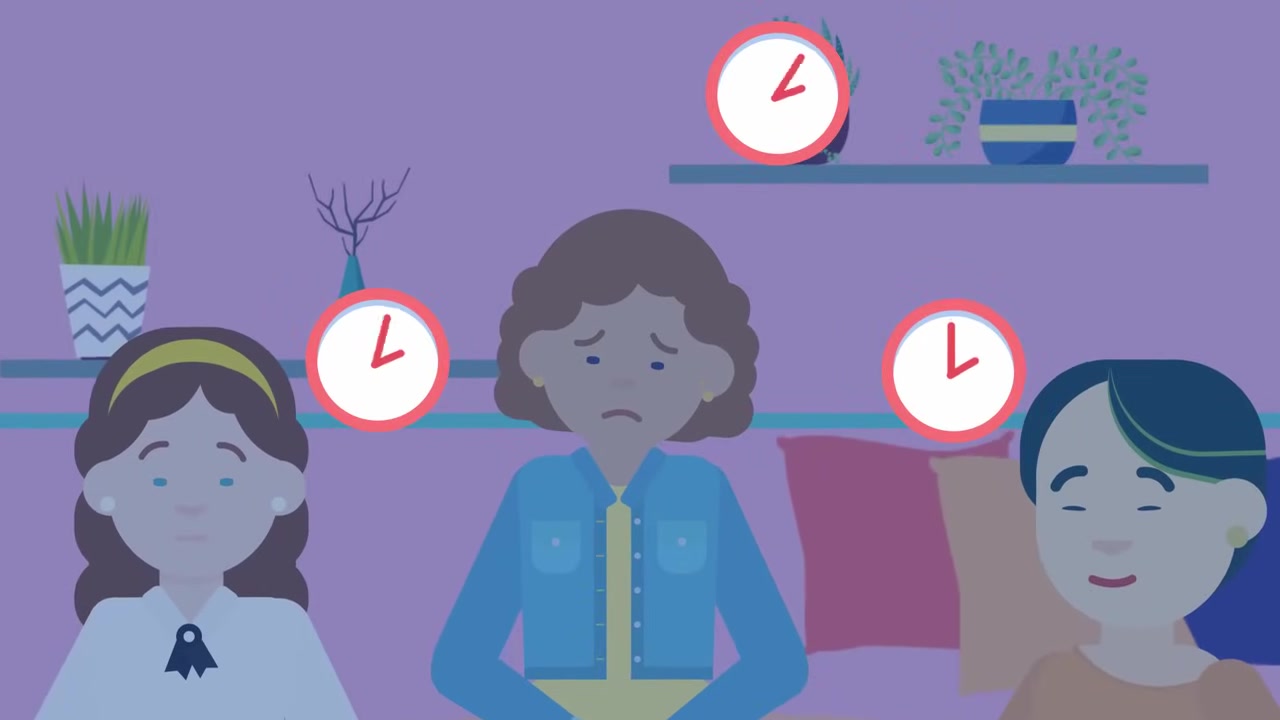
Honestly, almost everyone struggles when they first start meditating. The moment you close your eyes, your to-do list floods your mind, and doubting whether this works is completely natural. But this is where you must not give up.
One practitioner shared that during their first session, they could not stop thinking about their to-do list. But with continued practice, they became increasingly focused. Now, through consistent practice, they have gained the ability to step away from stress and refocus on tasks. Beyond personal calm, they can approach conversations with their mother more openly and comfortably.
This is not just anecdotal. A 2025 UCSF study found that participants whose mindfulness scores increased by week 8 showed sustained improvements in general stress and job strain through month 4 — with mindfulness score improvement explaining 23% of this sustained benefit. Meditation does not just feel good in the moment; it fundamentally changes the brain's stress-coping capacity. The key is not "perfect meditation" but "consistent meditation."
"During my first practice, I could not stop my mind from thinking of my to-do list. But as I kept practicing, I found myself more focused."
How to apply: To build a meditation habit, anchor it to an existing routine: "2-minute breathing meditation after brushing teeth" or "3-minute body scan before bed."
Action Checklist
Do today:
- Right now, focus on breathing for 1 minute: inhale 4 seconds, exhale 4 seconds, repeat 5 times
- When emotions arise today, name them: "I notice I'm feeling [emotion]"
- Before bed, try 5-minute body scan meditation (toes to crown)
This week:
- Install a meditation app (Insight Timer free recommended, or Headspace/Calm trial)
- Anchor meditation to existing routine: set a trigger like "2-min breathing after brushing teeth"
- Try 5-4-3-2-1 sensory grounding at least 3 times during lunch breaks
Long-term:
- Complete an 8-week mindfulness program (MBSR) — online courses available
- Build habit of meditating 5+ times per week for long-term benefits
- Integrate walking meditation into commute: 5 minutes focusing on foot sensations while walking to the station
Reference Links
References
- What is Mindfulness? - Psych Hub (4:50)
Related Tools
| Tool | Purpose | Price | Link |
|---|---|---|---|
| Headspace | Beginner-friendly step-by-step meditation courses, SOS meditations | 13 USD/month or 70 USD/year | Visit |
| Calm | Sleep and relaxation focus, celebrity sleep stories, sound library | 15 USD/month or 70 USD/year | Visit |
| Insight Timer | 200K+ free guided meditations, 17,000+ teachers, community features | Free (Premium 10 USD/month or 60 USD/year) | Visit |
| Psych Hub | Evidence-based mental health education platform, wellness resources, AI matching | Free (consumer resources) | Visit |
Related Resources
- Body Scan Meditation Practice Guide (Article) - UC Berkeley Greater Good Science Center body scan guide
- 17 Mindfulness Statistics 2025 (Article) - 17 science-backed mindfulness statistics
- Meditation May Stimulate Brain's Waste Removal System (Article) - Vanderbilt 2025 study
- Meditation Apps Deliver Real Health Benefits (Article) - Carnegie Mellon research
Fact-check Sources
- Mindfulness helps reduce stress and manage negative thinking → https://golemanei.com/mindfulness-statistics/
- Mindfulness practitioners handle conflict more effectively → https://pmc.ncbi.nlm.nih.gov/articles/PMC11591838/
- Body scan meditation promotes relaxation and stress reduction → https://pubmed.ncbi.nlm.nih.gov/35538557/
Questions to Consider
Right now, is there an emotion you can notice without judgment? Try naming it.
When is the most stressful moment of your day? Could you insert a 2-minute meditation right at that point?
When was the last time you were fully present in the current moment?
Key Takeaways
- 1Right now, focus on breathing for 1 minute: inhale 4 seconds, exhale 4 seconds, repeat 5 times
- 2When emotions arise today, name them: "I notice I'm feeling [emotion]"
- 3Before bed, try 5-minute body scan meditation (toes to crown)
- 4Install a meditation app (Insight Timer free recommended, or Headspace/Calm trial)
- 5Anchor meditation to existing routine: set a trigger like "2-min breathing after brushing teeth"
- 6Try 5-4-3-2-1 sensory grounding at least 3 times during lunch breaks
- 7Complete an 8-week mindfulness program (MBSR) — online courses available
- 8Build habit of meditating 5+ times per week for long-term benefits
- 9Integrate walking meditation into commute: 5 minutes focusing on foot sensations while walking to the station
Want to read this later?
Save this insight to access it anytime
Original Video
하루 5분 마인드풀니스로 스트레스 85% 줄이는 3가지 명상법 (71만 뷰 심리학 기반)