Lesson 2 / 2 in Ideation
3 Innovation Strategies from the Stanford Founder Who Raised 53M USD for Mental Health at Age 27

TL;DR
Discovering that the mental health system only activates after people hit rock bottom, a founder used design thinking to build a prevention-focused mental wellness platform and raised 53 million USD in funding.
3 Innovation Strategies from the Stanford Founder Who Raised 53M USD for Mental Health at Age 27
One-Line Summary
Discovering that the mental health system only activates after people hit rock bottom, a founder used design thinking to build a prevention-focused mental wellness platform and raised 53 million USD in funding.
Key Numbers & Data
| Metric | Value | Context |
|---|---|---|
| Total funding raised | 53M USD (approximately 742 billion KRW) | Lightspeed, Forerunner, Owl Ventures and other major VCs participated |
| Founder's age | 27 | Age when selected for Forbes 30 Under 30 |
| Design research period | 2-3 years | Redesigning the mental health system with IDEO founder David Kelley |
| First-year subscribers | 100,000 | Zeera app after rebranding |
| Client renewal rate | 100% | Every corporate client that adopted the program renewed |
| Engagement vs. incumbents | 14x | Employee engagement rate compared to existing corporate mental health services |
Background: Why This Matters
The mental health app market is valued at approximately 7.5 billion USD in 2025, projected to grow to over 35 billion USD by 2034. With a CAGR of 17-19%, it is a hyper-growth market. Yet most of this market targets people already in crisis. Services like Talkspace and BetterHelp are prime examples.
This raises a critical question: "Why does the mental health system only work after people hit rock bottom?" The person who asked this question is Ariela Safira. A Stanford math and computer science graduate, she discovered a fundamental flaw in the mental health system after a friend's suicide attempt.
From a preventive medicine perspective, investing 1 dollar in early mental health intervention saves 2 to 10 dollars in costs. Despite this, most mental health services remain stuck in the "crisis response" model. Real (now Zeera) drove straight into this gap.
Ariela Safira studied math and computer science at Stanford, then spent 2-3 years working with IDEO founder David Kelley on redesigning the mental health system. She enrolled in Columbia University's clinical psychology program before dropping out in 2019 to found Real. She also cycled across multiple countries to raise funds for suicide prevention and won the American Psychiatric Association Innovation Award in 2019. In 2024, she rebranded Real as Zeera, introducing an anonymous audio therapy model.
Related Market Data:
- Global mental health app market: 7.48B USD in 2025, projected to reach 35.29B USD by 2034 (CAGR 19.23%) (Source: Fortune Business Insights)
- North American market share: 47.26% (2024) (Source: Fortune Business Insights)
- Mental health early intervention: 1 USD invested saves 2-10 USD (Source: Steinberg Institute)
- Digital behavioral health startups saw investment surge 2020-2022, with profitability pressure increasing from 2023 (Source: Behavioral Health Business)
Key Insights
1. One Question That Pierced the Core of the Problem Created a 53M-USD Business

When Ariela Safira was a Stanford sophomore, a classmate attempted suicide. The shocking realization was that this friend's rehabilitation was the first time she had ever encountered the mental health system. She had never seen a mental health professional before.
The question that emerged from this experience is the key: "Imagine a world where someone never meets a primary care doctor until they are diagnosed with cancer." In physical health, this scenario is absurd -- but in mental health, it is reality. Most people do not encounter the mental health system until they have hit rock bottom.
This single question became the starting point for Real (now Zeera). The way the problem was discovered is noteworthy. Not through market analysis or trend research, but through a deeply personal experience that revealed a structural flaw in the system. Preventive medicine research shows that investing 1 dollar in early mental health intervention saves 2 to 10 dollars. The problem was clear, yet no one was addressing it.
"Imagine a world where someone never meets a primary care doctor until they're diagnosed with cancer. This system is failing us if people aren't even meeting it until they reach rock bottom."
How to apply: List moments from your own experience where you thought "this makes no sense," and check whether that absurdity represents a systemic problem.
2. How "Taking 10 Steps Back" with the IDEO Founder Created a New Care Model Over 2 Years

While most mental health startups focused on "moving existing one-on-one therapy online," Ariela Safira took a completely different approach. She directly contacted IDEO founder and Stanford d.school creator David Kelley, and they worked together for 2-3 years. The core question was: "What are the goals of a mental health care system? How do we make it affordable, effective, and something people can be proud to participate in?"
David Kelley's design thinking methodology starts with "user empathy." Ariela interviewed every stakeholder in the mental health system: psychiatrists, patients, rehab facility janitors, suicide survivors' families, and hospital architects. She even visited "the world's most innovative psychiatric ward" in Liverpool, England.
The key insight from this process was "taking 10 steps back." Rather than improving the existing system, they designed from a blank slate how to make mental health a part of everyday life. Just as fitness became part of our daily routine, mental wellness should become part of family conversations and daily habits. This approach became the core differentiator for Real (now Zeera).
"We're not simply putting one-on-one care online. Rather we're taking 10 steps back and asking what are the goals of a mental health care system."
How to apply: Check whether the product or service you are building is merely "moving the existing approach online," and try redefining the fundamental goal from scratch.
Tools mentioned:
- IDEO - Design thinking innovation consulting
- Stanford d.school - Design thinking education institution
3. The Moment When Having No Industry Experience Becomes Your Greatest Weapon
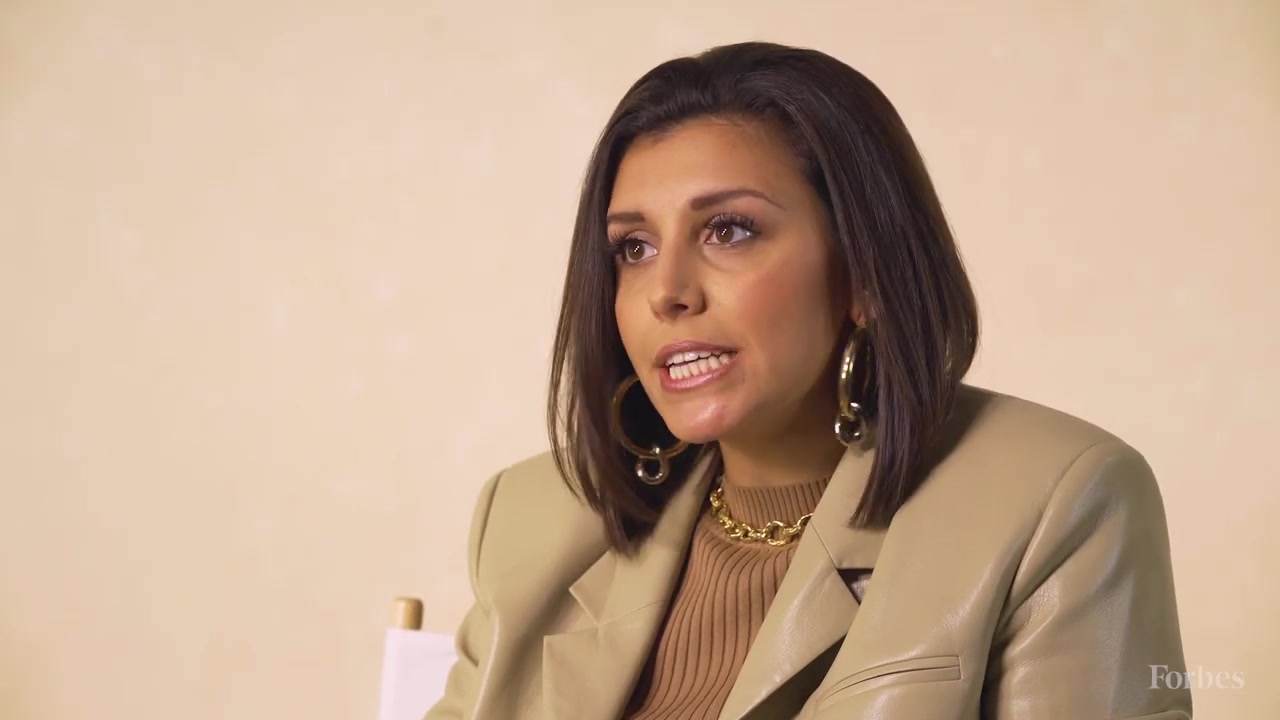
Conventional wisdom says healthcare startups need industry experience. You need to be a doctor, nurse, or at least have years of healthcare experience for credibility. But Ariela Safira argues the exact opposite: being under 30 with no healthcare industry experience is actually her "greatest advantage."
The reasoning is compelling. When you work in an industry for years, you develop the assumption that "this is how things are done." Healthcare is especially bound by regulation and convention, making it structurally difficult for insiders to imagine a radically different future. An outsider, however, gets a "fresh pair of eyes" to envision something completely new.
This is not mere self-justification -- it is proven by results. Real built the "prevention-focused model" that existing mental health services like Talkspace and BetterHelp never attempted. After rebranding as Zeera, it pioneered the entirely new category of anonymous audio therapy. Employee engagement was 14 times higher than existing corporate mental health services, and it achieved clinical outcomes equivalent to one-on-one therapy. Not knowing the industry's rules meant they could rewrite the rules entirely.
"Being under 30 in mental healthcare is one of my greatest advantages. It is so hard to envision a new version of an industry when you've lived in it for years. I get to have such a fresh pair of eyes and to envision a completely different future."
How to apply: If there is a field where you consider yourself "inexperienced," re-evaluate whether that inexperience might actually be a weapon for breaking existing conventions.
Tools mentioned:
- Zeera (formerly Real) - Prevention-focused mental wellness platform with anonymous audio therapy
Action Checklist
Today:
- Write down 3 experiences where you thought "this makes no sense"
- Identify which of those experiences represent systemic problems (structural, not personal)
- Research a sector in the current market that focuses only on "post-crisis response"
This week:
- List all stakeholders in your area of interest (users, providers, administrators, support staff) and interview at least 2
- Create a list of conventions you could break in a field where you feel "inexperienced"
- Take "10 steps back" from your existing service and redefine it from its fundamental purpose
Long-term:
- Participate in a design thinking workshop or take an IDEO/Stanford d.school online course
- Explore business areas where a prevention-focused model is possible (healthcare, education, finance, etc.)
- Clearly define your strengths as an "outsider" and use them in pitches
Reference Links
Source Material
- "The System Is Failing Us" - This Mental Health Entrepreneur Is Prepared To Change It | Forbes - Forbes (2:21)
Related Tools
| Tool | Purpose | Price | Link |
|---|---|---|---|
| Zeera (formerly Real) | Anonymous audio-based mental wellness platform with clinical efficacy equal to one-on-one therapy | B2B corporate wellness model | Visit |
| IDEO | World-leading design consulting firm founded by David Kelley | Consulting-based | Visit |
| Stanford d.school | Stanford University's design thinking education institution | Free online resources available | Visit |
Related Resources
- Revolutionizing Mental Health Care: A Conversation with Ariela Safira - In-depth interview about Ariela Safira's founding story and vision
- Real raises 10M USD from Lightspeed, Megan Rapinoe and others to rethink therapy - Detailed analysis of Real's Series A round
- Mental health app Real raises 37M USD Series B led by Owl Ventures - Real's Series B round and growth strategy
- The Zeera Effect: How our Innovative Care Model Drives Measurable Mental Health Outcomes - Zeera's clinical efficacy data and innovation model
Fact-Check Sources
- 16M USD investment (Lightspeed, Forerunner, Gwyneth Paltrow, Megan Rapinoe): https://techcrunch.com/2021/04/06/real-raises-10m-from-lightspeed-megan-rapinoe-and-others-to-rethink-therapy/
- Collaboration with IDEO founder David Kelley: https://magnifywellnessblog.wordpress.com/2021/01/20/innovating-intently-ariela-safira-the-pathway-to-real/
- Existing mental health systems only work after crisis: https://pmc.ncbi.nlm.nih.gov/articles/PMC10699532/
Questions to Consider
In your area of expertise, what convention have you unconsciously accepted as "just how things are done"?
If someone with zero industry experience looked at your industry, what would they immediately call "insane"?
Is your service or product focused on "post-crisis response" or "prevention"? What would a shift to prevention look like?
Key Takeaways
- 1Write down 3 experiences where you thought "this makes no sense"
- 2Identify which of those experiences represent systemic problems (structural, not personal)
- 3Research a sector in the current market that focuses only on "post-crisis response"
- 4List all stakeholders in your area of interest (users, providers, administrators, support staff) and interview at least 2
- 5Create a list of conventions you could break in a field where you feel "inexperienced"
- 6Take "10 steps back" from your existing service and redefine it from its fundamental purpose
- 7Participate in a design thinking workshop or take an IDEO/Stanford d.school online course
- 8Explore business areas where a prevention-focused model is possible (healthcare, education, finance, etc.)
- 9Clearly define your strengths as an "outsider" and use them in pitches
Want to read this later?
Save this insight to access it anytime
Original Video
27살에 5,300만 달러 투자받은 스탠퍼드 출신 창업자의 멘탈헬스 혁신 전략 3가지