Lesson 1 / 2 in Ideation
7 Steps a Ukrainian Developer Used to Build a Pinterest Automation Tool in 6 Weeks That Earns 16K USD per Month
TL;DR
A single frustration from running a cocktail blog led to a Micro-SaaS that automated Pinterest pin creation, growing to over 400 paying customers and 16,000 dollars in MRR.
7 Steps a Ukrainian Developer Used to Build a Pinterest Automation Tool in 6 Weeks That Earns 16K USD per Month
One-Line Summary
A single frustration from running a cocktail blog led to a Micro-SaaS that automated Pinterest pin creation, growing to over 400 paying customers and 16,000 dollars in MRR.
Key Numbers & Data
| Metric | Figure | Context |
|---|---|---|
| Monthly Recurring Revenue (MRR) | Over 16,000 USD | Top 1-2% among solo-operated Micro-SaaS businesses |
| Paying Subscribers | Over 400 | Active subscribers measured via Stripe |
| MVP Development Time | 6 weeks (nights and weekends) | Built with GitHub Copilot while working a 9-to-5 job |
| Monthly Churn Rate | About 10% | Slightly higher than SaaS average of 5-7%, but stable in a niche market |
| Pinterest Monthly Active Users | 570 million | As of Q1 2026, 10% year-over-year growth |
| Total Pins Uploaded | Over 3.74 million | Cumulative on the BlogToPin platform |
Background: Why This Matters
If you think of Pinterest as just a "photo-sharing app," you are missing the big picture. With 570 million monthly active users as of Q1 2026, it is the second-largest visual search engine after Google. The key point is that Pinterest users are "actively looking for something." For bloggers, Etsy sellers, and Shopify operators, it is a treasure trove of free traffic. Moreover, Gen Z (ages 18-24) makes up 42% of users and is the fastest-growing segment, meaning this market will only get bigger.
But there is a problem. To grow on Pinterest, you need to post 5-10 pins per day, and designing a single pin takes 5-10 minutes. That means spending an hour every day just creating pins -- honestly, how many people can keep that up consistently?
The marketing automation market itself is expected to nearly double from 47 billion dollars in 2025 to 81 billion dollars by 2030. AI tool adoption rates have reached 74%. However, the reality of the Micro-SaaS world is harsh. The median revenue for profitable Micro-SaaS businesses is only 4,200 dollars MRR, and 70% earn less than 1,000 dollars per month. In this context, 16,000 dollars MRR places you in the top 1-2%.
The protagonist of this story is a software engineer from Dnipro, Ukraine. He studied software engineering at the National University of Mines and gained practical experience at companies like Stormotion and Agent24. A self-taught coder since age 15, the 2022 Russia-Ukraine war changed everything. He abandoned his dream of joining big tech and chose the indie hacker path instead. After multiple failures, he automated the painful process of creating Pinterest pins that he experienced on his own cocktail blog, and BlogToPin was born. Currently, alongside BlogToPin, he runs Sequenzy, an email marketing tool, with cumulative revenue exceeding 175,000 dollars across both startups.
Key Insights
1. 5-10 Minutes x 10 Pins per Day = A Repetitive Task Worth Automating
If you are a blogger or e-commerce seller, you have probably experienced this. To post a single pin on Pinterest, you need to design an image, write a title, add a description, select a board... that is at least 5-10 minutes. But to genuinely grow on Pinterest, you need to post 5-10 pins per day. Spending an hour every day creating pins? Honestly, you would burn out in days.
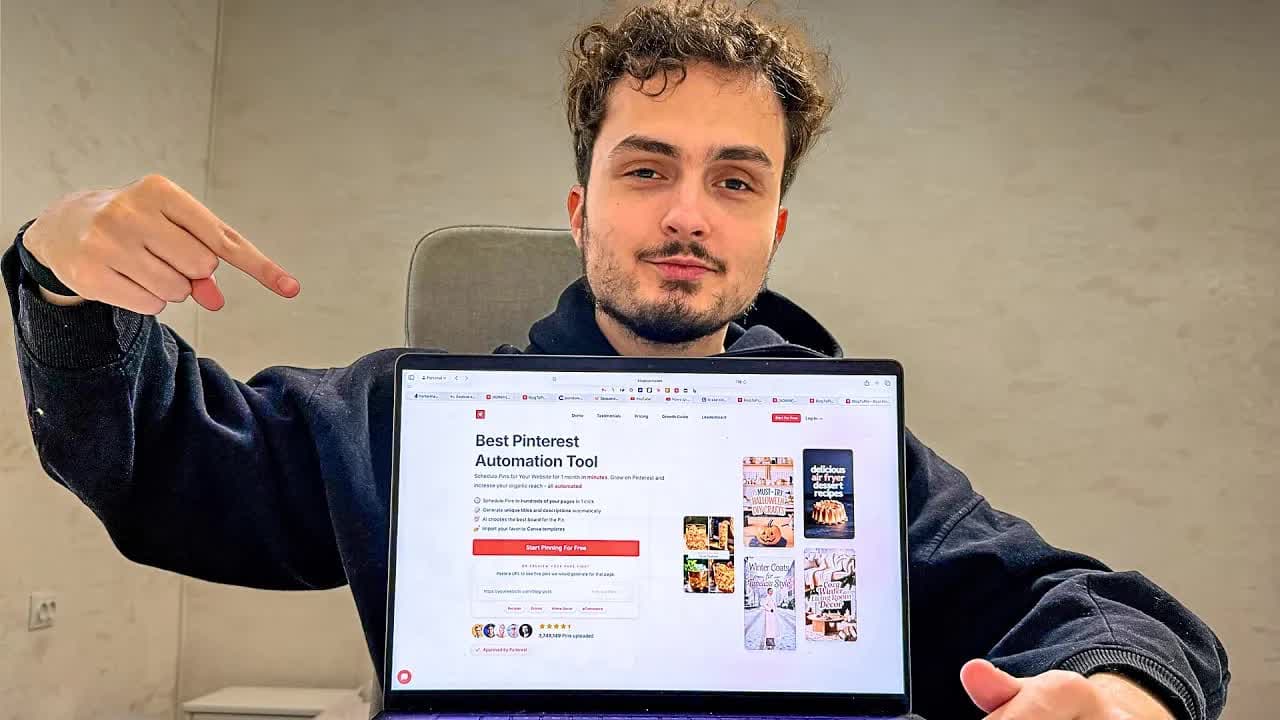
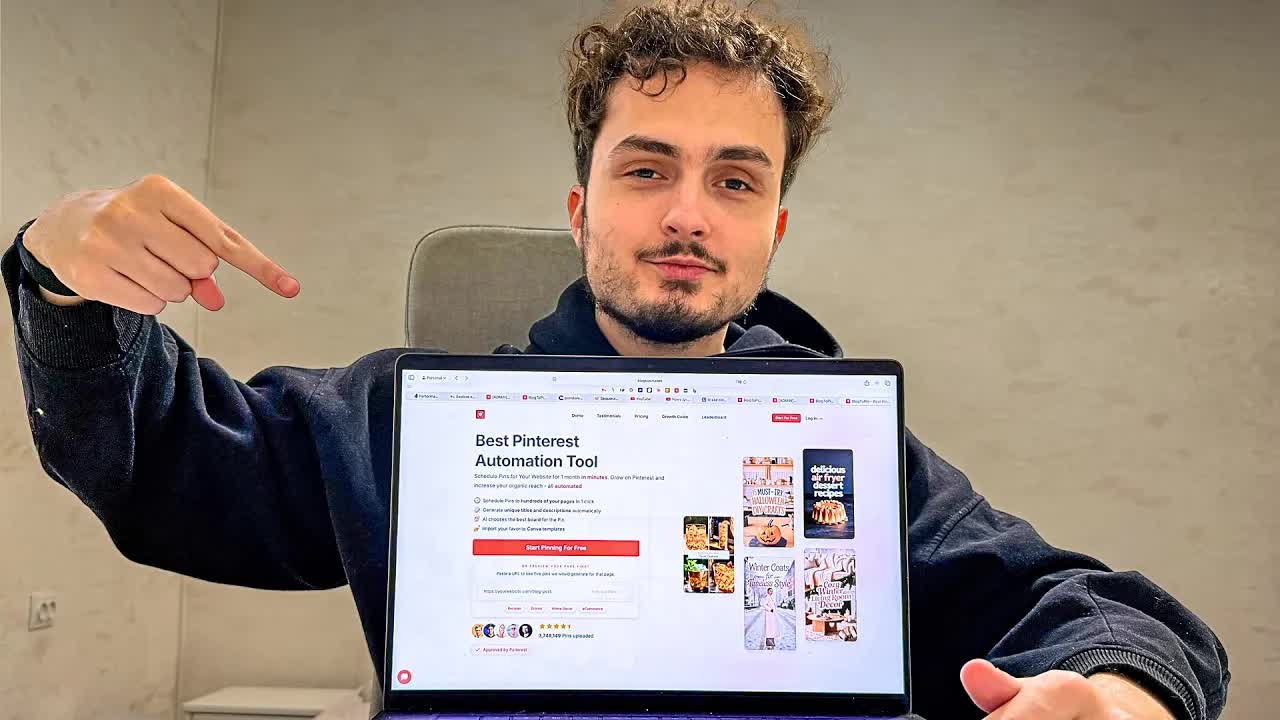
BlogToPin is a tool that completely automates this hellish repetitive task. Just connect your website URL, and AI designs pins, writes SEO-optimized titles and descriptions, and completes a month's worth of scheduling in minutes. Each pin looking different is also a key feature.
The business model is SaaS subscription. The Starter plan is 25 dollars per month (annual billing), with higher pricing for Agency and Enterprise plans. Currently there are over 400 paying subscribers, and MRR has exceeded 16,000 dollars. Traffic is stable at 300-500 visitors per month and growing steadily through compounding.
"Your app should be the best one for one specific person."
"I built something better, faster, and cheaper than the competition."
How to Apply: List out the 5-10 minute repetitive tasks you do daily in your field and evaluate their automation potential.
Tools Mentioned:
- BlogToPin - Automated Pinterest pin creation and scheduling
- Stripe - Payment and subscription management
2. Through War, Depression, and Failure to a Product That Solves Your Own Problem
He self-taught software engineering at age 15 and landed his first job right after graduation. His original dream was to work at big tech companies like Google or SpaceX.
Then in 2022, war broke out in his home country of Ukraine. After a prolonged period of depression, he realized the big company career path was not for him. Fortunately, six months later he discovered the indie hacker community, and seeing the emergence of ChatGPT gave him confidence that he could earn sufficient income on his own.
He created several apps trying to ride the AI wave, but all failed with zero revenue. So he pivoted and started an AI blog about his hobby -- cocktails. He tried every channel including Google, Instagram, Facebook, and Pinterest, and Pinterest turned out to be the most effective. After outsourcing pin creation, the realization hit: "I can automate this." In about two months, the first version of BlogToPin was complete.
"I decided to ride that AI wave. I created a few apps and they all failed. I made zero revenue."
How to Apply: Write down three recurring frustrations you experience in your current side project or hobby.
3. Zero Revenue for 10 Days After Launch, but Here Is Why He Did Not Give Up
He got the idea in December 2023. Since he was working a 9-to-5 job at the time, he could only develop during nights and weekends. He used GitHub Copilot -- AI coding tools like Cursor did not exist yet.
He hacked together a version in 7 days, but it was not production-ready. He had to rewrite most of it, taking a total of 2 months. He launched with a lifetime deal (LTD). Honestly, he did not expect anyone to buy.
He had 1,000 followers on Twitter, and seeing friends achieve viral launches gave him some hope. But in reality, nothing happened. He had to wait 10 days for his first paying customer.
After that, he converted the lifetime deal to a regular subscription model and kept improving the product. About a month later, real customers started trickling in. The key mindset was not "launch equals success" but "launch is the start of improvement."
"I launched with the lifetime deal because I didn't really expect anyone to buy it."
"I had to wait for my first paying customers for 10 days."
How to Apply: Narrow your scope to an MVP you can build in two weeks, and plan to invest at least three months in improvement after launch.
Tools Mentioned:
- GitHub Copilot - AI coding assistant
4. There Is No Secret Growth Hack -- Serve Your Customers Extraordinarily and Word-of-Mouth Follows
The three best marketing channels are word-of-mouth, affiliates, and SEO/LLM recommendations (ChatGPT, etc.).
The secret to word-of-mouth is simple: take extraordinary care of every single user. Personally review users' screen recordings, suggest strategy adjustments when Pinterest results are lacking, and build requested features within hours or days. When you do this, users naturally start recommending you to friends, and at some point it snowballs.
SEO and LLM recommendations follow a similar pattern. In the early days, he wrote every article himself, reached out to influencers, and posted consistently on Reddit -- an enormous amount of grinding. Building backlinks was painful too. But after a certain point, people start finding and buying on their own.
This is "asymmetric marketing." You struggle enormously at the beginning, but over time customers flow in on autopilot. There is no secret growth hack in this business. Build a product that truly solves a core problem, and growth follows.
"People really feel it when you care and they'd be extremely happy to share a word, recommend it to their friends."
"There really was no hack to growing this thing."
How to Apply: Directly contact five current customers (or users), ask about their pain points, and resolve them within 48 hours.
Tools Mentioned:
- Reddit - Community marketing and customer discovery
5. Do Not Hide Behind a Product Hunt Launch -- Find One Real Customer
Step 1: Find something people already do and already pay for. If you create an entirely new experience, finding customers becomes extremely difficult. Start in a market where money is already changing hands.
Step 2: Thoroughly research competitors. Scour G2 reviews, AppSumo reviews, and Capterra. Watch all related content and understand what people dislike. Pay special attention to how competitors use (or do not use) AI. Opportunities exist where large companies struggle to change their entire flow.
Step 3: Build an MVP in 1-2 weeks using AI coding tools. If you have done your research properly, you should be able to produce something faster, cheaper, and better in your specific niche. Not an app for everyone, but the best app for one specific person.
Step 4: Talk directly to your ICP (Ideal Customer Profile). Find them on Reddit, X, through cold outreach, YouTube, TikTok, Facebook groups -- anywhere. Do not hide behind directory submissions or Product Hunt launches. You need to find a real human who will actually use your product.
Step 5: Treat your first customer like your employer. Found your first paying customer? Congratulations. Now treat them like your boss. Review every action, collect feedback, and implement requests the same day. The goal is 100% satisfaction.
Step 6: Repeat with dozens and fans will emerge. Repeat this process with dozens of people and your app will hold real value for your ICP. These customers become fans who know exactly where others like them gather and who voluntarily recommend you.
Step 7: Improve 1% every day. Improve everything by 1% -- churn rate, onboarding, emails. If you add one paying customer per day and monthly churn is 10%, in one year you will have 200 paying customers. At 50 dollars each, that is a 10,000 dollars MRR business.
"It's impossible to hide here behind directory submissions or Product Hunt launch. You'd need to find a real human who'd benefit from what you created."
"Your app should be the best for that specific person. It will be absolute disaster for everyone else."
"Only an idiot will refuse it."
How to Apply: Read 50 reviews on G2/Capterra for tools in your area of interest and identify three recurring complaints.
Tools Mentioned:
- G2 - Software review platform
- Capterra - Software reviews and comparison
- AppSumo - Software deals platform
6. Rather Than Complex Features, "Feeling Value Within 1 Minute of Signing Up" Is What Matters
BlogToPin's onboarding experience is quite impressive. After signing up, it immediately asks you to enter your website URL. In about one minute, it scans your website to understand the content and shows Pinterest pin samples. Users immediately experience "so this is what pins from my site look like."
You can review and edit pins, set which pages to create pins for and which boards to post to, and a month's schedule is automatically generated. Each pin is uniquely designed and optimized for Pinterest SEO. An analytics dashboard tracks which pins are performing well.
The tech stack includes:
- Vercel: Web app hosting
- Hetzner: Scraper server
- Oxylabs: Proxy service
- Gemini: AI text generation
- fal.ai: AI image generation
- Sequenzy: Email delivery and churn prevention
"The very simple value for person is presented right away that he can get a lot of pins scheduled for him in a few minutes."
How to Apply: Design a "value within 1 minute of signing up" experience for your product or service.
Tools Mentioned:
- Vercel - Web app hosting and deployment
- Hetzner - Server hosting (for scrapers)
- Oxylabs - Web scraping proxy
- Google Gemini - AI text generation
- fal.ai - AI image generation
- Sequenzy - Email marketing and churn prevention
7. One Niche, One Problem, at Least Several Months of Persistence
So what is the conclusion? It boils down to three things.
First, try various things. You never know which idea will truly become "yours" until you try. Who would have guessed that running a cocktail blog would lead to building a Pinterest automation tool?
Second, when you feel ready, go deep on just one. One niche, one pain point. You need to commit for at least several months. But the important thing is not quietly building features -- it is simultaneously experimenting with multiple marketing angles. X, Reddit, email, content... reach your target audience through every possible channel.
Third, when something starts working, go all in. It is ultimately a persistence game. Most people give up just before results start showing.
"Try different things out and once you are ready, pick one niche, solve one specific pain point and stick with it for at least a few months."
How to Apply: Write down three ideas you are considering, and for the one you are most confident about, talk to five potential customers this week.
Action Checklist
Today:
- List five boring 5-10 minute tasks you repeat daily
- Read 50 reviews on G2/Capterra for tools in your area of interest and compile common complaints
- Research how competitors use (or do not use) AI
This Week:
- Talk directly to five potential customers about your most promising idea
- Define an MVP scope you can build in two weeks using AI coding tools (Cursor, Claude Code, etc.)
- Find three places where your ICP gathers on Reddit, X, and relevant Facebook groups
Long-Term:
- Design onboarding that delivers "value within 1 minute of signing up"
- Start an asymmetric marketing strategy (SEO, backlinks, content)
- Daily 1% improvement habit -- sequentially optimize churn rate, onboarding, email automation
References
Related Tools
| Tool | Purpose | Price | Link |
|---|---|---|---|
| BlogToPin | AI-powered Pinterest pin auto-creation and scheduling. Supports WordPress, Shopify, Etsy, Amazon, etc. | Starter 25 USD/month, Agency 50 USD/month, Enterprise 125 USD/month (annual billing) | Go |
| Tailwind | Official Pinterest partner, pin scheduling and analytics. Largest competitor | Pro from 24.99 USD/month | Go |
| Vercel | Front-end deployment platform | Free to 20 USD/month (Pro) | Go |
| Hetzner | Cost-effective server hosting based in Germany | From 4.15 EUR/month | Go |
| fal.ai | AI image generation API | Pay-as-you-go | Go |
| Google Gemini | AI text generation | Free tier + pay-as-you-go | Go |
Related Resources
- Nic Polotnianko X (Twitter) - Founder's build-in-public record
- 1,000 Micro SaaS Analysed: Real Revenue Data (Article) - Revenue analysis of 1,000 Micro-SaaS businesses (2025)
- AI-Driven, Founder-Led: The 2025 State of Micro-SaaS (Article) - Micro-SaaS ecosystem status report
- BlogToPin Review 2025 (Article) - Detailed BlogToPin review
- Pinterest Statistics 2026 (Article) - Latest Pinterest user statistics
Fact-Check Sources
- Pinterest has over 500 million active users → https://www.demandsage.com/pinterest-statistics/
- Achieved over 16K USD MRR → https://trustmrr.com/founder/nikpolale
- Over 400 active subscribers → Verified via public Stripe dashboard
Questions to Consider
Among the tasks I do every day, which one would I "pay to automate"?
Can I describe my idea's ICP (ideal customer) as one specific person? Where do they gather?
Does the product I am building (or planning to build) belong to a "market where money is already changing hands"?
Key Takeaways
- 1List five boring 5-10 minute tasks you repeat daily
- 2Read 50 reviews on G2/Capterra for tools in your area of interest and compile common complaints
- 3Research how competitors use (or do not use) AI
- 4Talk directly to five potential customers about your most promising idea
- 5Define an MVP scope you can build in two weeks using AI coding tools (Cursor, Claude Code, etc.)
- 6Find three places where your ICP gathers on Reddit, X, and relevant Facebook groups
- 7Design onboarding that delivers "value within 1 minute of signing up"
- 8Start an asymmetric marketing strategy (SEO, backlinks, content)
- 9Daily 1% improvement habit -- sequentially optimize churn rate, onboarding, email automation
Want to read this later?
Save this insight to access it anytime
Original Video
우크라이나 개발자가 6주 만에 만든 Pinterest 자동화 툴, 월 2,000만원 버는 비결 7단계