Lesson 28 / 46 in Mindset & Wellness
3-Step Word Meditation to Strengthen Focus 10x in the Age of 8-Second Attention Spans

TL;DR
Modern humans have an average attention span of 8.25 seconds. This progressive word-focus meditation -- 30 seconds, 60 seconds, 90 seconds -- trains your brain's focus muscle to become over 10 times stronger.
3-Step Word Meditation to Strengthen Focus 10x in the Age of 8-Second Attention Spans
One-Line Summary
Modern humans have an average attention span of 8.25 seconds. This progressive word-focus meditation -- 30 seconds, 60 seconds, 90 seconds -- trains your brain's focus muscle to become over 10 times stronger.
Key Numbers & Data
| Metric | Figure | Context |
|---|---|---|
| Modern Human Attention Span | 8.25 seconds | 2024 average human sustained attention -- shorter than a goldfish (9 seconds) |
| Focus Improvement Multiplier | 10x+ | The training goal: extending focus from 8 seconds to 90 seconds |
| Meditation Duration | 11 minutes | Short enough for a daily routine even in a busy schedule |
| Global Meditation Market (2026) | 11.74 billion USD | Projected to grow to 17.78 billion USD by 2032 (CAGR 13.1%) |
| 30-Day Meditation Attention Improvement | Statistically significant | USC study: 30-day app-based mindfulness meditation improved attentional speed and accuracy |
Background: Why This Matters
In 2026, where smartphone notifications, social media, and multitasking are the norm, human focus has hit all-time lows. Microsoft research shows that average sustained attention dropped from 12 seconds in 2000 to 8 seconds in 2013, and more recently, screen-based attention plummeted from 2.5 minutes (2004) to 47 seconds (2024).
In this context, meditation is no longer in the realm of "healing" or "spiritual practice." A 2025 USC study found that just 30 days of guided mindfulness meditation significantly improved attentional speed and accuracy. A PNAS study even showed that a single 10-minute meditation session improved executive attentional control in beginners.
The meditation market is exploding. The 2026 global meditation market is approximately 11.74 billion USD, with 45% of millennials using digital mindfulness tools. Led by apps like Headspace and Calm, this market is projected to grow at a CAGR of 13.1% through 2032.
Great Meditation is a major meditation channel with 1.36 million subscribers and 178 million total views. Operating for over 7 years, it produces all meditation scripts, background music, and images in-house. The average video length is about 11 minutes, maintaining accessibility for busy modern people.
Key Insights
1. The Focus Muscle Is Real: The Science Behind Turning 8 Seconds into 90
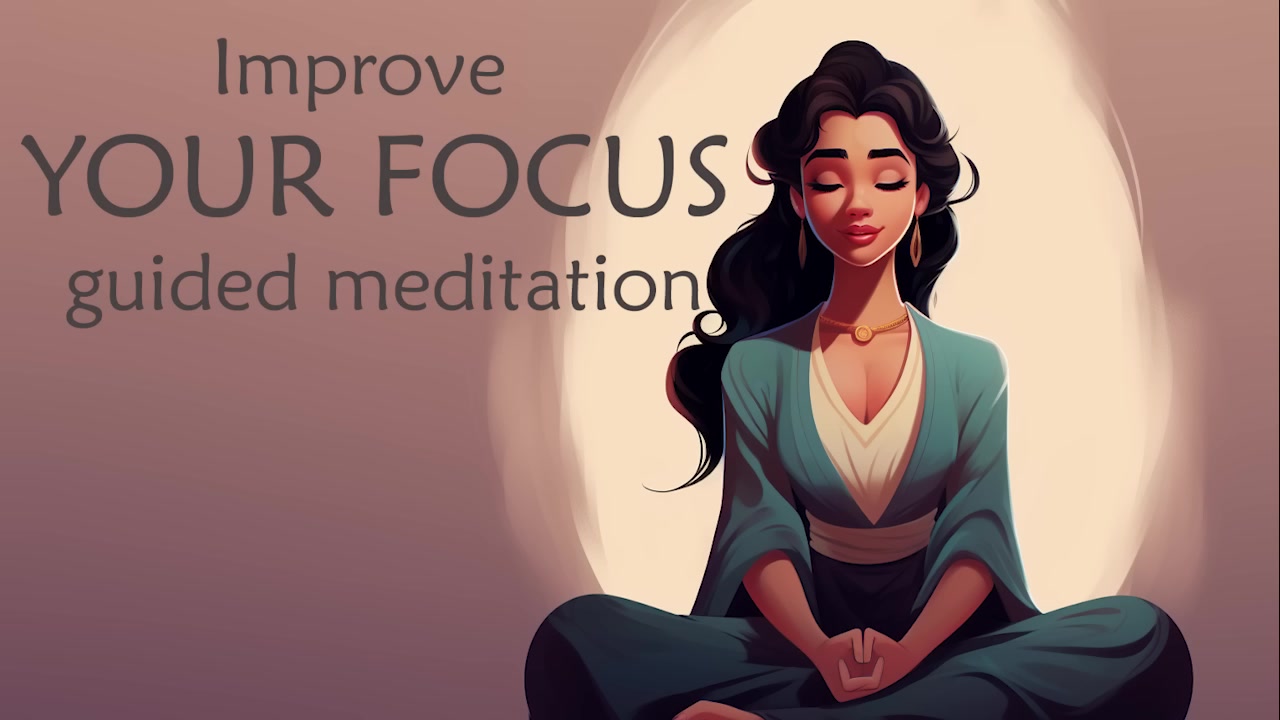
Focus is not something you are born with -- it is an ability that can be trained like a muscle. The core premise of this training is that since the average human attention span is about 8 seconds, sustaining focus on a single object for 90 seconds is like strengthening that muscle over 10 times.
Posture setup before training is important. Sitting with legs uncrossed and spine straight is recommended because circulation issues and discomfort directly impact focus. If the body is uncomfortable, the brain automatically diverts attention to that discomfort.
A notable point is the instruction to "pause until you feel ready." Most people make the mistake of jumping straight into meditation without mental preparation. Listening to what your body wants and needs first significantly affects the quality of the meditation.
"The average human's attention span is around 8 seconds, so this is basically like making that muscle over 10 times stronger."
Practical Application: Before starting meditation, spend 30 seconds checking your posture and confirming there are no uncomfortable spots in your body.
2. The Art of Observing Thoughts: The Secret to Breaking the Mind's Auto-Reactions
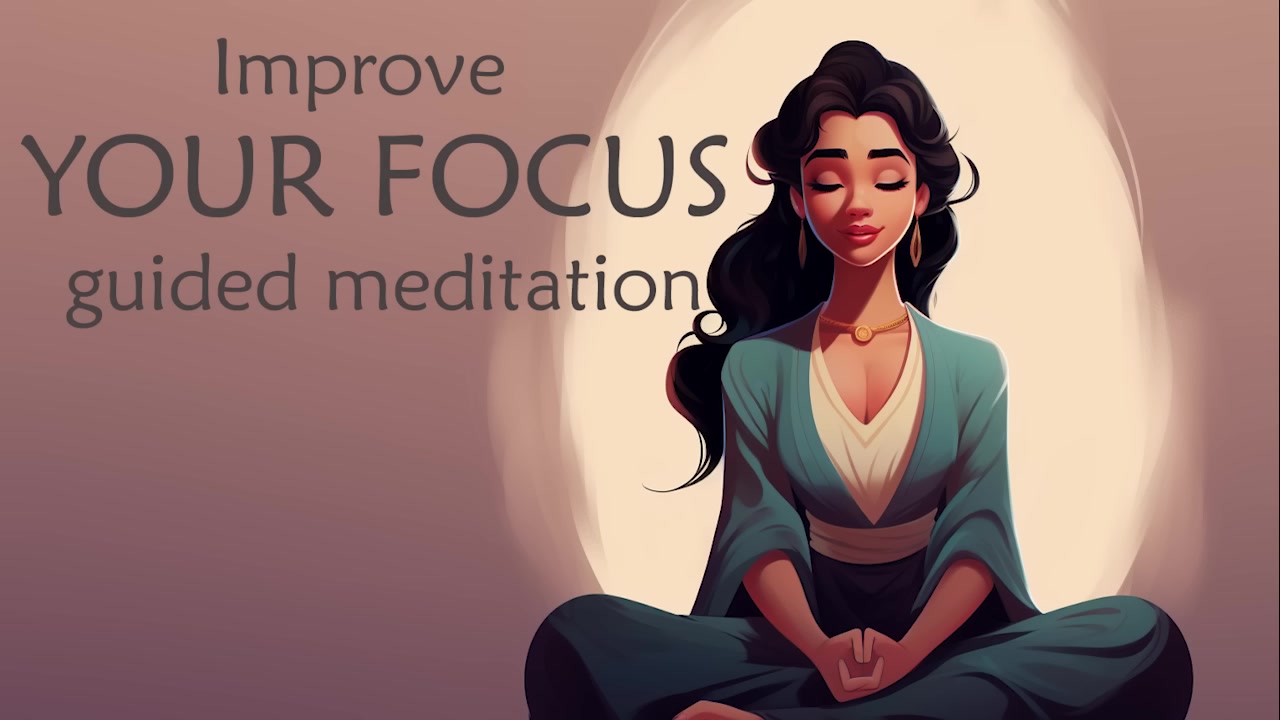
The hardest part of meditation is not that thoughts arise -- it is not "attaching" yourself to them. This training uses the "Observer" concept: watching your thoughts as if they were clouds passing through the sky, without trying to grab them.
This technique aligns with "decentering," a core method in cognitive behavioral therapy (CBT). According to a 2025 Mount Sinai research team, meditation changes activity in emotion-regulation brain regions like the amygdala and hippocampus. Practicing non-reaction to thoughts literally reshapes brain structure.
The key guidance at this stage is that it is perfectly okay when the mind reacts or thoughts arise. It is just a natural function of the mind. Just redirect your focus. This "permissive attitude" frees beginners from the common trap of obsessing over "perfect focus."
"It's just a function of the mind -- it is as natural as the heart pumping blood. This shift in perspective becomes your first breakthrough in meditation."
Practical Application: At any point during the day, practice 3 minutes of thought observation: at a cafe, during your commute, or while waiting.
3. The Science of the 30-Second Warm-Up: Activating the Brain's Focus Circuit with One Word
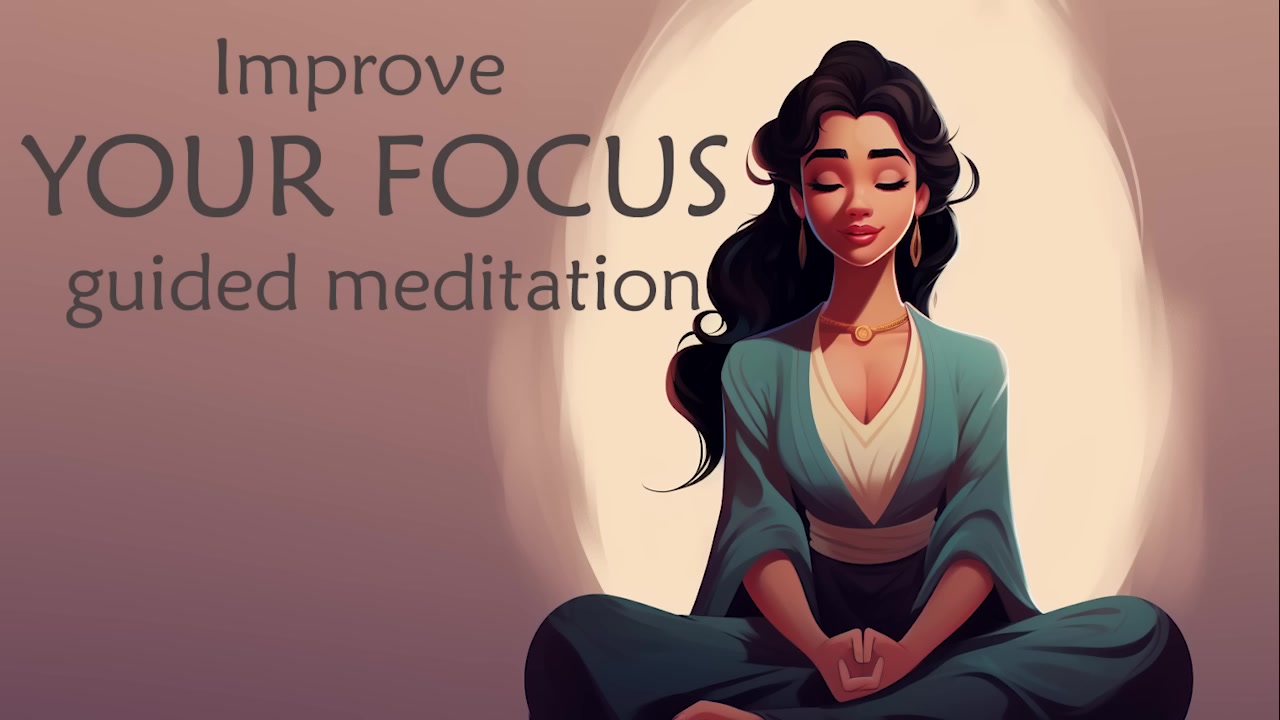
The first stage is a 30-second warm-up. A single word prompt is given, and you focus on that word as if it is all that exists for 30 seconds. The first prompt is "calm."
Why focus on a single word? This is the meditation "anchor" technique. Research has proven that focusing on a concrete object is far more effective for beginners than abstract "mind-clearing." A PNAS study showed that even a brief 10-minute mindfulness session improved executive attentional control in beginners.
30 seconds may seem short, but it actually feels surprisingly long when you try it. For someone with an average 8-second attention span, 30 continuous seconds of focus is already a significant challenge. That is why this stage is called a "warm-up" -- gently awakening the brain's focus circuit, like stretching before strength training.
"Focus on that one word prompt as if that word is all there is."
Practical Application: Set a timer for 30 seconds, close your eyes, and practice focusing solely on the word "calm."
4. 60 Seconds of Focus Changes the Brain: Applying Progressive Overload to Meditation
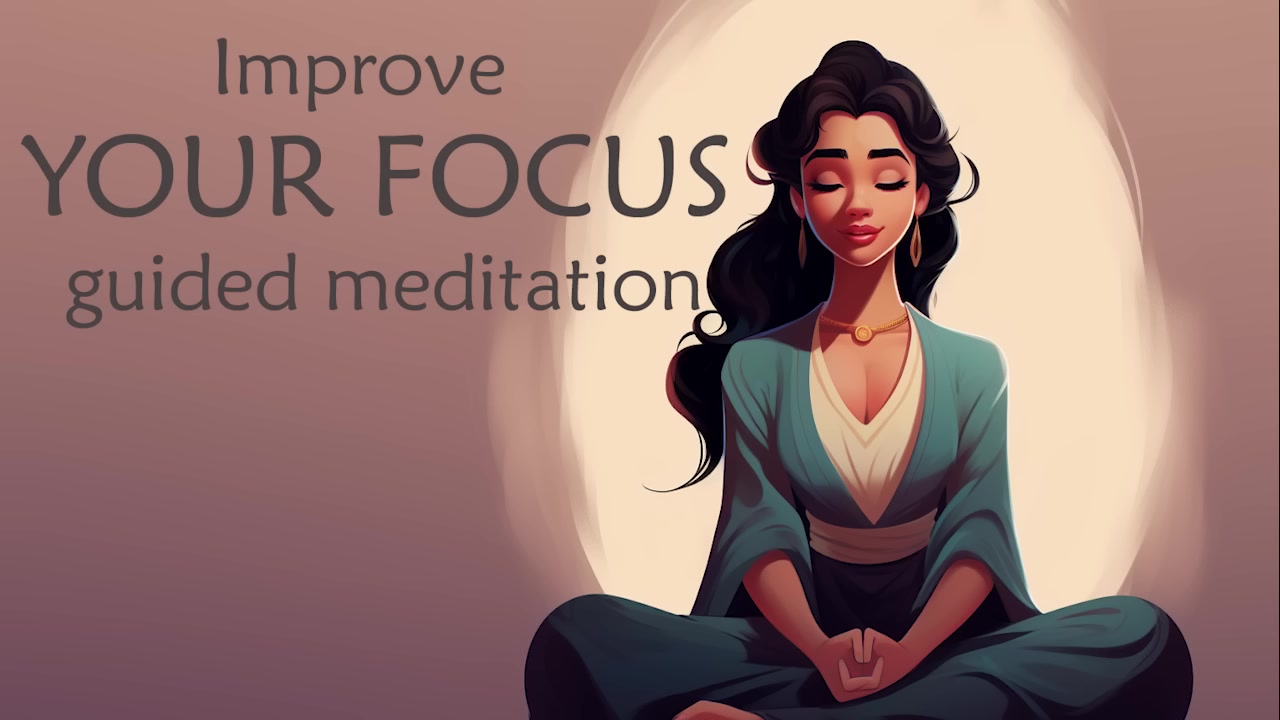
After the 30-second warm-up, a natural rest and self-acknowledgment break, then the second round begins: 60 seconds -- exactly double the time. The prompt word is "peace."
This structure follows the exact same principle as "progressive overload" in exercise science. Just as you must gradually increase weights to build muscle, the focus muscle also requires gradually increasing duration. Jumping straight to 5 minutes would cause frustration, but the leap from 30 to 60 seconds is an achievable challenge.
A notable psychological technique appears here: before starting the 60-second round, you are guided to look within for "eagerness" and "readiness." According to self-determination theory, actions driven by internal will are far more sustainable than externally forced ones.
"Explore within you and see if you can identify a sense of eagerness, even feel how willing and ready you are to dive in."
Practical Application: Practice 60-second word focus meditation daily for one week: right after waking up or before starting work.
5. The Meaning of 90 Seconds: How Changing Self-Talk Transforms Focus
The final round is 90 seconds. The prompt word is "serenity." Reaching 3 times the starting duration -- from 30 to 90 seconds -- is the climax of the entire training.
A very intentional self-talk technique is used here. Before beginning the focus, you say to yourself: "I am willing and I am ready to do my best and focus for 90 seconds." This is identical to techniques used in sports psychology to enhance self-efficacy. Multiple studies show that simply declaring your ability improves actual performance.
The most powerful closing message is this: "No one else can improve your focusing but you." This message contains the core truth that meditation's effects come from personal will and consistent practice, not external tools or apps. A 2025 Vanderbilt University study found that meditation stimulates the brain's waste removal system in a manner similar to sleep.
"I am willing and I am ready to do my best and focus for 90 seconds."
"No one else can improve your focusing but you."
Practical Application: Starting from week 2, challenge yourself with 90-second word focus meditation. Practice at the same time daily to build the habit.
Action Checklist
Today:
- Right now, set a 30-second timer and try focusing on the word "calm" once
- Choose one comfortable meditation spot (chair, cushion, etc.)
- Set up a "Do Not Disturb" routine on your smartphone
This week:
- Start a daily 11-minute 3-stage word focus meditation routine (30s, 60s, 90s)
- Try free trials of Headspace or Calm apps to compare guided meditations
- Start a meditation journal: date, focus duration, mind-wandering count, reflections
Long-term:
- Track focus changes over 4 weeks of daily meditation (measure via work productivity, reading time, etc.)
- Once 90 seconds feels comfortable, gradually extend to 2 minutes, then 3 minutes
- Add additional focus-strengthening habits like Deep Work block scheduling
Reference Links
Source Material
- Guided Meditation to Improve Your Focus! Level: Intermediate - Great Meditation (11:02)
Related Tools
| Tool | Purpose | Price | Link |
|---|---|---|---|
| Headspace | Structured meditation courses and focus-specific programs, beginner-friendly | 12.99 USD/mo or 69.99 USD/yr | Visit |
| Calm | Sleep stories and relaxation-focused meditation with celebrity narration | 16.99 USD/mo or 69.99-79.99 USD/yr | Visit |
| Insight Timer | World's largest free meditation library with timer and community features | Free (Premium: 59.99 USD/yr) | Visit |
| Balance | AI-powered personalized meditation with daily session recommendations | First year free | Visit |
Related Resources
- Mindfulness Meditation Improves Attention in Adults (USC, 2025) (Article) - Scientific results showing 30-day meditation improves attentional focus
- Meditation Induces Changes in Deep Brain Areas (Mount Sinai, 2025) (Article) - Latest neuroimaging research on meditation's effect on amygdala and hippocampus
- Short-term meditation training improves attention and self-regulation (PNAS) (Article) - Foundational research on short-term meditation improving attention and self-regulation
Questions to Consider
Can you focus on a single word for 30 seconds right now without any other thoughts? Try it.
What is the biggest reason your focus breaks during work or study? External environment or internal thoughts?
If your focus became 10 times better, what would be the first thing you would want to do?
Key Takeaways
- 1Right now, set a 30-second timer and try focusing on the word "calm" once
- 2Choose one comfortable meditation spot (chair, cushion, etc.)
- 3Set up a "Do Not Disturb" routine on your smartphone
- 4Start a daily 11-minute 3-stage word focus meditation routine (30s, 60s, 90s)
- 5Try free trials of Headspace or Calm apps to compare guided meditations
- 6Start a meditation journal: date, focus duration, mind-wandering count, reflections
- 7Track focus changes over 4 weeks of daily meditation (measure via work productivity, reading time, etc.)
- 8Once 90 seconds feels comfortable, gradually extend to 2 minutes, then 3 minutes
- 9Add additional focus-strengthening habits like Deep Work block scheduling
Want to read this later?
Save this insight to access it anytime