Lesson 5 / 5 in Product & Development
The Complete Process of Building an AI Business App in 60 Minutes with Zero Lines of Code (Auth, Payments, Deploy)
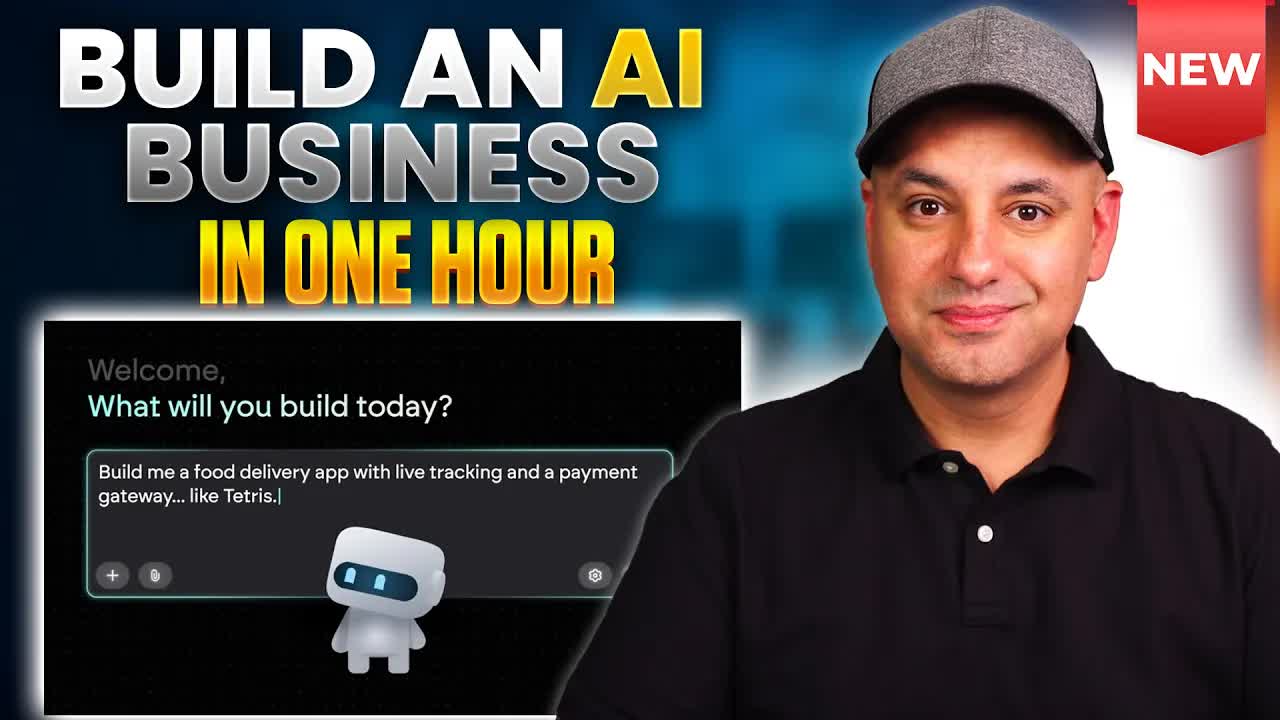
TL;DR
A step-by-step walkthrough of building and deploying a full-stack app with authentication, database, AI credit system, and Stripe payments in under 60 minutes without writing a single line of code.
The Complete Process of Building an AI Business App in 60 Minutes with Zero Lines of Code (Auth, Payments, Deploy)
One-Line Summary
A step-by-step walkthrough of building and deploying a full-stack app with authentication, database, AI credit system, and Stripe payments in under 60 minutes without writing a single line of code.
Key Numbers & Data
| Metric | Value | Context |
|---|---|---|
| App build time | Less than 60 minutes | From idea conception to deployable full-stack app |
| Lines of code written | Zero | All coding handled automatically by AI agent |
| AI models integrated | 4 | GPT-5, GPT-5 Mini, Claude, Nano Banana (image) running simultaneously |
| Emergent free credits | 10 credits/month | Free to start, Standard plan 20 USD/month (100 credits) |
| No-code AI platform market size | 8.6 billion to 75.1 billion USD (2034) | CAGR 31.13%, explosive growth market |
| Deployment time | 5-7 minutes | One-click deployment for live service launch |
Background: Why This Matters
As of 2026, vibe coding — a natural language-based app development approach — is experiencing explosive growth. This concept, first proposed by OpenAI co-founder Andrej Karpathy in early 2025, has now become a mainstream development methodology adopted by Fortune 500 companies. In Y Combinator's 2025 Winter batch, 25% of startups had 95% of their codebase generated by AI.
Gartner projects that by 2026, approximately 75% of new applications will be built using low-code/no-code technology. The no-code AI platform market is expected to grow from 8.6 billion USD in 2026 to 75.1 billion USD by 2034 (CAGR 31.13%). 92% of US developers already use AI daily, and vibe coding tool users report 3-5x productivity improvements on general tasks.
In this landscape, Emergent stands out as an agentic AI coding platform capable of building not just prototypes but "production-ready" apps. It offers differentiating features like automatic screenshot verification, testing agents, and universal API keys that solve the limitations of existing vibe coding tools.
The best demonstration of this trend is AI education expert Saj Adib (founder of Skill Leap AI, 7 years in tech education) using Emergent to build a real business app from scratch. The fact that authentication, payments, and multi-AI model integration were all completed within 60 minutes with zero coding experience perfectly illustrates where this trend stands today.
Market data confirmed by research:
- No-code AI platform market: 8.6 billion USD in 2026 to 75.14 billion USD in 2034, CAGR 31.13% (Fortune Business Insights)
- Low-code development technology market: expected to exceed 30 billion USD in 2026 (Gartner)
- 92% of US developers use AI daily (Microsoft/IBM)
- IBM internal research: vibe coding reduces enterprise app development time by 60%
Key Insights
1. What Is Possible in 60 Minutes: The Complete App
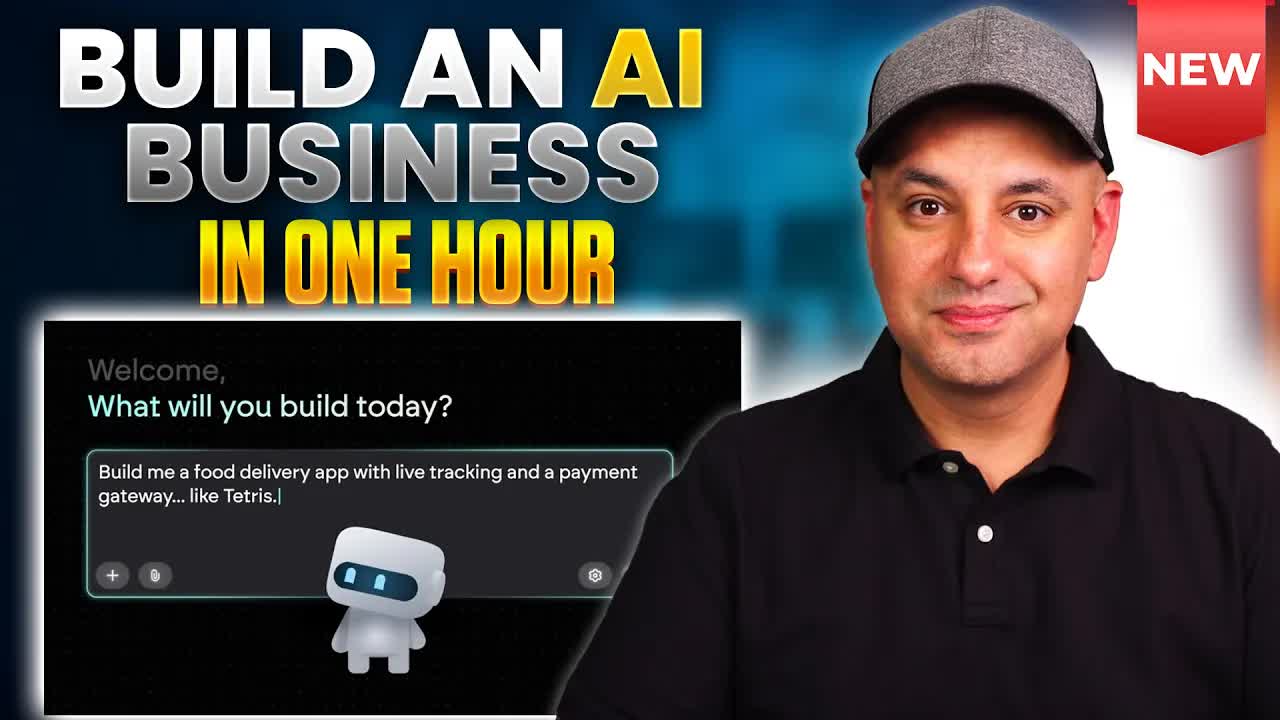
The most striking thing is that this app is not a simple prototype. A complete authentication system (sign-up/login) works, per-user databases are created, and an AI credit system is in place. New sign-ups automatically receive 10 credits.
The core functionality of the app is AI guiding users through the entire business launch process. From idea discovery to validation, naming, logo design, business plans, and marketing post generation — specialized AI chatbots guide users conversationally at each step.
Notably, logo generation uses Google's Nano Banana image model, while text conversations use GPT-5 — multiple AI models working simultaneously within a single app. An admin panel is also built separately to monitor user status, credit usage, and active users in real time.
"I went from having just an idea to building this fully functioning app that connects several AI models in less than an hour. And I didn't write a single line of code."
How to apply: Think about ideas for turning your area of expertise into an AI platform. The key is packaging your know-how into step-by-step AI chatbots.
Tools mentioned:
- Emergent AI - Agentic AI coding platform (built the entire app)
- GPT-5 - Text-based AI chatbot (ideation, validation, etc.)
- Nano Banana - Google Gemini image generation model (logo creation)
2. Starting a Full-Stack App with a Single Prompt: AI Fills in the Details
The beginning of app creation is surprisingly simple. The entire starting prompt was just one sentence: "Build me a web app called AI Startup Mentor that helps with business idea discovery, logos, websites, and marketing."
Here is the important point: the prompt does not need to be perfect. Emergent's agent fills in the gaps automatically. UI design, tech stack selection, and other details are decided by the agent making optimal judgments.
Selecting the "Stable and Thorough" option in the agent settings produces reliable results. It runs on Claude 4.5, with advanced settings available like the 1 million token context window option (remembering more conversation context) and Ultra Thinking model (deeper reasoning).
The universal API key is also a key differentiator. Instead of obtaining separate API keys from OpenAI, Google, etc., a single Emergent integrated key provides access to all models — GPT-5, Claude, Nano Banana, and more. The hassle of API key management disappears.
"The nice thing is emergent actually has a universal key. So there is no setup needed."
How to apply: First refine your app idea through conversations with ChatGPT, then use the result as your prompt.
Tools mentioned:
- Claude 4.5 - Emergent's default agent model
3. Screenshots, Testing, and Bug Fixing — All Handled Automatically by AI
Anyone who has tried vibe coding can relate: the most time-consuming part is "catching errors." Taking screenshots, explaining what is broken, fixing it, repeating... this cycle often takes more than half of total development time.
Emergent solves this with its testing agent. The AI automatically takes screenshots of the app and shares them in the chat, while a dedicated testing agent automatically tests the app. When errors are found, it analyzes logs, identifies root causes, and applies fixes automatically.
In practice, after the initial prompt, apart from answering one additional question, there was not a single instance of manual error fixing or screenshot uploading. This was impossible with previous tools, where you had to manually point out "look here, this part is broken" every time.
This is not just about convenience. It is a core feature that dramatically reduces development time. According to IBM's internal research, enterprise app development time was reduced by 60% using vibe coding techniques, and combining automatic testing could amplify that effect further.
"One of the most frustrating parts when I've done any type of vibe coding or I'm building these type of apps is just how much back and forth and how many simple things fall through the cracks."
How to apply: When choosing a vibe coding tool, check whether it has "automatic testing" as a core criterion.
4. Don't Like It? Change Everything: Safe Experimentation with Fork
There is a common dilemma in app development: the current version is fine, but you want to try a completely different direction. One wrong move can lead to irreversible changes.
Emergent's Fork feature solves this cleanly. It summarizes the existing conversation and creates a new branch, allowing bold experimentation while safely preserving the current version.
In practice, this feature was used to completely redesign the app's dashboard. The tab-based structure was replaced with a side panel + central chatbot layout, with the full business launch steps (Idea > Validation > Naming > Logo > Business Plan > Incorporation > Website > Marketing) placed in the sidebar.
The key is connecting different AI models to each step. The ideation chatbot uses GPT-5, logo generation uses Google Nano Banana, and website-related tasks use Claude — four different AI models each performing their roles within a single app. With a single universal key connecting everything, there is zero complexity.
"This fork option basically summarizes your existing conversation and creates another version of it. So you could actually keep this version and create a fork with a new version."
How to apply: Develop the habit of always creating a Fork before major direction changes during app development. The freedom to experiment changes completely.
5. From Free 10 Credits to Stripe Payments: Monetization Structure Completed in 60 Minutes
Just looking at the logo generation feature alone reveals the app's completeness. Enter a business name and description, and Google's Nano Banana model creates 2 logos at once. The quality of logos from the first attempt is impressive — text rendering is accurate and the brand feel comes through perfectly.
Nano Banana is a Gemini-based image generation model developed by Google DeepMind, showing particularly strong performance in generating images with text. The recent Nano Banana Pro version supports multilingual text rendering and up to 4K resolution.
But the real core is the monetization structure. A single prompt — "Add a credit system and Stripe payments" — implemented the entire payment system. Free 10 credits on sign-up, tiered pricing at 1 credit per chat, 3 credits per logo, and 5 credits per website, 150-credit one-time paid purchase, and an actual Stripe checkout page — all designed automatically.
Stripe Sandbox is connected for testing, and to accept real payments, you simply swap the API key in the Stripe dashboard. The fact that free-to-premium conversion paths (CTAs) were also auto-designed is truly practical.
"I mean, how wild is that? I have a real working business here in just about an hour that I could put online and give people some free credits to see if they like it and see if they upgrade."
How to apply: Consider a credit system as the revenue model for your AI app. Tiered pricing by feature is possible, and the free trial-to-paid conversion feels natural.
Tools mentioned:
- Stripe - Payment processing (checkout, subscriptions)
- Nano Banana Pro - Google Gemini image generation model (logos)
6. Live in 5 Minutes: Deployment and Actual Operating Costs
Once the app is complete, deployment is a single button press. The Share feature lets you create a 30-minute feedback link first, and when ready, the Deploy button initiates full deployment.
Before deployment, the Health Check feature automatically runs a code review to catch issues that could block deployment. Deployment itself takes 5-7 minutes, and custom domain connection is also available.
Emergent's pricing is realistic. Start free with 10 credits, get 100 credits on the Standard plan (20 USD/month), or 750 credits on the Pro plan (approximately 200 USD/month). Since you can build one app for fewer than 100 credits, the Standard plan is sufficient to build and deploy a single app.
One thing to note is that app hosting costs 50 credits per month. That is half of the Standard plan going to hosting, so running multiple apps may require the Pro plan. Also remember that Emergent can build mobile apps, not just web apps.
"If you think about it, the fact that I could build something like this in one sitting is just kind of mind-blowing. I used to build apps with teams all the time in my previous companies and they take months to get something like this."
How to apply: Build an MVP with free credits first, collect feedback using the Share feature, then consider a paid plan.
Tools mentioned:
- Emergent Hosting - App deployment and hosting (50 credits/month)
Action Checklist
Today:
- Create a free account on Emergent (app.emergent.sh) and start your first app with 10 credits
- Write down 3 ideas for turning your area of expertise into an AI platform
- Refine your idea with ChatGPT and convert it into a prompt
This week:
- Build an MVP-level app with Emergent and get feedback via Share link
- Implement credit system and Stripe payment integration
- Test 2-3 different design directions using the Fork feature
Long-term:
- Connect a real Stripe account and transition to a paid service
- Add features based on user feedback and optimize credit pricing
- Expand your web app to a mobile app for multi-platform service
References
Related Tools
| Tool | Purpose | Price | Link |
|---|---|---|---|
| Emergent AI | Agentic AI coding platform. Build, test, and deploy full-stack apps with natural language prompts. Auto screenshots, testing agent, universal API key. | Free (10 credits/month), Standard 20 USD/month (100 credits), Pro approx. 200 USD/month (750 credits) | Visit |
| GPT-5 | OpenAI's latest large language model. Used for text generation, conversation, analysis, and general AI tasks. | Usage-based API pricing (accessible via Emergent universal key) | Visit |
| GPT-5 Mini | Lightweight version of GPT-5. Fast and cost-efficient, suitable for high-volume use cases. | Lower cost than GPT-5 | Visit |
| Nano Banana (Gemini Image) | Google DeepMind's Gemini-based image generation model. Accurate text rendering, strong for logos/infographics. | API: approx. 0.039 USD/image (accessible via Emergent universal key) | Visit |
| Stripe | Global online payment platform. Supports subscriptions, one-time payments, checkout. | 2.9% + 0.30 USD per transaction | Visit |
| Claude | Anthropic's AI model. Used as Emergent's default agent engine (Claude 4.5). | Varies by model (accessible via Emergent universal key) | Visit |
Related Resources
- What Is Vibe Coding? 2026 Complete Guide (Article) - Comprehensive guide covering vibe coding concepts and tools
- 12 Best Vibe Coding Tools in 2026 (Article) - Comparison of major vibe coding tools including Emergent
- Emergent Product Hunt Page (Tool) - Emergent community reviews and ratings
- The Rise of Micro Apps: Non-Developers Are Writing Apps Instead of Buying Them (TechCrunch) (Article) - Analysis of the micro app trend created by vibe coding
- Emergent AI Pricing and Credit System (Guide) - Detailed comparison of credit consumption and plans
Fact-Check Sources
- Full-stack app completed in 60 minutes without coding → Demo verification + Emergent review compilation
- Emergent builds production-ready apps, not prototypes → https://www.aixploria.com/en/emergent-ai/
- Deployment takes 5-7 minutes → https://emergent.sh/
- App buildable for fewer than 100 credits → https://help.emergent.sh/articles/769724-credits-and-pricing
Questions to Consider
What repetitive expertise-based tasks do you perform that could be packaged into an AI app to provide value to others?
Between credit-based pricing and subscription models, which revenue structure is better suited for your app?
In an era where you can build an app in 60 minutes, what becomes the key differentiator if it is not technical ability?
Key Takeaways
- 1Create a free account on Emergent (app.emergent.sh) and start your first app with 10 credits
- 2Write down 3 ideas for turning your area of expertise into an AI platform
- 3Refine your idea with ChatGPT and convert it into a prompt
- 4Build an MVP-level app with Emergent and get feedback via Share link
- 5Implement credit system and Stripe payment integration
- 6Test 2-3 different design directions using the Fork feature
- 7Connect a real Stripe account and transition to a paid service
- 8Add features based on user feedback and optimize credit pricing
- 9Expand your web app to a mobile app for multi-platform service
Want to read this later?
Save this insight to access it anytime
Original Video
코딩 0줄로 60분 만에 AI 비즈니스 앱 완성한 전 과정 (인증·결제·배포까지)