Lesson 10 / 46 in Mindset & Wellness
3 Mindfulness Techniques a Psychologist Actually Uses: From the 30-Second 54321 Grounding to 1-Minute Daily Routines
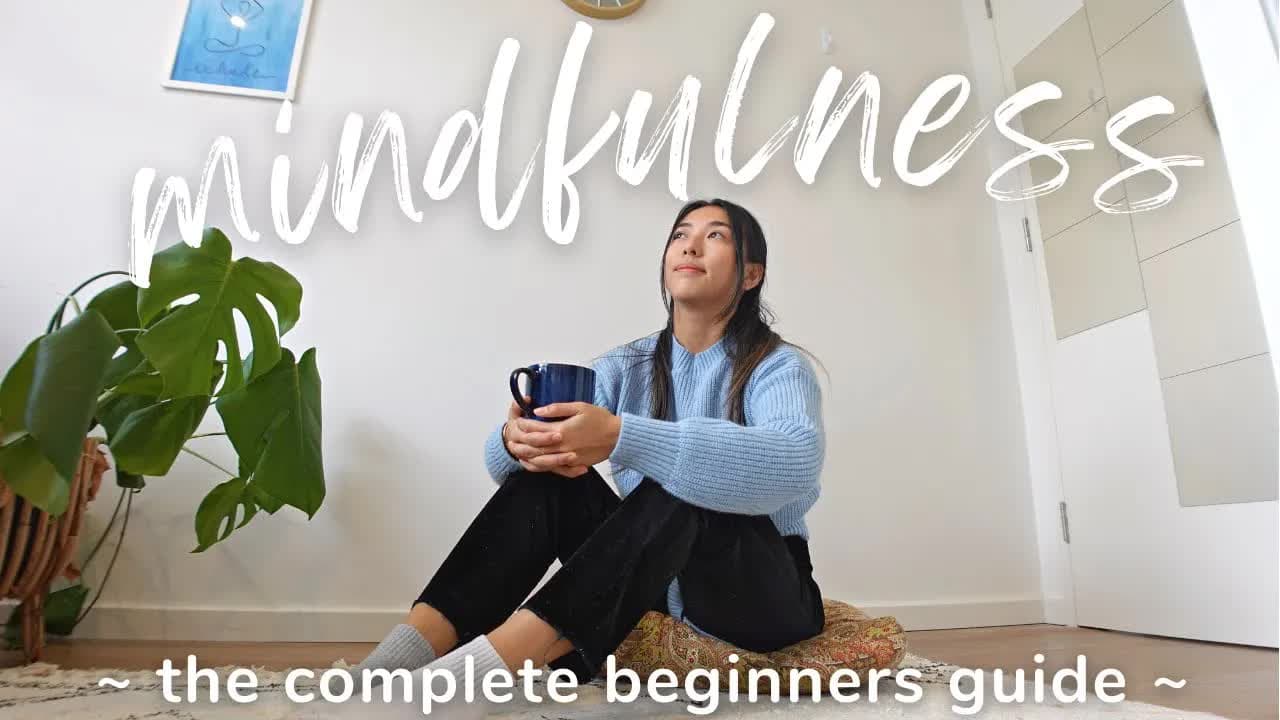
TL;DR
Mindfulness is not about clearing your mind -- it is about noticing when your mind has drifted and gently bringing it back. A psychologist shares 3 beginner techniques anyone can start in 1-2 minutes today.
3 Mindfulness Techniques a Psychologist Actually Uses: From the 30-Second 54321 Grounding to 1-Minute Daily Routines
One-Line Summary
Mindfulness is not about clearing your mind -- it is about noticing when your mind has drifted and gently bringing it back. A psychologist shares 3 beginner techniques anyone can start in 1-2 minutes today.
Key Numbers & Data
| Metric | Figure | Context |
|---|---|---|
| Number of Techniques | 3 | Beginner-friendly mindfulness techniques anyone can start today |
| 54321 Duration | 30 seconds to 1 minute | Immediate grounding using all five senses |
| Informal Mindfulness Time | 1-2 minutes/day | Woven into existing daily activities, no extra time needed |
| Mindfulness Adoption Rate Change | 7.5% to 17.3% | US adult mindfulness practice rate more than doubled from 2002-2022 (NCHS) |
| Cortisol Reduction Effect Size | g=0.41 (moderate) | Meta-analysis of mindfulness program salivary cortisol reduction |
Background: Why This Matters
Mindfulness originated from Eastern philosophy, particularly Buddhism, but modern psychology and medicine have conducted thousands of studies on its secular (non-religious) form. Effects including stress reduction, working memory improvement, and decreased worry and rumination have been well-established. In clinical psychology, mindfulness is recommended to virtually every client at least once.
The problem is starting. Many people install meditation apps, follow guided sessions, and then quit saying "this is not for me" or "I keep having thoughts, am I failing?" The core of mindfulness is not eliminating thoughts -- it is noticing that your mind has drifted and returning to the present without judgment. Misunderstanding this leads to frustration before you even begin.
Ro (Roanna Chan), a clinical psychologist practicing in Sydney, Australia, holds a Master of Clinical Psychology (MClinPsych) from UNSW. She directly addresses this misunderstanding and presents 3 techniques that complete beginners can start today. The concept of "informal mindfulness" is particularly practical for busy modern people, as it requires no separate time or space.
Related market data:
- US adult mindfulness practice rate more than doubled from 7.5% (2002) to 17.3% (2022) (Source: NCHS / golemanei.com)
- Global meditation app market approximately 5.72 billion USD in 2025, projected to grow at 12.5% CAGR through 2033 (Source: SkyQuest / Statista)
- 10 minutes of daily mindfulness reduced depression symptoms by approximately 20% (Source: University of Bath / University of Southampton)
- Mindfulness programs showed moderate cortisol reduction effect size of g=0.41 in meta-analysis (Source: Health Psychology Review)
Key Insights
1. The Essence of Mindfulness: Not "Clearing Thoughts" but "Noticing and Returning"
In its simplest definition, mindfulness is "bringing awareness to the present moment." Common methods include connecting with sensations (touch, taste, hearing) or paying attention to breathing. Breathing is especially recommended for a simple reason -- we are always breathing.
Our brain constantly oscillates between present, future, and past. Thinking about what to eat for lunch, then a mistake from last week pops up, then worrying about next week's exam. Too much time in future worries becomes "anxiety." Getting stuck in past failures becomes "depression." Mindfulness is a tool for increasing the time we spend in the present moment between these two extremes.
The biggest misconception is that mindfulness means "eliminating thoughts." The reality is the opposite. We always have thoughts and emotions -- we are human. If you had zero thoughts for 30 minutes, that would actually be concerning. The key is noticing thoughts passing by without climbing aboard. Imagine standing at a train station. Thoughts are like passing trains. Instead of boarding every train and riding along, you simply watch them pass.
The success metric of mindfulness is different too. It is not how long you stayed present, but how well you notice that your mind drifted and return. Like building muscle at the gym, repeating this "notice and return" process strengthens your mindfulness muscles over time.
"Mindfulness is just the practice of noticing when our mind has drifted and to gently, non-judgmentally bring it back in."
"It's like going to the gym. Over time you start to build those mindfulness muscles."
How to apply: Do not blame yourself when your mind wanders. Treat the fact that you "noticed" as a success. Today, consciously recognize at least 3 moments when your mind traveled to the past or future and returned.
2. The 54321 Technique: Force-Landing in the Present Using All Five Senses in 30 Seconds
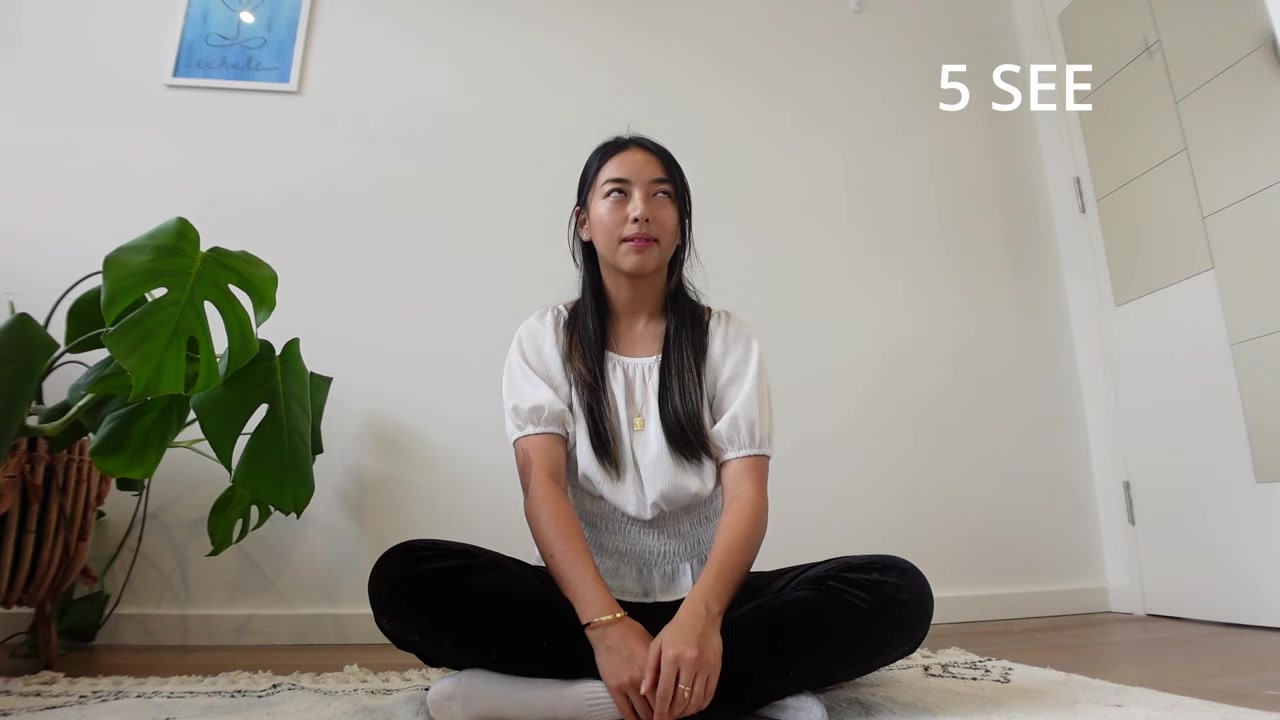
The first technique is "54321 Grounding." It takes 30 seconds to 1 minute and uses all five senses to quickly connect to the present moment. It works as a "reset button" when you notice your mind drifting, or when you feel anxious or distracted.
Here is how it works. Look around and find 5 things you can see -- a leaf, lamp, water bottle, tissue, carpet. Next, notice 4 things you can feel. You do not need to reach out and touch anything; just focus on what your body feels right now -- the pressure of toes in socks, the weight of sitting on a cushion, hair touching shoulders, a tickle on your nose. Then 3 things you can hear -- a clock ticking, rain, distant voices. 2 things you can smell -- fabric, rain. Finally, 1 thing you can taste.
The biggest advantage of this technique is that "you physically cannot do it while thinking about something else." While hunting for what you see, hear, and feel one by one, it is physically impossible to focus on your worries simultaneously. This makes it an "emergency exit" for quickly returning to the present from anxiety or panic states.
CBT (Cognitive Behavioral Therapy) and DBT (Dialectical Behavior Therapy) actively utilize this technique. A 2024 study confirmed that grounding techniques like this significantly increase parasympathetic nervous system (PSNS) activation and decrease sympathetic nervous tone, directly regulating physiological stress responses.
"I physically can't do the 54321 and tune into what I'm feeling and hearing if my thoughts are drifting."
How to apply: Try 54321 right now. From where you sit, find 5 things you see, 4 things you feel, 3 things you hear, 2 things you smell, 1 thing you taste.
3. Zero Extra Minutes: How Your Morning Coffee Becomes Mindfulness Practice
The second technique is "Informal Mindfulness." This is the first recommendation for people who are resistant to mindfulness or tried it and felt it was not for them. It requires absolutely no separate time, space, or tools.
The key is adding "awareness" to activities you already do every day. For example, when drinking your morning coffee. Normally you scroll Instagram while drinking. Instead, put the phone down and feel the warmth of the cup. Is it warm or cool? Actually taste the coffee -- the sensation in your mouth, the feeling of swallowing, the aroma. Just 1-2 minutes of this is enough.
When you first practice this, you have an almost surreal experience. You discover shops and houses on streets you have walked for years but never noticed. It is the moment you realize how much of your life has been lived on "autopilot."
A 2024 University of Bath study found that just 10 minutes of daily mindfulness practice reduced depression symptoms by approximately 20% and increased motivation for healthy habits like exercise and sleep. Informal mindfulness lowers the barrier to just 1-2 minutes of micro-practice for people who find even 10 minutes daunting.
"It's literally just being mindful of your life. You don't need to set aside any extra time. You don't need to have a space or any tools for it."
How to apply: Tomorrow morning when drinking coffee (or tea), put down your phone and spend 1 minute focusing only on the temperature, taste, aroma, and sensation of swallowing.
4. Breath Observation, Not Breath Control: A Different Approach from Standard Meditation
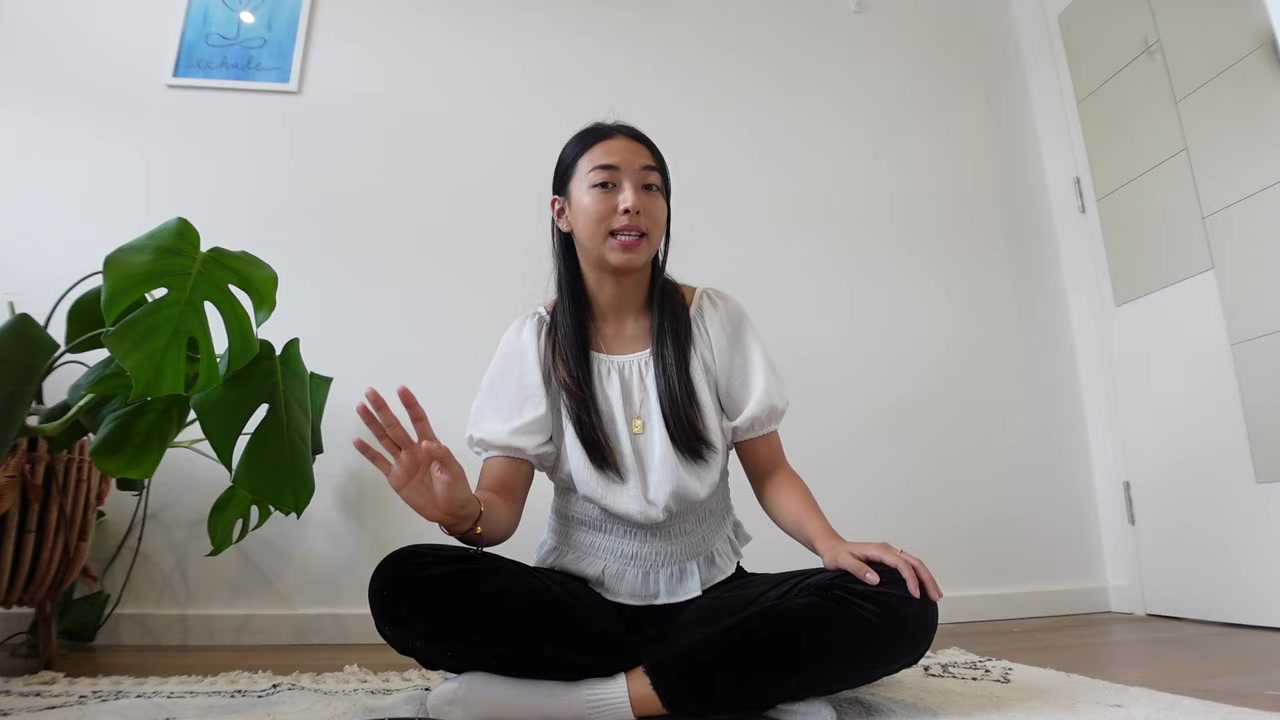
The third technique is "Breath Noticing," which differs from typical breathing meditation. Guided meditations usually say "breathe in... breathe out" and make you follow a specific pattern. But since everyone has different lung capacity and breathing speed, forcing the same pattern on everyone does not always make sense.
The key to this technique is "observation" rather than "control." You do not need to slow your breathing, breathe into your belly, or exhale only through your nose. Simply notice the breathing you are already doing. "Am I breathing fast right now?" "Slow?" "Deep?" "Shallow?" Ask yourself these questions.
The interesting part is that even without controlling your breath, just observing it causes your breathing to naturally slow and soften over time. Not trying to control it actually lets your body relax. The University of Pennsylvania Department of Psychiatry also recommends this approach, emphasizing that the goal is not relaxation or stress reduction but simply noticing, accepting, and recognizing. Relaxation is a byproduct, not the purpose.
This is an excellent technique for people who have mastered the first two and are ready for the next level. Before diving into long, difficult meditation sessions, starting with this simple breath observation is much more sustainable.
"Don't try and control it, just notice it."
How to apply: Tonight, lie down and spend 1 minute observing your breathing without controlling it. Just notice whether it is fast or slow, deep or shallow.
5. What a 100-Day Meditation Challenge Taught: Informal Mindfulness Lasts Longer Than Formal Meditation
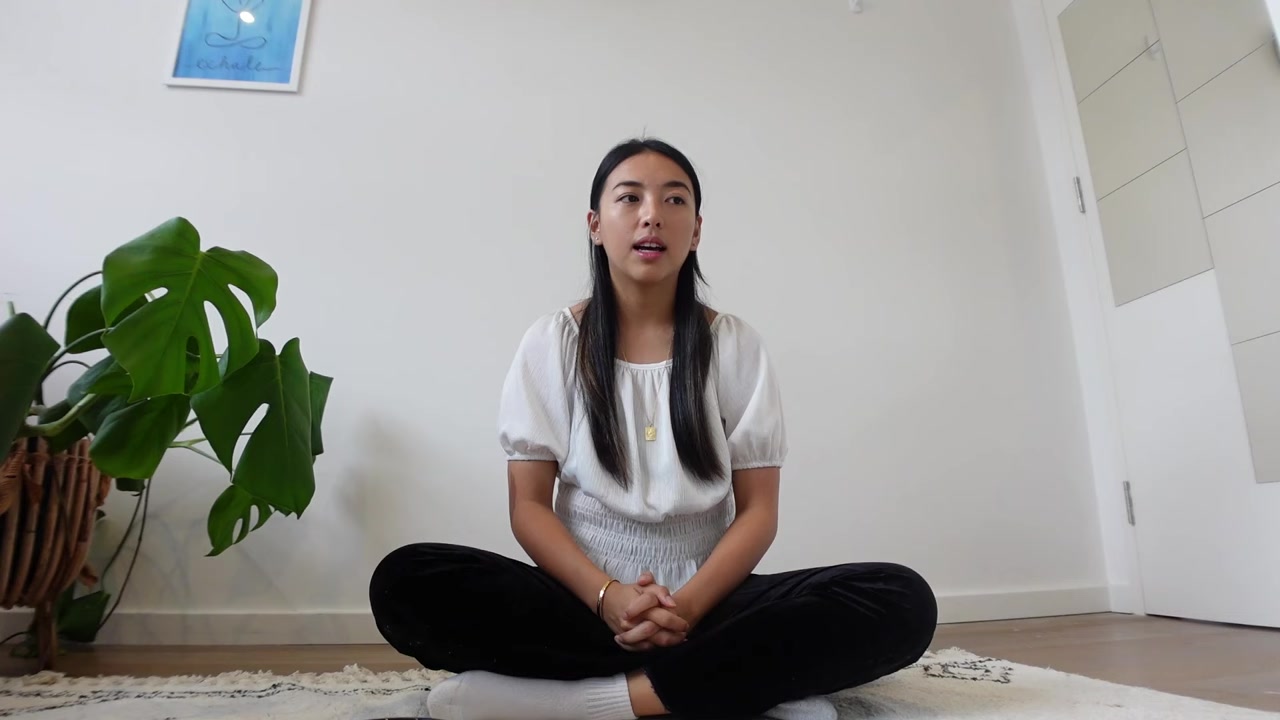
Being a psychologist does not mean perfect mindfulness practice. She publicly started a 100-day meditation challenge to build the habit, but on day 30, a personal event (a breakup) caused her to completely stop. Even perfect plans and public declarations can be powerless against life's unexpected variables.
The interesting finding is that while formal sit-down meditation was abandoned, informal mindfulness continued. Focusing on toothbrushing sensations for 2 minutes, observing trees and bushes for 1 minute while walking -- these "micro-practices" could be sustained without special willpower or time investment.
The message is clear: approach mindfulness like an "experiment." Drop the pressure to do it perfectly, try it out, and find the method that works for you. After becoming comfortable with informal mindfulness, expanding to guided meditation, apps, and books is never too late.
"Even when I can't do a sit-down meditation, I will do my two minutes of concentrating on toothbrushing or one minute of walking down the street observing the bushes and the trees."
How to apply: This week, pick one daily activity (brushing teeth, coffee, commute walk) and experiment with 1-2 minutes of mindfulness. Take notes on what happens.
Action Checklist
Today:
- Do the 54321 technique once right now from where you sit (30 seconds to 1 minute)
- Consciously notice 3 moments today when your mind drifts to past or future and returns
- Spend 1 minute before bed observing your breath without controlling it
This week:
- Practice 1 minute of informal mindfulness during morning coffee or tea every day
- During your commute walk, spend 1 minute consciously observing surroundings (trees, buildings, sky)
- Do 54321 grounding once daily, especially when feeling anxious or distracted
Long-term:
- After informal mindfulness becomes habitual, try guided meditation apps like Headspace or Calm
- Gradually extend breath observation time: 5 min -> 10 min -> 15 min
- Try a 30-day mindfulness challenge (designed flexibly to include informal mindfulness)
Reference Links
Source Material
- 3 easy mindfulness techniques | psychologist explains - the psych diaries (12:56)
Related Tools
| Tool | Purpose | Price | Link |
|---|---|---|---|
| Headspace | Guided meditation, sleep, focus sessions. VR version (Headspace XR) also available. | 12.99 USD/mo or 69.99 USD/yr (free trial) | Visit |
| Calm | Meditation, sleep stories, music. AI-based personalized recommendations. | 14.99 USD/mo or 69.99 USD/yr (free content) | Visit |
| Ten Percent Happier | Science-based meditation app. Practical approach for skeptics. | 99.99 USD/yr | Visit |
Related Resources
- 5-4-3-2-1 Coping Technique for Anxiety - UR Medicine (article) - Detailed 54321 technique guide from Rochester Medical Center
- Mindful Breathing Practice - UC Berkeley Greater Good (article) - Evidence-based mindful breathing guide from Berkeley
- Mindfulness Exercises - Mayo Clinic (article) - Mayo Clinic's everyday mindfulness practices
- 10 minutes of daily mindfulness - Harvard Health (article) - Harvard Health on 10-minute daily mindfulness effects
Questions to Consider
During today, where did your mind most often drift -- to the "past" or the "future"? And what emotion came with it?
During everyday activities like brushing teeth or showering, what are you usually thinking about? If you turned that time into mindfulness practice, what might change?
Instead of feeling pressure to do mindfulness "perfectly," if you approach it as an "experiment," what is the smallest step you could take today?
Key Takeaways
- 1Do the 54321 technique once right now from where you sit (30 seconds to 1 minute)
- 2Consciously notice 3 moments today when your mind drifts to past or future and returns
- 3Spend 1 minute before bed observing your breath without controlling it
- 4Practice 1 minute of informal mindfulness during morning coffee or tea every day
- 5During your commute walk, spend 1 minute consciously observing surroundings (trees, buildings, sky)
- 6Do 54321 grounding once daily, especially when feeling anxious or distracted
- 7After informal mindfulness becomes habitual, try guided meditation apps like Headspace or Calm
- 8Gradually extend breath observation time: 5 min -> 10 min -> 15 min
- 9Try a 30-day mindfulness challenge (designed flexibly to include informal mindfulness)
Want to read this later?
Save this insight to access it anytime