Lesson 24 / 46 in Mindset & Wellness
The Real Cause of Burnout Isn't Overwork: A 1,000-Person Survey Reveals the Trauma and Self-Worth Connection
TL;DR
The root cause of burnout is not overwork or low pay but unresolved trauma that erodes your sense of self-worth, and healing that trauma restores vitality and creativity.
The Real Cause of Burnout Isn't Overwork: A 1,000-Person Survey Reveals the Trauma and Self-Worth Connection
One-Line Summary
The root cause of burnout is not overwork or low pay but unresolved trauma that erodes your sense of self-worth, and healing that trauma restores vitality and creativity.
Key Numbers & Data
| Metric | Value | Context |
|---|---|---|
| Low self-worth reported | 97% | Out of 1,000 survey respondents, nearly all reported experiencing low self-worth |
| Trauma experience reported | 92% | Over 9 in 10 respondents reported experiencing some form of trauma |
| Burnout reported | 87% | A significant majority reported burnout levels that impacted daily functioning |
| Annual burnout healthcare cost | 125-190 billion USD | Annual burnout-related healthcare spending in the US (Harvard Business Review) |
| Survey scope | 1,000 out of 20,000 | Self-selected survey from newsletter subscribers interested in high-performance living |
Background: Why This Matters
In 2019, the World Health Organization (WHO) officially classified burnout as an "occupational phenomenon" in the ICD-11. However, WHO's definition limits burnout to "chronic workplace stress that has not been successfully managed" and explicitly states it should not be applied to other areas of life. This definition leaves a critical gap: why do people who love their work, earn well, and do not overwork still experience severe burnout?
A 2025 study found that burnout symptoms and traumatic stress symptoms significantly overlap. Mental exhaustion, helplessness, and emotional detachment -- the hallmark symptoms of burnout -- may actually be manifestations of unresolved trauma. In the US alone, the annual economic cost of burnout reaches 322 billion USD in productivity losses, with healthcare costs alone at 190 billion USD. Despite these massive investments, burnout rates continue rising year after year, suggesting we may be diagnosing the root cause incorrectly.
Dr. Karen Curry Parker, a high-performance coach with 30 years of experience coaching over 10,000 people, noticed this gap. The burnout patterns she observed in her coaching practice did not align with WHO's definition, leading her to independently research the relationship between trauma and burnout. She is the founder of Quantum Human Design, holds degrees in nursing (BSN) and journalism (BA), and has been featured on Fox News, Bloomberg Businessweek, CBS, and ABC.
Related market data:
- Annual US burnout-related healthcare spending: 125-190 billion USD (Source: Harvard Business Review)
- Annual corporate productivity loss from burnout: 322 billion USD (Source: The Interview Guys Research Report)
- Physician burnout costs 4.6 billion USD annually in turnover and reduced hours (Source: Healthcare Dive / Annals of Internal Medicine)
- Burnout symptoms (exhaustion, helplessness, emotional detachment) significantly overlap with traumatic stress symptoms (Source: PMC / PLOS One)
Key Insights
1. Loving Your Work But Burning Out: The Critical Gap in WHO's Definition
The WHO's 2019 official classification of burnout in ICD-11 was an important step, but the definition has significant limitations. WHO defines burnout as the result of "chronic workplace stress that has not been successfully managed" and specifies it applies only to occupational contexts.
The problem is that reality does not match this definition. Most coaching clients did not hate their jobs. They were not overworked or underpaid. Many genuinely loved their work. Yet they experienced extreme fatigue and exhaustion. If work is not the problem, what is draining these people?
This question marks a turning point. When we look for burnout's cause only in the workplace, solutions become trapped there too: get a better job, reduce hours, negotiate a raise. But if burnout strikes people whose working conditions are already good, we need to look somewhere entirely different.
"Most of my clients really loved their work but they felt exhausted and burned out because of underlying patterns of self-sabotage linked to traumatic events from their past"
How to apply: Ask yourself whether the exhaustion you feel is truly caused by work, or whether it comes from something deeper.
2. 97% Doubt Their Own Worth: The Shadow of Trauma Revealed by a Survey
A survey sent to 20,000 newsletter subscribers yielded approximately 1,000 responses. While not a scientifically randomized sample -- it was a self-selected group interested in high-performance living -- the consistency of results is noteworthy.
97% of respondents reported low self-worth. 92% reported experiencing some form of trauma. 87% reported being in a state of burnout, with some unable to even go to work. The fact that all three numbers are simultaneously high suggests a meaningful connection between them.
According to the Harvard School of Public Health, unresolved trauma is a primary driver of low self-worth and motivational dysfunction. The intriguing part is the scope of "trauma." While 92% reported trauma experiences, most did not experience what the DSM defines as "actual or threatened death, serious injury, or sexual violence." Everyday traumas -- invisible by textbook definitions -- were eroding their sense of self-worth.
"97 percent of the survey participants described themselves as having low self-worth"
How to apply: Rate your self-esteem on a scale of 1 to 10, then reflect on where low scores might originate.
3. When a Father's Advice Becomes Trauma: How 'Everyday Wounds' Create Burnout

A new definition of trauma is proposed that goes beyond the conventional one: "Any event, perception, or experience that causes us to lose our connection to our sense of value and to our unique gifts that we have to bring to the world." This definition matters because it captures how experiences that are not extreme violence or accidents can still devastate someone's sense of self-worth.
Amy's case illustrates this well. Amy was a journalist experiencing burnout and autoimmune disease. Through therapy, she recalled her father advising her in college that creative writing "won't pay the bills" and pushing her to change majors. His advice came from good intentions, but Amy lost her sense of value in what she did best -- creative writing. This loss eventually affected not only her career but her physical health. When Amy healed that trauma and returned to creative writing, her joy in work returned, and she is now writing her second novel.
Mark's case is equally compelling. A successful entrepreneur plagued by extreme fear of failure, Mark grew up under a critical father and developed a pattern of deliberately sabotaging time management on projects. By failing preemptively, he could avoid facing the terror that "my best is not good enough." Only after healing the trauma from his father's criticism could Mark fully access his abilities.
"I define trauma as any event, perception, or experience that causes us to lose our connection to our sense of value and to our unique gifts that we have to bring to the world"
How to apply: Reflect on whether someone's words or actions in your past shook your confidence in what you do best.
4. Cortisol Kills Creativity: The Chain Reaction of Trauma on Brain and Body
There is a physiological pathway connecting trauma to burnout. Unresolved trauma triggers a stress response, and the body continuously secretes cortisol. This places the body in a chronic fight-or-flight state. Neuroscience research shows that elevated cortisol decreases serotonin levels and physiologically shuts down the brain's creative regions -- because creativity is unnecessary when you are being chased by a bear.
A framework of 9 key elements measures resilience. Self-worth, empowerment, lovability, and 5 other keys must all operate at high levels for the 9th key -- vitality -- to emerge. Vitality is the energy to take necessary action in life. When vitality drops, basics like keeping the house clean, exercising, and eating well become difficult, and pursuing dreams becomes nearly impossible.
This framework explains why some people thrive in terrible workplaces while others burn out in dream jobs. Burnout is not a workplace problem -- it is a state where internal resilience resources have been depleted by trauma. The case of Dr. Allen, a surgeon who worked only 20 hours per week and held multiple medical technology patents, demonstrates this. A business partnership dispute shook his self-worth to the point where getting out of bed became a struggle. After restoring his self-worth, his vitality returned, and he recovered not only his career but his relationships.
"When you can't access your vitality, you burn out"
How to apply: Assess your resilience across the 9 domains (self-worth, empowerment, lovability, vitality, etc.) and identify your weakest area.
5. A Better Job Won't Help: Why We Must Redesign Burnout Solutions from the Ground Up
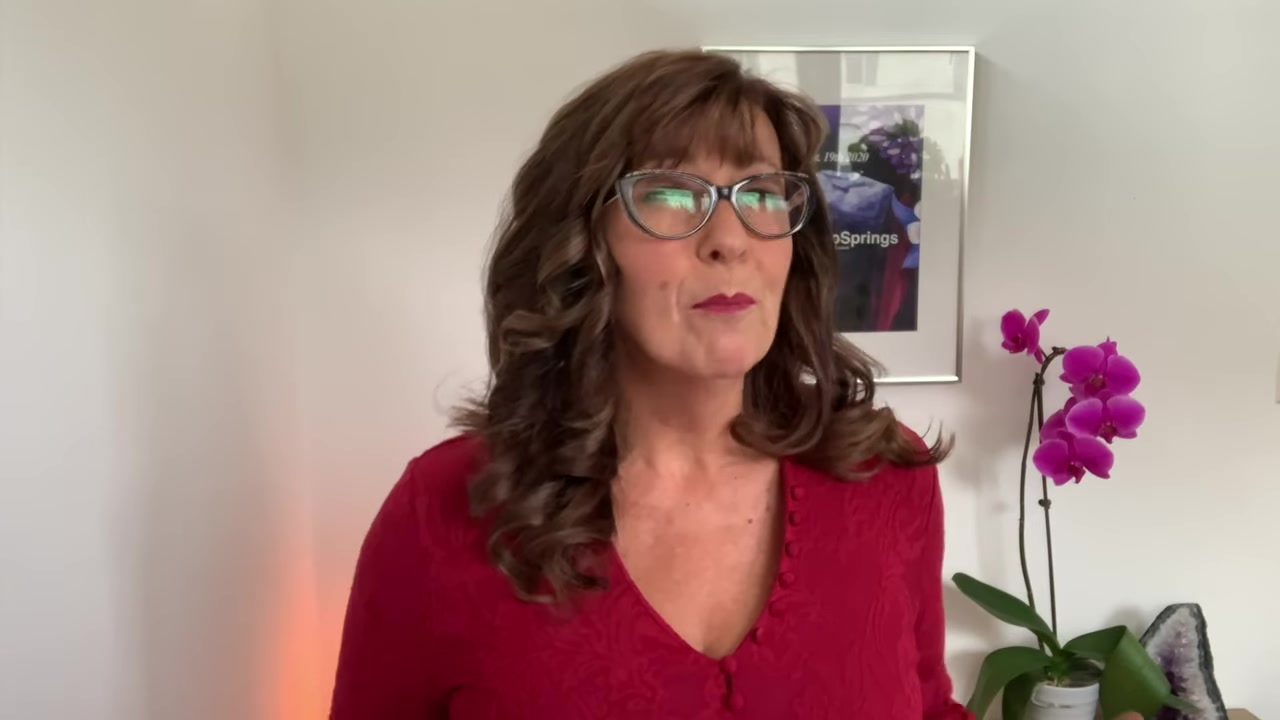
The core message is clear: getting a better job is not the solution to burnout. If the root cause is not work-related stress as WHO defines it, but unresolved trauma, we are responding to this costly syndrome in entirely the wrong way.
The numbers prove it. Annual burnout-related healthcare spending in the US alone reaches 125-190 billion USD. According to Harvard Business Review, the number of people reporting burnout increases every year. A 2025 analysis estimates burnout costs US businesses 322 billion USD annually in lost productivity. Spending this enormously without improvement suggests the diagnosis itself may be wrong.
Broadening the lens reveals structural dimensions of trauma. If these levels of burnout exist among middle-class coaching clients, what about people exposed to systemic racism, sexism, and gender bias? When the daily experience of having your worth denied repeats itself, vitality and creativity can be systematically drained. A burned-out society becomes reactive and less creative, losing collective creative potential. Finding "elegant solutions" to humanity's challenges -- climate change, pandemics, sustainability -- requires healthy, creative people. Healing trauma to restore vitality and creativity is not just an individual issue but a societal imperative.
"Getting a better job won't help"
How to apply: When you feel burned out, consider focusing not only on improving your work environment but also on healing internal trauma. Explore professional counseling or coaching.
Action Checklist
Do today:
- Self-assess your current burnout level on a scale of 1 to 10
- Examine whether you have been attributing burnout solely to work
- Recall 1-2 past experiences where your sense of self-worth was shaken
This week:
- Conduct a self-assessment using the 9 resilience keys (self-worth, empowerment, lovability, vitality, etc.)
- Research trauma-specialized therapists or coaches and consider booking an initial consultation
- Start a daily 5-minute journaling practice writing about "what I'm good at"
Long-term:
- Begin regular trauma healing work (therapy, coaching, EMDR, etc.)
- Recognize self-sabotaging patterns (preemptive failure, procrastination, excessive perfectionism) and work through them with a professional
- Approach burnout through both environmental improvement and internal healing work
Reference Links
References
- A Better Job Won't Help - The Truth about Burnout | Karen Curry Parker | TEDxColoradoSprings - TEDx Talks (14:27)
Related Tools
| Tool | Purpose | Price | Link |
|---|---|---|---|
| Quantum Human Design | A human design system created by Karen Curry Parker. Provides a framework for understanding personal potential, energy types, and burnout recovery. | Varies by program | Visit |
Related Resources
- Beating Burnout: Dr Karen Parker Of Quantum Human Design On The 5 Things You Should Do If You Are Experiencing Work Burnout (Article) - Authority Magazine interview: 5 practices for overcoming burnout
- Trauma-Informed Care: A Missing Link in Addressing Burnout (PMC) (Article) - Academic paper arguing trauma-informed care is the missing link in burnout solutions
- WHO: Burn-out an occupational phenomenon (Article) - WHO's official burnout classification announcement (ICD-11)
- The Creative Brain Under Stress (PMC) (Article) - Neuroscience research on how creative brain function changes under stress
- Leading Organizations From Burnout to Trauma-Informed Resilience (PMC, 2024) (Article) - Framework for organizational transition from burnout to trauma-informed resilience
Fact-check Sources
- WHO classified burnout as an occupational phenomenon in ICD-11 in 2019 -> https://www.who.int/news/item/28-05-2019-burn-out-an-occupational-phenomenon-international-classification-of-diseases
- Burnout-related annual healthcare costs of 125-190 billion USD -> https://blog.theinterviewguys.com/workplace-burnout-in-2025-research-report/
- Unresolved trauma linked to low self-esteem and motivational dysfunction -> https://counselingnow.com/why-survivors-often-confuse-burnout-with-unresolved-trauma/
Questions to Consider
Is the fatigue and lethargy you feel right now truly caused by work, or does it come from somewhere deeper?
Has someone's words or actions in your past shaken your confidence in what you do best? How might that wound be affecting your life today?
Have you been repeating a pattern of changing jobs or blaming your environment every time burnout strikes?
Key Takeaways
- 1Self-assess your current burnout level on a scale of 1 to 10
- 2Examine whether you have been attributing burnout solely to work
- 3Recall 1-2 past experiences where your sense of self-worth was shaken
- 4Conduct a self-assessment using the 9 resilience keys (self-worth, empowerment, lovability, vitality, etc.)
- 5Research trauma-specialized therapists or coaches and consider booking an initial consultation
- 6Start a daily 5-minute journaling practice writing about "what I'm good at"
- 7Begin regular trauma healing work (therapy, coaching, EMDR, etc.)
- 8Recognize self-sabotaging patterns (preemptive failure, procrastination, excessive perfectionism) and work through them with a professional
- 9Approach burnout through both environmental improvement and internal healing work
Want to read this later?
Save this insight to access it anytime
Original Video
번아웃의 진짜 원인은 과로가 아니다: 1,000명 설문조사로 밝혀진 트라우마와 자기가치감의 연결고리