Lesson 34 / 46 in Mindset & Wellness
How a 2.9M-Subscriber Creator Escaped Burnout by Cutting Content from 4x to 2x per Month
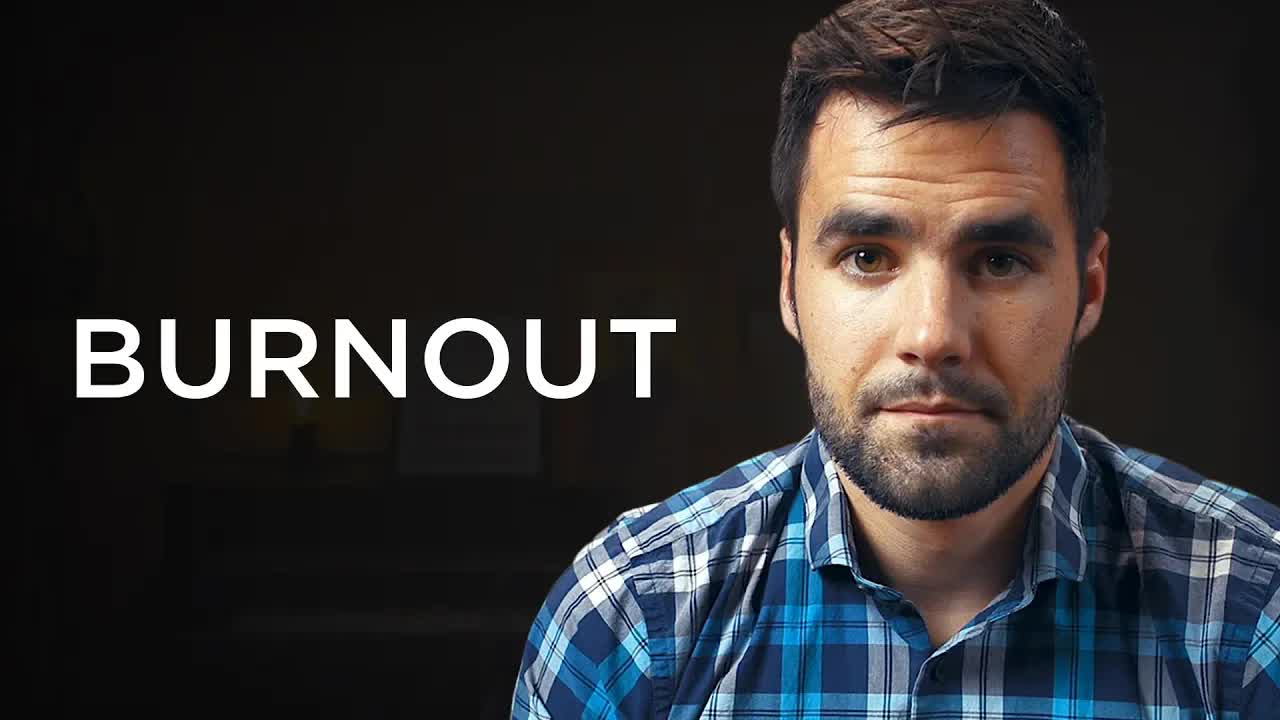
TL;DR
Burnout caused by overcommitment is not solved by "working harder" -- only by intentionally doing less.
How a 2.9M-Subscriber Creator Escaped Burnout by Cutting Content from 4x to 2x per Month
One-Line Summary
Burnout caused by overcommitment is not solved by "working harder" -- only by intentionally doing less.
Key Numbers & Data
| Metric | Figure | Context |
|---|---|---|
| Monthly Content (Burnout Period) | 4-5 per month | Sponsor schedules locked months ahead, making voluntary reduction difficult |
| Post-Reduction Output | 2 per month | Spreadsheet analysis showed team salaries sustainable at half output |
| Worker Burnout Rate | 82% | 2025 global worker burnout experience rate (Meditopia research) |
| Entrepreneur Burnout Rate | 42% | Entrepreneurs who experienced burnout in the past month (Entrepreneur.com) |
| YouTube Subscribers | 2.9M+ | Thomas Frank main channel, top-tier productivity creator |
Background: Why This Matters
Burnout was officially classified by the WHO in ICD-11 as an "occupational phenomenon" in 2019, recognizing it as a structural problem rather than simple fatigue. WHO defines burnout by three characteristics: energy depletion/exhaustion, mental distance or cynicism toward work, and reduced professional efficacy.
In 2025, 82% of all workers experienced burnout. Millennials reported 84% -- the highest among generations -- and Gen Z hits peak burnout at age 25 on average. For entrepreneurs, 42% experienced burnout in the past month, and 65% reported work-life imbalance. Each burned-out employee costs a company approximately 4,000 USD annually.
Thomas Frank started with a College Info Geek blog during college in 2010 and has created productivity content for over 15 years. With 2.9 million subscribers and over 170 million cumulative views, he also runs Thomas Frank Explains (230K+ subscribers) for Notion education, co-founded the creator-owned streaming platform Nebula, and earns six-figure monthly income as a full-time creator.
Key Insights
1. Burnout Starts Not from External Pressure, but from a "Mental Prison" You Build Yourself

The tipping point came around April-May 2019. Unlike previous high-stress periods, this time the fundamental perspective toward work turned negative, and cynicism spread across all areas of life.
The deepest irony: as someone running their own business, every task was self-chosen. Nobody forced it. Yet the feeling of being trapped was overwhelming. This is the "mental prison" -- a cage you build yourself and lock yourself inside. Research shows 72% of entrepreneurs experience mental health issues, many linked to this self-attribution pattern.
"I felt trapped by the work that I had built for myself. And it was kind of funny because nobody was telling me to do what I was doing."
Practical Application: Check if there is anything you are doing that "nobody told you to do" yet you "feel unable to stop."
2. "I'll Be More Efficient Next Month" Is the Most Dangerous Self-Deception That Feeds Burnout

Producing 4-5 pieces monthly with sponsor deadlines locked months ahead, plus team payroll responsibilities. The truly dangerous part was the monthly self-deception: "This month was hard because I was inefficient. Next month I'll work harder, smarter." This thought sustained burnout for months.
"Mental prisons are built on a foundation of at least a kernel of truth." The thought "I can work more efficiently" contains some truth but masks the real problem: there are simply too many commitments. We imagine our future selves as free from our current to-do lists, so we keep loading more onto tomorrow.
"I think a lot of these mental prisons we put ourselves in are built on a foundation of at least a kernel of truth."
Practical Application: If you are telling yourself "I'll do better next time," determine whether it is truly an efficiency problem or a volume problem.
3. The Moment You "Decide" to Cut Your Schedule, Recovery Begins -- Before the Workload Actually Changes

The first recovery step was a real vacation. Then came the critical decision: talking with the agency to reduce the monthly schedule from 4-5 pieces. Something fascinating happened -- before the schedule actually decreased, just the decision to reduce it triggered immediate change. Ideas started flowing again. Interest in new projects revived.
During burnout, new opportunities provoked irritation: "Where would I find time for that?" But after deciding to cut back, the same situations sparked curiosity -- even though the actual workload would not decrease until July. Burnout research confirms that "psychological detachment" is the key mediator for recovery. Even without physically reducing work, the certainty that "it will decrease soon" creates psychological detachment, triggering recovery.
"The moment I committed to cutting back my schedule, I started to have a more open outlook towards new things."
Practical Application: Make one decision today to reduce a burdensome commitment. Even if execution comes later, the decision itself starts the change.
4. Vague Fear Crumbles Before a Single Spreadsheet -- The Power of Data-Driven Decisions

The biggest barrier during burnout was the vague fear: "If I cut back, everything collapses." But actual numbers had never been checked. Opening a spreadsheet to model income and expenses revealed: 1 piece per month meant definite loss. But 2 per month? Break-even. Personal salary and full team payroll maintained.
"Everything crashes and burns" versus "everything just slows down" are entirely different pictures. The former creates terror; the latter is a manageable reality. Only data made this distinction possible. Financial modeling, time tracking, and priority matrices are not just productivity tools -- they are mental health tools too.
"I thought, if I stopped working as hard, everything is gonna crash and burn. Not that everything is just going to slow down. Which is a much more palatable future."
Practical Application: Model the actual financial and time impact of reducing a burdensome commitment in a spreadsheet with specific numbers.
5. The Thought "I'll Rest When I'm Successful Enough" Is a Trap That Perpetuates Burnout

Another critical recovery axis was releasing perfectionism. Once you invest 5 days making ultra-high-quality content, every subsequent piece feels like it must match that level. But looking at the music industry, bands create orchestral masterpieces one album and strip down to guitar-bass-drums-vocals the next. This ebb and flow rhythm is natural in creative work.
The philosophical realization: "I'll rest when I'm successful enough" never materializes. Goals achieved at 28 that were set at 25 do not bring rest -- a thousand new desires appear. The goalpost keeps moving. The conclusion: accept slower growth in exchange for better work-life balance, less chronic stress, and freedom to explore genuinely interesting things.
Burnout recovery research consistently shows that "recovery experience through non-work activities" improves next-day work engagement. Resting is not laziness -- it is an investment in your next achievement.
"There's never going to be a magical moment where I have attained enough success that I will just let myself slow down. That doesn't exist."
Practical Application: If you are waiting for "someday when OO happens, then I'll rest" -- stop waiting and start "slower growth" today.
Action Checklist
Today:
- Write down every current commitment (work, side projects, promises, etc.)
- Sort them into "truly catastrophic if stopped" versus "just slows things down if stopped"
- Check if you keep telling yourself "I'll do better next time" in any area
This week:
- Pick one reducible commitment and model its actual impact in a spreadsheet
- Have an honest conversation about your current burden with someone you trust
- Dedicate one evening this week entirely to non-work activities
Long-term:
- Create a quarterly commitment review routine (audit total volume every 3 months)
- Recognize the "moving goalpost" pattern: practice pausing after achievements instead of immediately chasing the next goal
- Intentionally apply "ebb and flow" rhythm to your work instead of perfectionism
Reference Links
Source Material
- I burned out. Here's how I recovered. - Thomas Frank (12:15)
Related Tools
| Tool | Purpose | Price | Link |
|---|---|---|---|
| Google Sheets Budget Model | Business finance simulation spreadsheet shared by Thomas Frank | Free | Visit |
| Notion | All-in-one productivity tool for commitment tracking and project management | Free / Plus 10 USD/mo | Visit |
Related Resources
- Doing Too Much for Too Long - Thomas Frank blog post (Article) - Detailed essay on burnout experience and recovery
- Eight Evidence-Based Approaches to Beat Burnout (Article) - Scientific evidence-based burnout recovery approaches
Questions to Consider
What commitment do you feel "trapped by" right now? How many of them truly cannot be reduced?
If you cut your current workload in half, would the actual worst-case scenario be "catastrophe" or "slower growth"?
What are you postponing with "I'll rest when I'm successful enough"? Will reaching that benchmark truly allow you to rest?
Key Takeaways
- 1Write down every current commitment (work, side projects, promises, etc.)
- 2Sort them into "truly catastrophic if stopped" versus "just slows things down if stopped"
- 3Check if you keep telling yourself "I'll do better next time" in any area
- 4Pick one reducible commitment and model its actual impact in a spreadsheet
- 5Have an honest conversation about your current burden with someone you trust
- 6Dedicate one evening this week entirely to non-work activities
- 7Create a quarterly commitment review routine (audit total volume every 3 months)
- 8Recognize the "moving goalpost" pattern: practice pausing after achievements instead of immediately chasing the next goal
- 9Intentionally apply "ebb and flow" rhythm to your work instead of perfectionism
Want to read this later?
Save this insight to access it anytime
Original Video
I burned out. Here's how I recovered.