Lesson 36 / 46 in Mindset & Wellness
From a Cup of Tea to Enlightenment: Thich Nhat Hanh's 3 Energies for Everyday Meditation
TL;DR
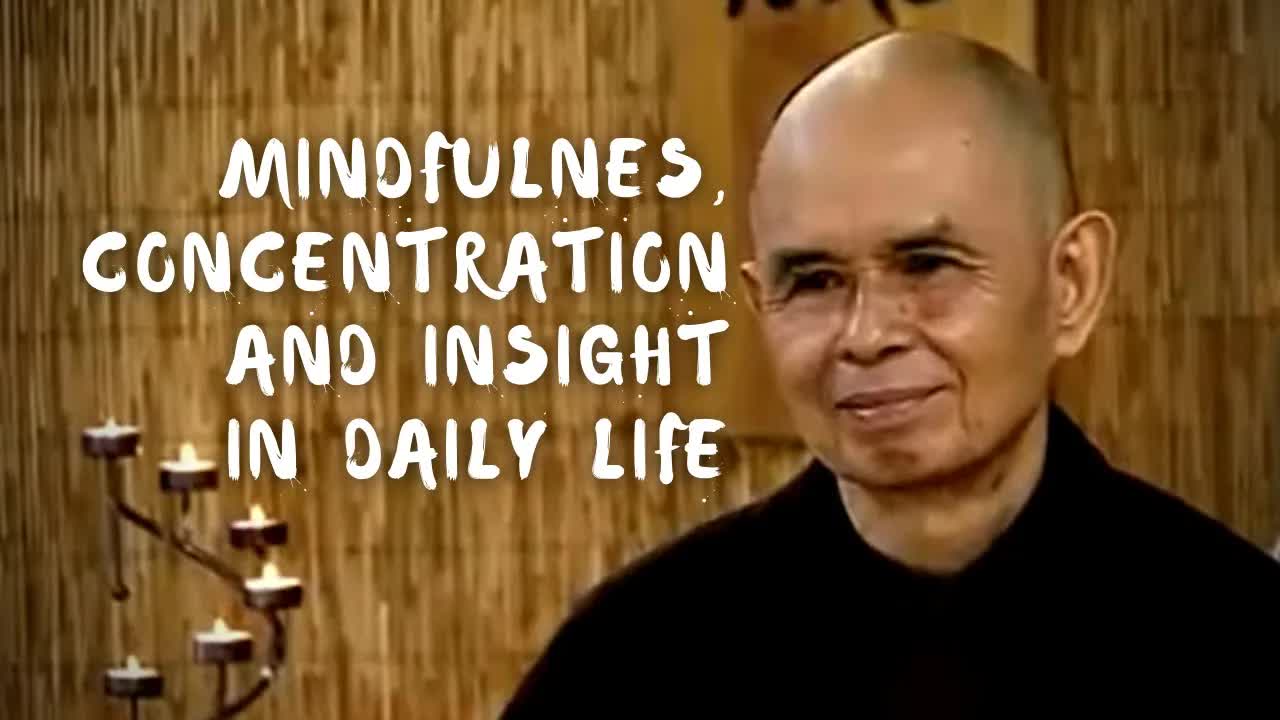
Mindfulness, Concentration, and Insight -- with just these three energies, ordinary moments like showering, doing dishes, and brushing teeth can transform into moments of awakening.
From a Cup of Tea to Enlightenment: Thich Nhat Hanh's 3 Energies for Everyday Meditation
One-Line Summary
Mindfulness, Concentration, and Insight -- with just these three energies, ordinary moments like showering, doing dishes, and brushing teeth can transform into moments of awakening.
Key Numbers & Data
| Metric | Figure | Context |
|---|---|---|
| Global Meditation Market (2025) | 7.3-10.6 billion USD | Growing at 13-23% CAGR, projected to reach 17.8 billion USD by 2032 |
| Plum Village Practice Communities | Monasteries in 11 countries | Over 700 monastic disciples and hundreds of thousands of practitioners worldwide |
| Mindfulness Training Effect | 30 days | USC study: 30 days of mindfulness meditation significantly improves attention regardless of age |
| Minimum Effective Meditation Time | 3 times/week, 10-21 min | Carnegie Mellon study: measurable effects on blood pressure and rumination with app-based meditation |
| Thich Nhat Hanh's Published Works | Over 100 books | Multiple global bestsellers, translated into over 40 languages |
Background: Why This Matters
Thich Nhat Hanh (1926-2022) is known as the "Father of Mindfulness," a world-renowned Zen master and peace activist. He entered monastic life at age 16 at Tu Hieu Temple in Hue, Vietnam, and spent over 40 years in exile after advocating for peace during the Vietnam War. Plum Village, which he founded in France, became one of the world's largest mindfulness practice centers, and he widely introduced the concept of "engaged Buddhism" to the West.
There is a reason this teaching is gaining particular attention now. As of 2025, the global meditation market is valued at 7.3-10.6 billion USD, growing at 13-23% CAGR. With rising mental health issues, widespread burnout, and attention deficits in the AI era, demand for "meditation you can practice right in your daily life" is exploding. Thich Nhat Hanh's teachings are considered the most accessible meditation method for modern people because they can be practiced immediately through everyday activities like breathing, walking, and drinking tea -- no special tools or locations needed.
Martin Luther King Jr. nominated him for the Nobel Peace Prize, a testament to his international influence. Even after his passing on January 22, 2022, at his hometown Tu Hieu Temple, his teachings continue through practice communities around the world.
Key Insights
1. The Essence of Meditation Is Generating Three Energies
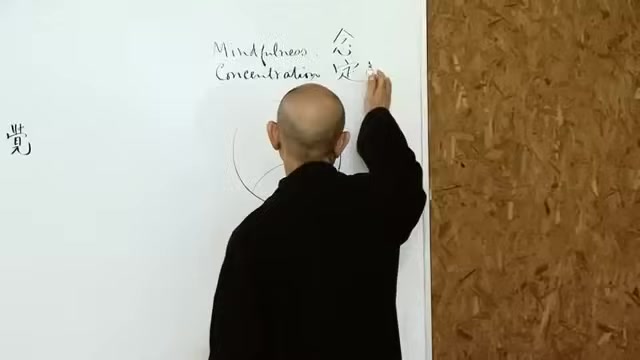
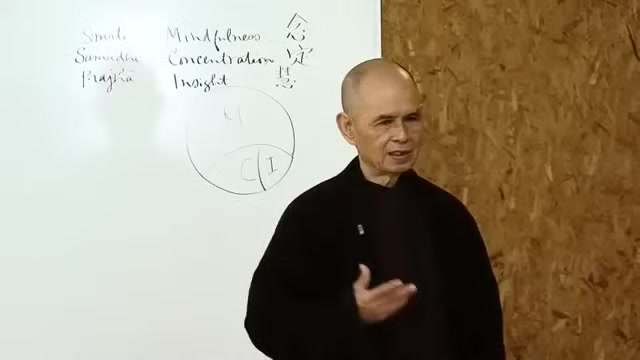
The core of Buddhist practice has a surprisingly simple structure. It consists of three energies called Smrti (Mindfulness), Samadhi (Concentration), and Prajna (Insight) in Sanskrit. When the first energy, Mindfulness, becomes strong enough, Concentration naturally arises from within it. When you truly pay attention to something, you naturally concentrate on it.
For example, imagine paying attention to your body. As you breathe in, you notice that "my body is here." At that moment, your body becomes the sole object of mindfulness, and when mindfulness is strong enough, concentration on the body naturally follows. This is the practice of "mindfulness of the body."
When mindfulness and concentration become sufficiently powerful, a breakthrough occurs. You discover and realize new things -- this is Insight. Meditation is ultimately about generating these three energies, and the seeds already exist within all of us. Practice is merely the process of allowing those seeds to manifest as energy.
"Mindfulness is the first energy, mindfulness gives birth to concentration, and mindfulness and concentration together bring about insight."
"You don't need to look outside for these three. We all have the seed of mindfulness within us, the seed of concentration within us, and the seed of insight within us."
How to apply: Choose one activity today (eating, walking, or breathing) and practice focusing "only on that" for 3 minutes.
2. These Three Energies Are Holiness -- Why Anyone Can Become a Buddha
Let us look at what these three energies specifically do. First, they unite body and mind completely. Usually our body is here while our mind wanders in the past or future. With mindfulness and concentration, the mind returns to the body.
Second, they connect us with all the wonders of life. They stop us from endlessly running to find happiness elsewhere and let us see that happiness is possible right here, right now. This alone can free us from worry, fear, and endless craving.
Here is where a fascinating insight emerges. If you possess these three energies, you carry within you a "sacred element." The "Holy Spirit" in Christianity can be interpreted in the same context. Where mindfulness, concentration, and insight exist, there is life and healing, nourishment and happiness. The key is this -- if you know how to generate these sacred energies, you can escape suffering and attain true freedom. It is not as difficult as it sounds.
"If you have these three energies, you are a Buddha."
"Holiness is made of mindfulness, concentration, and insight."
How to apply: Catch a moment during the day when you are "running to find happiness." Stop briefly and write down 3 things you already have.
3. Seeing Clouds in a Cup of Tea -- Practicing Insight Anywhere

Let us move into practical application. There is a beautifully simple example of pouring tea. When you pour tea mindfully, your mind is not thinking about the past, the future, or any plans. Your mind is focused solely on the act of pouring tea. Pouring tea becomes the sole object of mindfulness and concentration.
And from this, remarkable insight arises. You come to know that "there is a cloud in this cup of tea." Yesterday it was a cloud in the sky, but it fell as rain, seeped into the tea plant, and today it has become the tea in your cup. This is the insight of "interbeing" -- the realization that everything is interconnected. This kind of wisdom is not somewhere far away. It begins to arise the moment you have mindfulness and concentration.
The same principle applies to breathing. When you mindfully breathe in and concentrate on that in-breath, you gain the insight that you are alive. During the Vietnam War, a grenade was once thrown into a room, but fortunately he was not in that room at the time. With such experiences, the statement "being alive right here and now is itself a miracle" is far from an empty phrase. Being alive is not only a miracle -- it is the greatest of all miracles.
"You can see that there is a cloud in this tea. Yesterday it was a cloud, but today it has become the tea in your cup."
"To be alive is not only a miracle but the greatest of all miracles."
How to apply: Tomorrow morning with your first drink, spend 3 breaths paying full attention to that beverage alone. Consider the story within it -- water, earth, sun.
4. Showering, Brushing Teeth, Doing Dishes -- The Secret of Making the Most Ordinary Moments Sacred Practice
Here the scope of practice expands. Beyond breathing and drinking tea, every daily activity can become meditation. Walking meditation is a prime example. Having healthy legs that allow you to walk -- that itself is insight. Many people of the same generation cannot walk, so being able to use both feet makes walking itself a great happiness. Each step can generate the energy of joy and happiness, thanks to mindfulness, concentration, and insight.
The same applies when doing dishes. Breathing in and feeling that you are alive and standing, noticing the water that traveled from very far away to your kitchen, and truly connecting with that water as you wash -- this can become joy. The key is "not rushing to finish the dishes." If you enjoy the washing itself, it is a practice as sacred as sitting meditation or walking meditation.
Showering, preparing breakfast, brushing teeth, even going to the bathroom -- every moment becomes a moment of happiness when done with mindfulness. If you can turn the 2-3 minutes of brushing your teeth into happy moments, then even the small act of buttoning your clothes can become joy. Time is for us to live, and there is no need to rush through what we are doing now to get to something else. According to USC research, just 30 days of consistent mindfulness training significantly improves attention regardless of age, providing scientific backing for everyday mindfulness practice.
"You don't need to rush to finish the dishes. Enjoy the washing, and you are in the Kingdom of God."
"Make the 2 minutes, 3 minutes of brushing your teeth a happy moment."
How to apply: When doing dishes or brushing teeth today, consciously do not rush and pay full attention to the activity itself. Feel the water temperature, the texture of soap bubbles, the movement of the toothbrush one by one.
5. The Past Is a Prison, the Future Is a Prison -- Returning to the Present Is Liberation
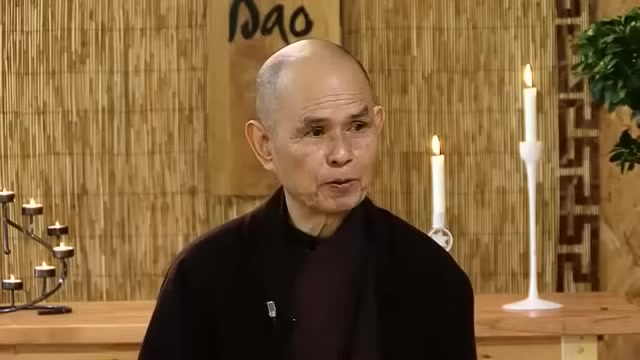
The teaching concludes with the topic of "freedom." The freedom discussed here is not political freedom but inner freedom. Specifically, freedom from sadness, regret about the past, and fear of the future.
Many people are imprisoned by the past. Trapped by past failures, regrets, and wounds, unable to live in the present. The future is the same. Many people fear the future, feel anxious, and are filled with worry. So the future becomes yet another prison. Recent research shows that mindfulness meditation reduces amygdala reactivity and improves emotional regulation, providing a neurobiological mechanism for reducing overreactions to past trauma and future anxiety.
The solution is surprisingly simple. Breathing in, bringing the mind back to the body and returning to the present moment -- that itself is liberation. No elaborate rituals or special states are needed. When you sit to meditate, be a free person. When you walk, walk as a free person. Every step is freedom, every step is healing, every step is joy. Practice is not done with the mind alone but with the body, with every in-breath and out-breath. When mind, body, and breath are together, you finally settle into the here and now, and you can live deeply without wasting your life.
"Breathing in, bringing the mind back to the body and returning to the present moment -- that alone is liberation."
"Every step is freedom. Every step is nourishment, every step is healing, every step is joy."
How to apply: Right now, take 3 deep breaths while recognizing "I am here, now." When thoughts about the past or worries about the future arise, return to your breath.
Action Checklist
Today:
- Take 3 conscious breaths right now, feeling that "I am alive"
- For the first 3 bites of your next meal, focus entirely on eating and nothing else
- During tooth brushing, pay attention only to brushing for 2 minutes (put the phone down)
This week:
- Convert one daily activity (dishes, shower, walking) into a "mindfulness practice"
- Try walking meditation: during your commute, focus on "each step" for just 100 steps
- Install the Plum Village App and follow a 10-minute guided meditation daily
Long-term:
- Build a habit of 5-minute breathing meditation every morning (consistently for 30 days per USC research)
- Gradually expand mindfulness objects: breathing -> walking -> eating -> conversation -> work
- Recognize the "rushing habit" pattern and consciously slow down once a day
- Consider attending a Plum Village offline retreat or a local mindfulness group
Reference Links
Source Material
- Mindfulness, Concentration, and Insight in Daily Life | Thich Nhat Hanh (short teaching) - Plum Village App (21:18)
Related Tools
| Tool | Purpose | Price | Link |
|---|---|---|---|
| Plum Village App | 100+ guided meditations, 300+ Dharma talk videos, mindfulness bell feature from Thich Nhat Hanh and Plum Village practitioners. iOS/Android. | Completely free (no ads, no in-app purchases) | Visit |
| Plum Village Official Site | Official website of the Plum Village practice community. Retreat schedules, teachings, practice guides. | - | Visit |
| TNH Meditation (Teaching Archive) | Archive site organizing Thich Nhat Hanh's mindfulness practice teachings by topic. | Free | Visit |
Related Resources
- Mindfulness, Concentration, and Insight (TNH Meditation) (article) - Systematic guide to Thich Nhat Hanh's three energies teaching
- The Miracle of Daily Mindfulness (Lion's Roar) (article) - Summary of Thich Nhat Hanh's teachings on everyday mindfulness
- Neurobiological Changes Induced by Mindfulness and Meditation (2024) (article) - Systematic review on neurobiological changes from mindfulness meditation
- Full Dharma Talk: Breathing with Life, Death, and Fear of Failure (video) - The complete talk from which this teaching was excerpted
Questions to Consider
When was the one moment today when you were "fully present"? How did that feel?
Is the "prison" currently confining you one of the past (regret) or the future (fear)?
If even 2 minutes of brushing your teeth can become a happy moment, are the things you consider "conditions for happiness" truly necessary?
Key Takeaways
- 1Take 3 conscious breaths right now, feeling that "I am alive"
- 2For the first 3 bites of your next meal, focus entirely on eating and nothing else
- 3During tooth brushing, pay attention only to brushing for 2 minutes (put the phone down)
- 4Convert one daily activity (dishes, shower, walking) into a "mindfulness practice"
- 5Try walking meditation: during your commute, focus on "each step" for just 100 steps
- 6Install the Plum Village App and follow a 10-minute guided meditation daily
- 7Build a habit of 5-minute breathing meditation every morning (consistently for 30 days per USC research)
- 8Gradually expand mindfulness objects: breathing -> walking -> eating -> conversation -> work
- 9Recognize the "rushing habit" pattern and consciously slow down once a day
- 10Consider attending a Plum Village offline retreat or a local mindfulness group
Want to read this later?
Save this insight to access it anytime
Original Video
차 한 잔에서 깨달음까지: 틱낫한 스님이 알려주는 일상 명상의 3가지 에너지 활용법