Lesson 37 / 46 in Mindset & Wellness
The 12 Stages of Burnout Self-Diagnosis: Why Recovery Takes Over a Year and 3 Escape Strategies
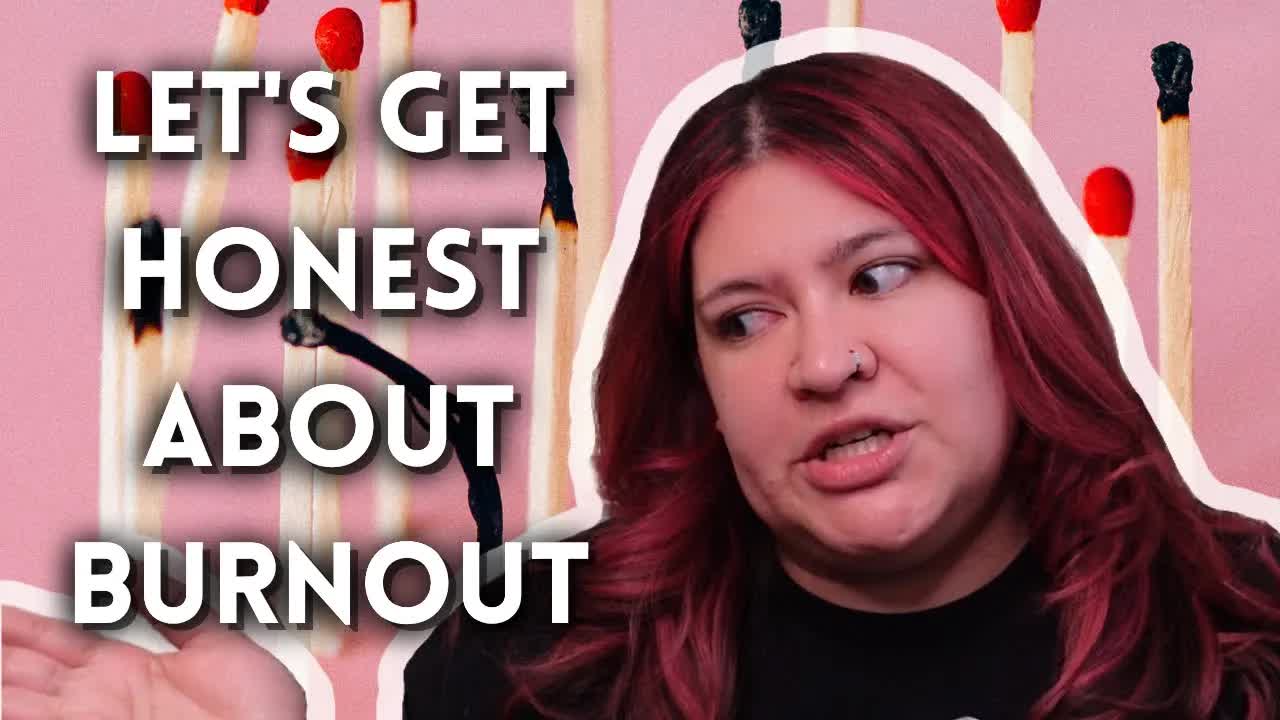
TL;DR
Burnout is not simple fatigue -- it is a psychological syndrome that progresses through 12 stages, and reaching the later stages can require over a year to recover.
The 12 Stages of Burnout Self-Diagnosis: Why Recovery Takes Over a Year and 3 Escape Strategies
One-Line Summary
Burnout is not simple fatigue -- it is a psychological syndrome that progresses through 12 stages, and reaching the later stages can require over a year to recover.
Key Numbers & Data
| Metric | Value | Context |
|---|---|---|
| Burnout stages | 12 stages | Freudenberger-North model: from compulsion to prove oneself to complete shutdown |
| US worker burnout rate | 55% | 2025 Eagle Hill Consulting survey: over half of US workers experiencing burnout |
| Severe burnout recovery | 1-2+ years | Research shows late-stage burnout cannot be resolved with a weekend off |
| Gen Z burnout rate | 66% | Highest burnout rate across all generations |
| Unrecovered patients | 37% | Still unrecovered 7 years after treatment for stress-related exhaustion (BMC Psychology) |
Background: Why This Matters
The term "burnout" was first coined in 1974 by American psychologist Herbert Freudenberger. Initially considered a phenomenon limited to caregiving professions like social workers and healthcare providers, research since the 1990s has shown it can occur in any occupation.
In 2019, the WHO officially listed burnout in ICD-11 as an "occupational phenomenon." While not a medical diagnosis, it is defined across three dimensions: energy depletion, cynicism toward one's job, and reduced professional efficacy. A key debate exists: the WHO limits burnout to the workplace context, but clinical practice observes the same syndrome in non-work domains like parenting, caregiving, and academics.
As of 2025, 55% of US workers report experiencing burnout, with Gen Z at 66%. Burnout is now recognized as a structural and social issue, not individual weakness.
Mickey Atkins is a Licensed Clinical Social Worker (LCSW) based in Tucson, Arizona, who actively creates mental health education content. She identifies as a "Fat & Feminist Therapist," is an ADHD individual herself, and has personally experienced burnout.
Key Insights
1. Burnout Is Not a Diagnosis -- And That Makes It More Dangerous

The fact that burnout is not an "official diagnosis" is a bigger problem than most realize. No diagnostic code means no insurance coverage, and saying "I have burnout and need rest" at work lacks medical backing. Mayo Clinic defines burnout as "a state of physical or emotional exhaustion that also involves a sense of reduced accomplishment and a loss of personal identity."
Here is the interesting debate: most academic literature treats burnout as a workplace-only phenomenon. But clinical reality shows identical patterns in parenting, caregiving, academics, and relationships. Honestly, does our life divide neatly into "work" and "everything else"? Workplace stress bleeds into home life, and caregiving burdens affect job performance. Limiting burnout to work issues ignores that humans are integrated beings.
"Burnout is a state of physical or emotional exhaustion that also involves a sense of reduced accomplishment and a loss of personal identity."
"I think it would just be disingenuous to discuss burnout only from the perspective of existing in the workplace because we know that human beings don't just function at work."
How to apply: When doing a burnout self-check, do not only assess work stress. Evaluate exhaustion levels across all life domains: home, relationships, parenting, academics.
2. Efficiency Obsession and 'Gifted Kid Syndrome' Plant the Seeds of Burnout

People vulnerable to burnout share common traits. First: efficiency obsession -- not just wanting to succeed, but needing to succeed "most efficiently." This mindset fundamentally conflicts with rest, fun, and self-care. An unconscious belief that "rest is wasting time" underlies it.
Second: Gifted Kid Syndrome -- people raised on "you're special" and "you're the best." For them, exceeding expectations is not just a habit but their identity itself. They learned that doing more and better than others is the only way to be loved and recognized. This identity leads to easy exploitation at work.
Third: capitalist productivity obsession -- the equation "good worker = good person" deeply embedded in society. Fourth: gendered caregiving expectations -- women face double messages about caregiving being "natural." Fifth: self-sacrifice culture in caregiving professions -- healthcare workers, social workers, and teachers are easily exploited through the logic of "you do meaningful work, be grateful even if pay is low."
The key point: multiple risk factors often operate simultaneously in one person.
"The way that capitalism steals our identities in some ways by telling us that a lot of our worth comes from being a good worker."
"This is obviously a crock of shit but also is like particularly manipulative to folks who have grown up with this as part of their identity."
How to apply: Check how many risk factors apply to you. If any connect to your identity, examine whether they are preventing healthy boundary-setting.
3. Burnout Does Not Come Suddenly -- The 12-Stage Warning Signal Checklist

The Freudenberger-North 12-stage model matters because most people only recognize burnout at the final stage -- complete collapse. But warning signals appear much earlier.
Stage 1: Compulsion to prove oneself. Stage 2: Working harder -- "nobody works as hard as me" pride. Stage 3: Neglecting needs -- sleep, exercise, social life become "luxuries." Stage 4: Displacement of conflicts -- rejecting feedback like "you need to rest."
Stage 5: Revision of values -- the frightening turning point. You unconsciously rewrite your values: "I don't need hobbies, work IS my fulfillment." A form of self-gaslighting. Stage 6: Denial of emerging problems. Stage 7: Withdrawal -- cutting contacts, avoiding gatherings.
Stage 8: Obvious behavioral changes -- sleep patterns disrupted, acting out of character. Stage 9: Depersonalization -- unable to feel value in yourself. Stage 10: Inner emptiness -- loneliness and helplessness dominate. Stage 11: Depression -- chronic lethargy. Stage 12: Burnout syndrome (complete shutdown) -- physically and emotionally stopped.
Critical to know: these stages do not necessarily progress in order. And not reaching Stage 12 does not mean you are fine. Society's message that "you must be completely broken to deserve help" is genuinely dangerous.
"We as a society are obsessed with only honoring that people need help when they reach a stage of complete and total shutdown."
"We start to almost like gaslight ourselves into saying like I don't need these things."
How to apply: Print the 12-stage checklist and honestly mark where you currently stand. If between stages 3-5, now is the optimal time to intervene.
4. A Weekend Trip Will Not Fix This -- The 3 Core Pillars of Recovery

The most dangerous approach to burnout recovery is placing all responsibility on the individual through "self-care routines." Research shows that individual CBT approaches have some effect, but the most significant recovery occurs when personal change and environmental (workplace) change happen simultaneously. Adjusting workload may matter more than buying a yoga mat.
First pillar: Root cause tracking. Trace where in the 12 stages it started and which risk factors were at play. Is it a work issue, family relationship issue, or identity issue formed in childhood? This work is far more effective with a professional therapist.
Second pillar: Healing within community. Burnout tends to isolate, but recovery paradoxically happens "among people." It does not need to be a large community. Starting by honestly talking to just one safe person -- a parent, close friend, neighbor -- is enough.
Third pillar: Reclaiming your time. Practicing saying "No" to extra work, overtime, unpaid projects, and things you do not want to do. This is both a self-defense skill and an act of rebellion against capitalist systems. The key is spending reclaimed time not on "productive recovery activities" but on things that are purely enjoyable. Practicing joy as a human being, not as a worker.
Finally, remember that severe burnout recovery can take 1-2+ years. According to BMC Psychology research, 37% of patients treated for stress-related exhaustion had not fully recovered even after 7 years. "A good weekend rest will fix it" dangerously underestimates burnout's severity. And slow recovery is not your fault -- structural problems may be hindering your healing.
"Reclaiming our time is an act of rebellion and also an act of self-love."
"If your friends only like you when you're happy they're not your real friends and you deserve better friends than that."
How to apply: This week, schedule one activity purely for joy (not obligation). Decide in advance what you need to say "No" to in order to protect that time.
Action Checklist
Do today:
- Self-diagnose your current burnout stage using the 12-stage checklist
- Block at least 30 minutes this week for "joy-only time"
- Honestly share your current state with 1 safe person
This week:
- List 3 things you failed to say "No" to last month, and practice refusing next time
- Identify which area you are neglecting most: sleep, exercise, meals, or social connections
- Note the specific structures causing burnout at work/home/school (workload, expectations, etc.)
Long-term:
- Work with a professional therapist to explore burnout root causes (identity, values, relationship patterns)
- Initiate conversations about workload adjustment and role redefinition at work
- Establish hobbies, leisure, and community activities as regular routines (pure enjoyment, unrelated to productivity)
Reference Links
References
- Therapist Explains Burnout and How to Recover - Mickey Atkins (34:00)
Related Tools
| Tool | Purpose | Price | Link |
|---|---|---|---|
| Psychology Today Therapist Finder | Regional therapist search engine with specialty, insurance, and price filters | Free search | Visit |
| Open Path Collective | Affordable therapy matching service with sliding scale | 30-80 USD per session | Visit |
| Therapy Den | Inclusive therapist search engine focused on marginalized-friendly therapists | Free search | Visit |
| Inclusive Therapists | Therapist search for people with marginalized identities | Free search | Visit |
| NAMI | Mental health education, tools, resources, and helpline (1-800-950-6264) | Free | Visit |
Related Resources
- 12 Stages of Burnout - Freudenberger Model (Article) - Detailed explanation of the 12-stage model
- Job Burnout: How to Spot It and Take Action (Article) - Mayo Clinic's official burnout guide
- WHO - Burn-out an Occupational Phenomenon (Article) - WHO's ICD-11 burnout classification
- Long-term follow-up of residual symptoms in stress-related exhaustion (Article) - 7-year follow-up study (BMC Psychology)
Fact-check Sources
- Burnout is not a medical diagnosis → https://www.who.int/standards/classifications/frequently-asked-questions/burn-out-an-occupational-phenomenon
- Burnout concept originated in the 1970s → https://www.researchgate.net/publication/307038936
- Burnout recovery can take over 1 year → https://link.springer.com/article/10.1186/s40359-020-0395-8
- Combined personal + environmental change is most effective → https://pmc.ncbi.nlm.nih.gov/articles/PMC5821021/
Questions to Consider
In the 12-stage model, which stage do you feel you are at? Which stage resonated most?
Among the things you feel you "must keep doing," which could you actually let go of?
Who is your "safe person"? When was the last time you honestly told them you were struggling?
Key Takeaways
- 1Self-diagnose your current burnout stage using the 12-stage checklist
- 2Block at least 30 minutes this week for "joy-only time"
- 3Honestly share your current state with 1 safe person
- 4List 3 things you failed to say "No" to last month, and practice refusing next time
- 5Identify which area you are neglecting most: sleep, exercise, meals, or social connections
- 6Note the specific structures causing burnout at work/home/school (workload, expectations, etc.)
- 7Work with a professional therapist to explore burnout root causes (identity, values, relationship patterns)
- 8Initiate conversations about workload adjustment and role redefinition at work
- 9Establish hobbies, leisure, and community activities as regular routines (pure enjoyment, unrelated to productivity)
Want to read this later?
Save this insight to access it anytime
Original Video
번아웃 12단계 자가진단법: 심리치료사가 알려주는 회복에 1년 이상 걸리는 이유와 3가지 탈출 전략