Lesson 39 / 46 in Mindset & Wellness
How to Reduce Stress by 47% with a 3-Minute Daily Body Scan Meditation: A Complete Beginner's Guide
TL;DR
Body scan meditation is the easiest scientifically proven mindfulness technique that lowers cortisol and boosts focus — all you need is a quiet space and 3 minutes to start today.
How to Reduce Stress by 47% with a 3-Minute Daily Body Scan Meditation: A Complete Beginner's Guide
One-Line Summary
Body scan meditation is the easiest scientifically proven mindfulness technique that lowers cortisol and boosts focus — all you need is a quiet space and 3 minutes to start today.
Key Numbers & Data
| Metric | Value | Context |
|---|---|---|
| Global meditation market (2025) | Approx. 10.7 billion USD | Projected to reach 29.7 billion USD by 2035, 10.5% CAGR |
| Stress reduction (scientific) | Measurable reduction at 3x/week, 10-21 min | Large-scale RCT (2,239 participants) confirmed significant stress reduction vs. control |
| Cortisol reduction | Biological stress marker decrease after 8 weeks | 2019 study: 20-min daily body scan reduced both cortisol and self-reported stress |
| Headspace users | 70 million | Leading meditation app running for 15+ years |
| Psych Hub free users | 30 million+ | Distributed through 800+ partner organizations, reviewed by Harvard/Columbia experts |
Background: Why This Matters
Stress management is no longer optional — it is essential. The global meditation market surpassed 10.7 billion USD in 2025 and is projected to reach 29.7 billion USD by 2035. The core driver of this growth is mindfulness — the skill of focusing on the present moment.
Body scan meditation stands out as the most accessible mindfulness technique for beginners. A large-scale randomized controlled trial of 2,239 participants (Nature Human Behaviour, 2024) showed body scan meditation provided "extreme-level evidence" for stress reduction, with a Bayes factor of 3.69 x 10^11 — meaning the probability of no effect is essentially zero.
Many people mistakenly think meditation is difficult and time-consuming. Research shows that just 3 sessions per week of 10-21 minutes produces measurable stress reduction. Even a 3-minute mini body scan can reset your day.
Psych Hub was co-founded by licensed therapist Marjorie Morrison and former U.S. Congressman Patrick J. Kennedy, with content reviewed by experts from Harvard, Columbia, UPenn, and Yale.
Related market data:
- Global meditation market: 10.7 billion USD (2025) to 29.7 billion USD (2035), CAGR 10.5% (Source: Expert Market Research)
- Meditation app revenue: 5.72 billion USD in 2025 (Source: Statista)
- Mindfulness meditation holds 25%+ market share (Source: Industry Reports)
- Headspace has 70 million regular users (Source: Business of Apps)
Key Insights
1. The Simplest Weapon Against Exam Stress is "Stop and Feel"
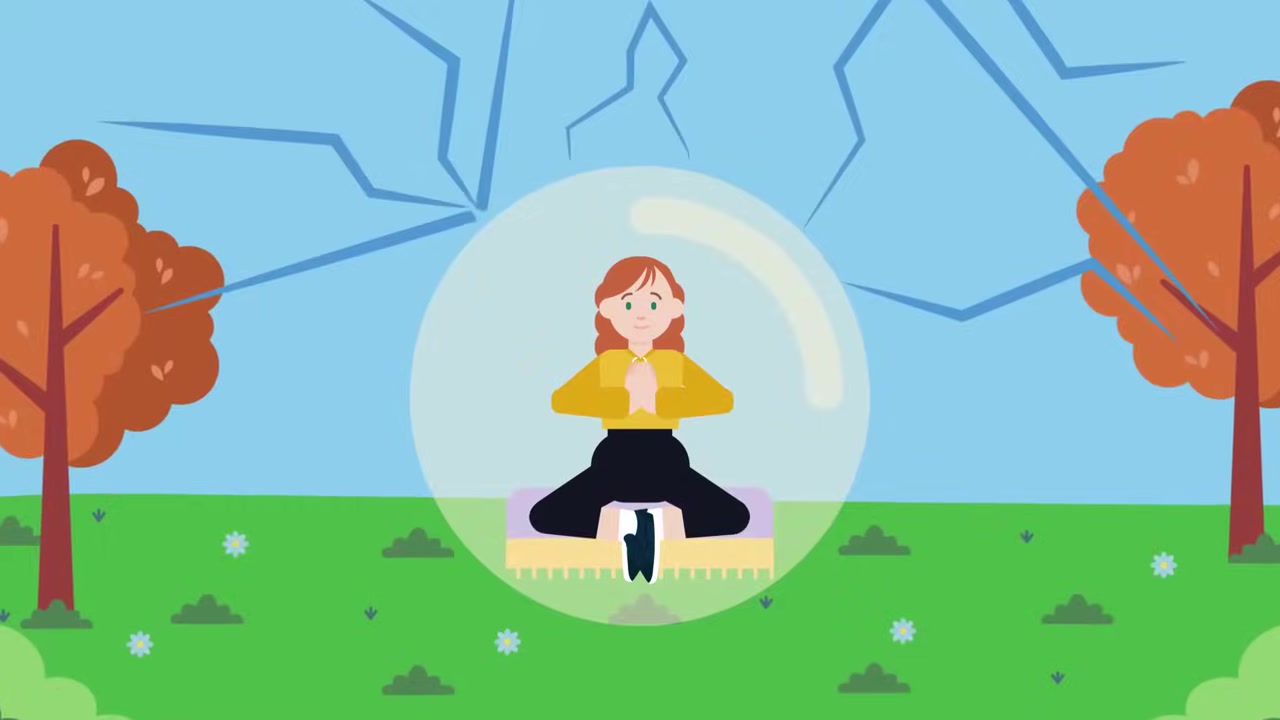
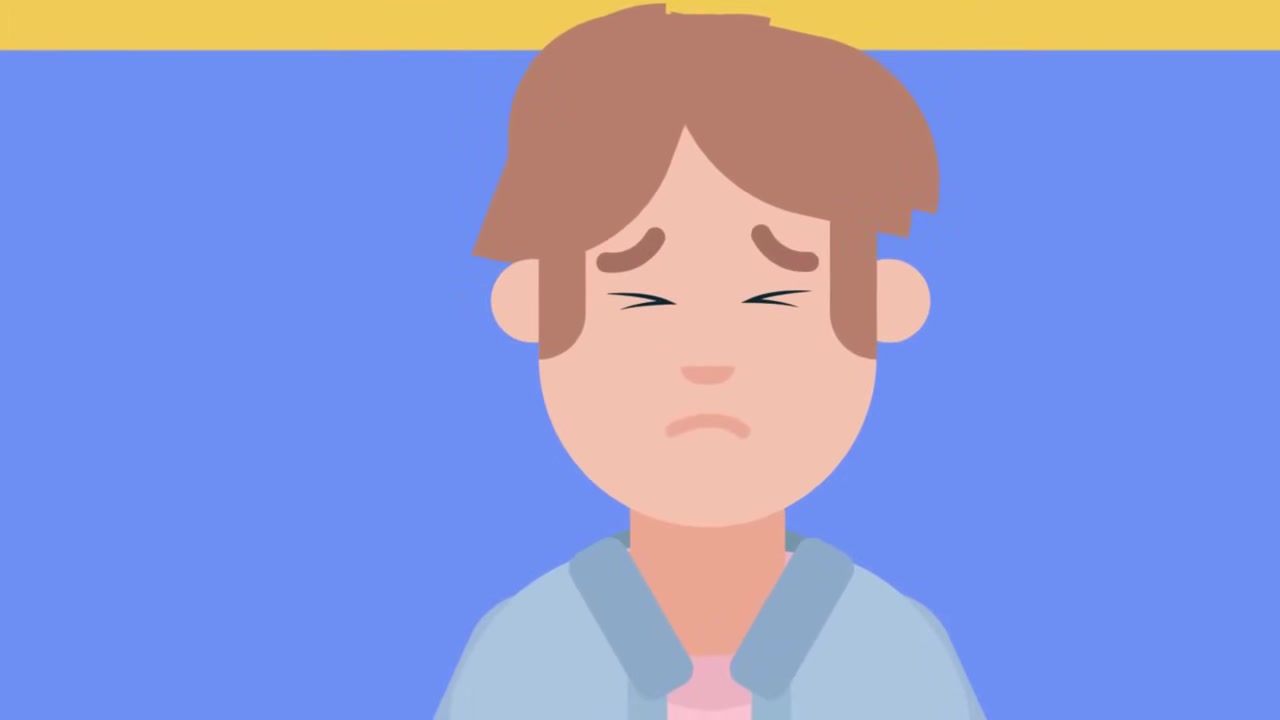
During exam season, everyone hits that "I can't do this anymore" wall. Brandon was no different — completely overwhelmed with his final exam the next morning. But interestingly, Lidia, going through the same exam period, looked completely different — sitting quietly, doing mindfulness meditation.
Mindfulness does not eliminate stress. The exam is still tomorrow, the study load remains the same. But it changes how you respond to that stress. Studies on college students show that brief mindfulness-based interventions significantly improved stress indicators, with 93% of participants reporting some level of improvement. The key detail: Lidia had a meditation mat with her — this was not a one-time thing but an established routine.
"I use mindfulness to control my stress during the day, especially during exam week."
How to apply: Identify your most stressful time of day, then block 3 minutes for meditation right before it in your calendar.
2. The Key to Mindfulness is "Acknowledging Without Judging"
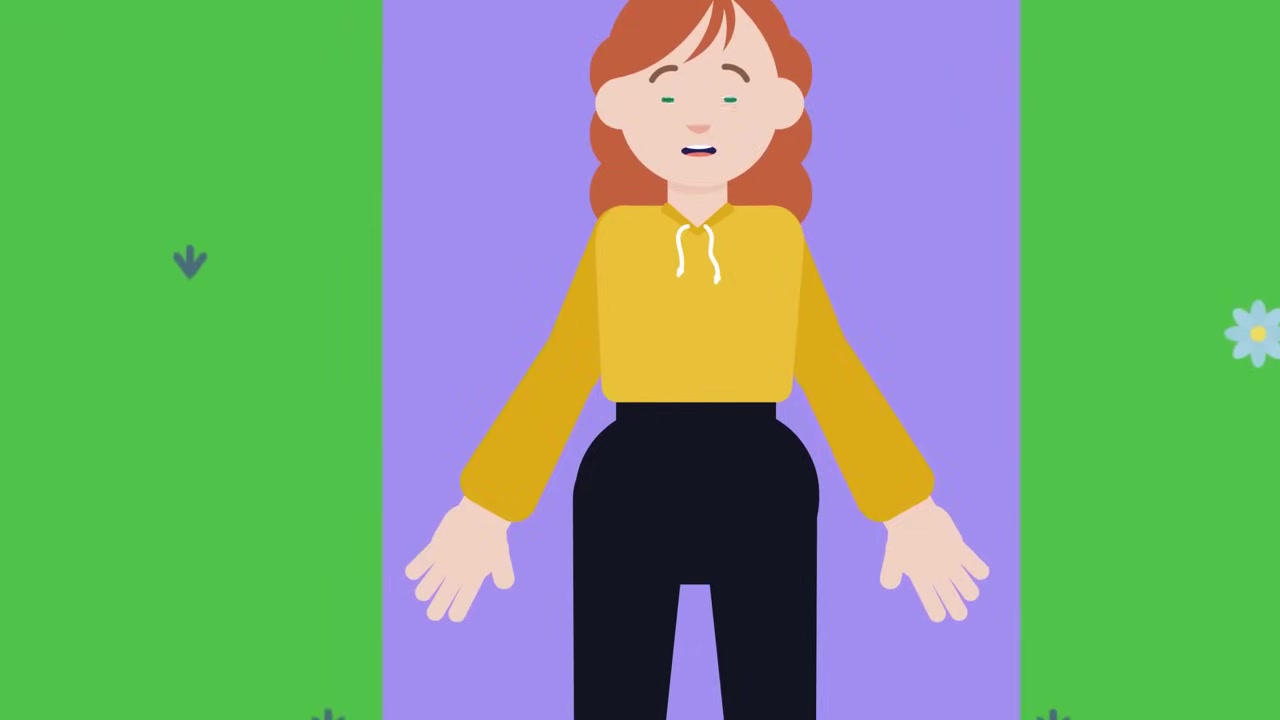
The principle behind body scan meditation is simpler than you think. Remember three things: first, relaxing; second, acknowledging physical sensations; third, acknowledging thoughts that arise.
Many people misunderstand meditation as "emptying the mind." It is actually the opposite. You do not stop thoughts from arising; you notice them without judgment. You recognize "Oh, I'm worrying about tomorrow's exam" without spiraling into "Why am I so anxious?"
A 2025 meta-analysis published in Nature found that mindfulness meditation training significantly improves interoception — awareness of internal body sensations. This is not just "feeling better" but actual changes in how the brain processes body signals. The finding that body scans cause neurobiological changes beyond simple relaxation is a key recent discovery.
"The key to mindfulness is relaxing, and allowing your mind to acknowledge the physical sensations of your body and the thoughts that come into your head."
How to apply: Next time you feel stressed, pause for 10 seconds and ask: "What sensations am I feeling in my body right now?" This alone is the first step of mindfulness.
3. The 3-Minute Body Scan: Breathing, Leaf Visualization, Head-to-Toe Sequential Scan
The practical body scan process has three stages.
Stage 1: Focus on breathing. Lie down or sit comfortably with legs extended. Eyes open or closed — your choice. Bring attention to your breath: air entering through the nose, traveling to the lungs, the chest expanding, then flowing out. Noises and random thoughts may arise. That is completely normal — just acknowledge each one and move on.
Stage 2: Leaf visualization. This is a brilliant technique. Imagine a leaf floating on a stream. Place each thought on a new leaf and watch it float away. This visualization is powerful because the very effort of suppressing thoughts creates stress. The leaf image allows thoughts to come and go naturally without pulling you in.
Stage 3: Head-to-toe sequential scan. Start at the scalp and head, then move through neck, shoulders, chest, abdomen, back, legs, thighs, knees, calves, ankles, feet, and toes. At each area, consciously relax the muscles. When finished, reverse back up, gather attention on the entire body and breath, then slowly rise.
A December 2025 study from Vanderbilt University Medical Center found that meditation stimulates the brain's waste removal system (glymphatic system) similarly to sleep. This means deep-relaxation meditation like body scans is not just a "mood booster" but an actual physical brain-cleaning process.
"Think of a leaf floating on a stream. Place each thought on a new leaf, and watch it float away."
"Focus your attention on this moment. Right here, right now."
How to apply: Before bed tonight, try this 3-stage body scan. Set a 3-minute timer: breathing, then leaf visualization, then head-to-toe scan.
Mentioned tools:
- Headspace - Guided meditation app (includes body scan, 12.99 USD/month)
- Calm - Meditation/sleep app (includes body scan sessions, 69.99 USD/year)
- Insight Timer - 60,000+ free meditation guides (free basic, premium 9.99 USD/month)
4. The Real Secret to Meditation Results is Consistency and Environment Design

Brandon's reaction after his first body scan is telling: he had not felt that relaxed in a long time, and he wanted to keep practicing. Two important takeaways: first, the effects are immediate — you feel relaxation after just one session; second, practice is still needed — initial sessions may bring lots of distracting thoughts, but repeated practice leads to deeper relaxation.
Lidia's key advice: "All you need is a quiet space." No expensive equipment, no long time blocks, no special skills. Her suggestion to find a distraction-free location aligns perfectly with environment design principles. Habit formation research confirms that environment matters more than willpower.
The science supports this: an 8-week study of 20-minute daily body scans showed decreases in both cortisol levels and self-reported stress. However, meta-analyses note that body scans alone may not be sufficient — they work best combined with other mindfulness techniques like mindful breathing, walking meditation, and loving-kindness meditation.
"Wow, it's been a long time since I've felt this relaxed. I need to keep practicing this so I can get good at it."
"All you need is a quiet space."
How to apply: Designate a "meditation spot" at home or office — a quiet corner, balcony, or even your car. Place a cushion or mat there as a visual trigger for habit formation.
Mentioned tools:
- Psych Hub - Free mental health education platform (1,500+ educational content pieces, reviewed by Harvard/Columbia experts)
Action Checklist
Do today:
- Try a 3-minute body scan before bed tonight (lying or sitting: breath → leaf visualization → head to toe)
- Set a 3-minute timer and practice the leaf visualization technique
- Choose a quiet "meditation spot" at home
This week:
- Install Insight Timer (free) or Headspace and complete 3 guided body scan sessions
- Choose a fixed meditation time (right after waking or before bed) and set a recurring calendar event
- Explore free mindfulness content on Psych Hub (psychhub.com)
Long-term:
- Start an 8-week daily body scan challenge (10-20 min/day, targeting cortisol reduction)
- Add one new mindfulness technique (mindful breathing, walking meditation, or loving-kindness)
- Keep a meditation journal: date, time, technique, brief notes — review changes after 4 weeks
Reference Links
References
- How to Practice Mindfulness - Psych Hub (3:43)
Related Tools
| Tool | Purpose | Price | Link |
|---|---|---|---|
| Psych Hub | Mental health education platform with free mindfulness videos and guides | Free | Visit |
| Headspace | Leading meditation app with body scan courses | 12.99 USD/month or 69.99 USD/year | Visit |
| Calm | Meditation/sleep app with body scan sessions | 69.99 USD/year | Visit |
| Insight Timer | 60,000+ free meditation guides, largest free library | Free (Premium 9.99 USD/month) | Visit |
Related Resources
- Body Scan Meditation: Systematic Review and Meta-analysis (Article) - PubMed systematic review
- Self-administered mindfulness interventions reduce stress (Article) - Nature Human Behaviour, 2,239-person RCT
- Meditation may stimulate brain waste removal (Article) - Vanderbilt 2025 study
- A 3-Minute Body Scan Meditation (Article) - Mindful.org practice guide
Fact-check Sources
- Mindfulness helps manage stress and focus → https://www.nature.com/articles/s41562-024-01907-7
- Body scan involves body sensation awareness and thought observation → https://pubmed.ncbi.nlm.nih.gov/35538557/
- A quiet space is all you need to practice meditation → https://www.nature.com/articles/s41562-024-01907-7
Questions to Consider
Right now as you read this, how much tension is in your shoulders? Try consciously lowering them.
When is the most stressful time of your day? What if you invested just 3 minutes right before that moment?
Have you ever thought meditation was a "waste of time"? Could the fact that 3 sessions of 10 minutes per week delivers scientifically proven results change that view?
Key Takeaways
- 1Try a 3-minute body scan before bed tonight (lying or sitting: breath → leaf visualization → head to toe)
- 2Set a 3-minute timer and practice the leaf visualization technique
- 3Choose a quiet "meditation spot" at home
- 4Install Insight Timer (free) or Headspace and complete 3 guided body scan sessions
- 5Choose a fixed meditation time (right after waking or before bed) and set a recurring calendar event
- 6Explore free mindfulness content on Psych Hub (psychhub.com)
- 7Start an 8-week daily body scan challenge (10-20 min/day, targeting cortisol reduction)
- 8Add one new mindfulness technique (mindful breathing, walking meditation, or loving-kindness)
- 9Keep a meditation journal: date, time, technique, brief notes — review changes after 4 weeks
Want to read this later?
Save this insight to access it anytime
Original Video
하루 3분 바디스캔 명상으로 스트레스 47% 줄이는 과학적 방법 (초보자 완벽 가이드)